Study of Nutrients' Effects on Brain Provides Insight into Appetite Regulation

CINCINNATIA cell-signaling pathway in the brain that is linked to the development of cancer and diabetes is also a key part of networks that regulate food intake, say University of Cincinnati (UC) researchers.
The finding might one day lead to new ways of helping obese people lose weight, either with new drugs or by carefully designing diets that can activate this pathway.
Scientists from UCs Genome Research Institute demonstrated that the signaling pathway mTORactivated by nutrient and hormonal signalsplays a role in the brains ability to sense how much energy the body has available.
This finding, the researchers say, suggests that very specific micronutrients may drive these pathways in the brain and could lead to a more scientific approach to diet design to help regulate body weight.
The study, led by Randy Seeley, PhD, professor in UCs psychiatry department, appears in the May 12, 2006 issue of the journal Science.
Ingesting calories (energy in the form of nutrients) has two purposes, says Dr. Seeley.
We take in calories to maintain levels of stored fuel (energy) and adequate available fuel, he says.
The signals that tell our brain about both the stored and the available energy in our body can activate the mTOR pathway in key parts of the brain that control appetite.
Knowing that mTOR basically serves as a check-point for sensing energy changes, the researchers predicted that it could be manipulated to alter food intake.
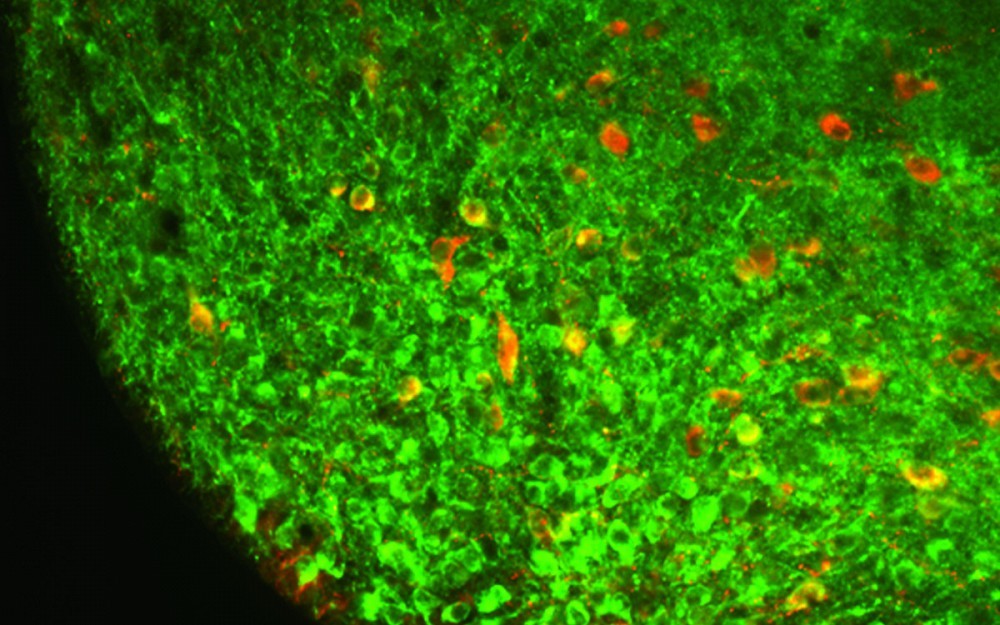
The mTOR pathway is very sensitive to branched-chain amino acids, particularly leucine, Dr. Seeley explains. In laboratory studies, he and his team found that when they administered leucine directly to the hypothalamus, a brain region that controls a number of metabolic processes, animals ate less.
Other, similar amino acids did not give the same results.
This animal study, says Dr. Seeley, could eventually have implications for human obesity.
Rather than basing our diets only on macronutrients like fat or carbohydrates, we might one day be designing diets based on micronutrients like amino acids, he says.
But, Dr. Seeley adds, that certainly doesnt mean people should run out and add more leucine to their diets.
We still have a lot to learn about how these nutrients would act if simply ingested with other nutrients, in what form they could be most effective, and even if they are effective at all when not administered directly to the brain, he says.
The study was funded by the National Institutes of Health and is part of a major effort at the UC College of Medicine to understand the biology of weight regulation.
Coauthors include Daniela Cota, MD, Sara Kozma, PhD, Karine Proulx, Kathi Blake Smith, George Thomas, PhD, and Stephen Woods, PhD.

Obesity researcher Randy Seeley, PhD

Obesity researcher Randy Seeley, PhD
Related Stories
On-site training in Speech & Hearing Clinic sets UC’s programs apart
August 27, 2026
At the University of Cincinnati’s Speech & Hearing Clinic, Doctor of Audiology and Speech-Language Pathology graduate students gain real-world experience while providing free speech and hearing services to the community.
Designing with cancer patients' needs in focus
August 27, 2026
Kristina Shin is designing garments that prioritize the comfort, function and confidence of breast cancer patients, addressing a need often overlooked by traditional fashion.
UC, NKU renew longstanding partnership supporting Army ROTC cadets
August 26, 2026
The University of Cincinnati Army ROTC and Northern Kentucky University (NKU) have renewed a longstanding partnership that supports students preparing to become Army officers and leaders in their communities. The universities formalized the renewed agreement during a signing event Aug. 11 at NKU.