UC HEALTH LINE: 'Non-Traditional' Therapies Offer Help for Traditional Aches and Pains

CINCINNATIIf youre finding no relief for that shoulder pain or tennis elbow, or that out-of-whack back keeps you from finishing your weeding, a University of Cincinnati (UC) physician says some non-traditional therapies might be good options.
Such therapies are based on the notion that the body has the ability to heal itself with just a little prompting, says Michael Bertram, MD, assistant professor of physical medicine and rehabilitation,
Prolotherapy, for example, can be traced back to the 1950s. This injection technique has caught enough attention in the
Prolotherapy is based on the assumption that injuries we normally attribute to inflammationinjuries ending in itismay really be caused by degraded tissue, says Bertram. By redamaging that tissue, we force the body to respond to the point of injury by stimulating an inflammatory or healing response.
In a session of prolotherapy, solutions of sugar water (dextrose) are injected into painful joints and soft tissues. The injections cause damage to weakened or degraded tissue, prompting the body to respond.
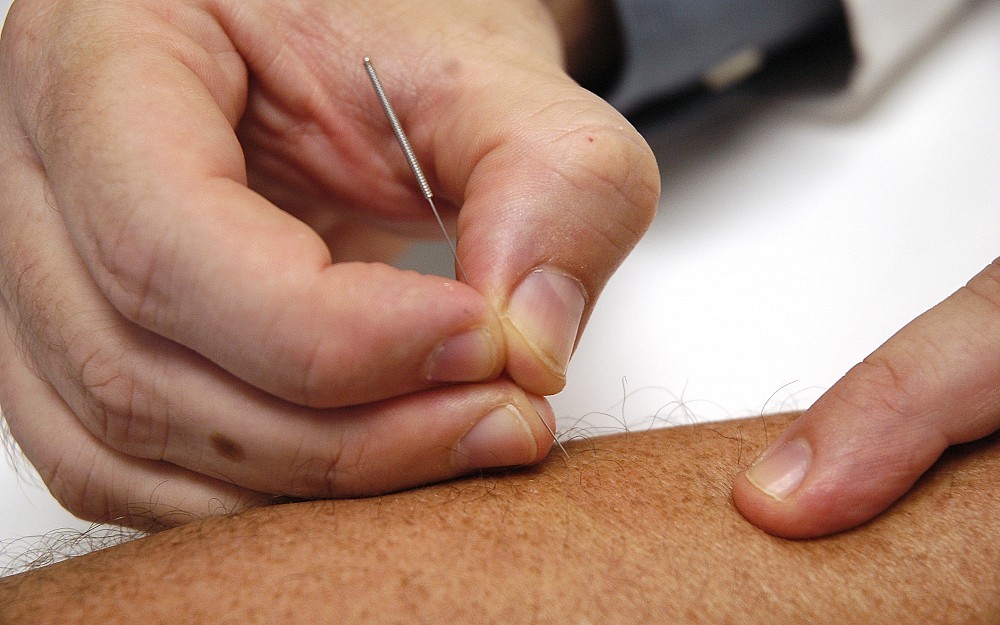
Another non-traditional therapy for chronic pain is acupuncture. This practice, traced back to ancient
Our cells are made up of positive and negative chargeslike mini batteries, says Bertram. It is believed that through acupuncture, we can affect the bodys central nervous system which is also electrically based.
Acupuncture techniques vary, but more modern practice involves placing tiny stainless steel needles into points on the body. Practitioners then use their hands or electrical stimulation to manipulate the needles, prompting the central nervous system to release pain-killing chemicals in the brain and spinal cord regions to block pain.
This therapy has been used to treat chronic pain ranging from migraine and lower back pain to fibromyalgia. It has also been used to treat sinusitis and gastrointestinal problems.
A 2002 survey by the National Institutes of Health estimated that 8.2 million
Tags
Related Stories
Cancer Center plays key role in lab research, clinical trials for new pancreatic cancer drug
September 1, 2026

WLWT and WCPO highlighted the contributions of University of Cincinnati Cancer Center researchers that helped lead to the recent FDA approval of daraxonrasib, a new treatment for pancreatic cancer.
Cancer Center physician receives $150,000 New Investigator Research Grant to study treatment-resistant leukemia
September 1, 2026
The University of Cincinnati Cancer Center’s Sarah Skuli, MD, PhD, received a two‑year, $150,000 Leukemia Research Foundation New Investigator Grant to study TP53‑mutated leukemia, a treatment‑resistant subtype with very poor outcomes.
Heavy social media use linked to depression
August 31, 2026

U.S. News and World Report, Yahoo! News, MSN, USA Today and other national media highlight a new study by the University of Cincinnati and Northwestern University that found a correlation between heavy social media use and depression in adults.