Neuroscience Institute Joins Study of Huntington's Disease Patients and Their Families

The study, called Cooperative Huntington's Observational Research Trial, or COHORT, is an ambitious project involving the collection and integration of family history and clinical data and the creation of a biological specimen repository. The study seeks to uncover information about the natural history of HD to further scientific understanding of the disease and to aid in the development of potential treatments. The study will lay the foundation for future research studies of experimental drugs aimed at slowing or postponing the onset and progression of HD.
Huntington's disease affects about 30,000 people in the
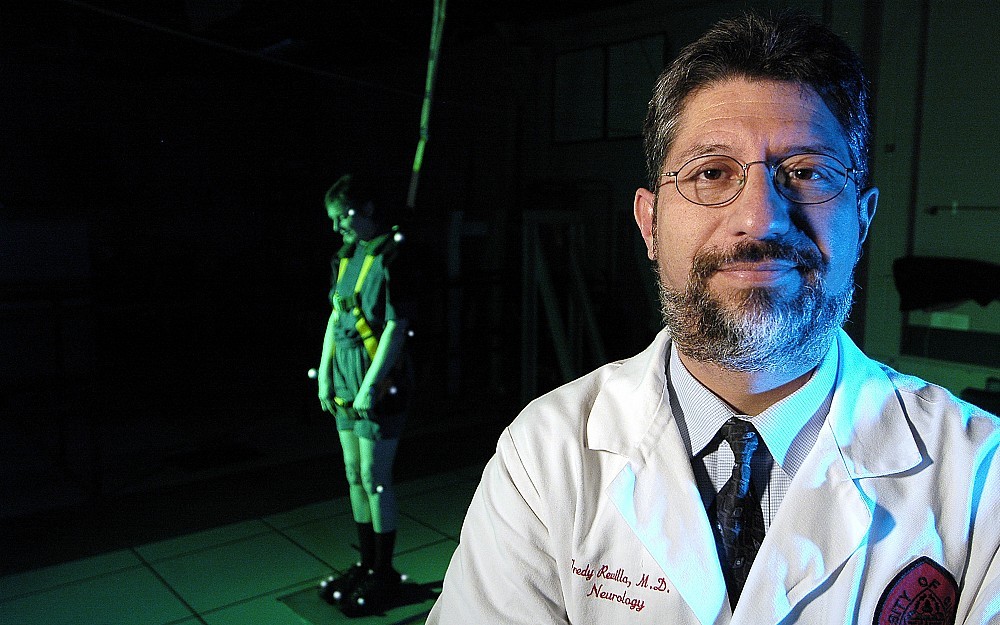
Fredy J. Revilla, M.D., head of the Center for Parkinson's Disease and Movement Disorders at the Neuroscience Institute and assistant professor of neurology at the UC College of Medicine, is principal investigator for the
"Treatments that stop or delay the onset of HD symptoms are the main focus of research efforts in Huntington's disease," Revilla said. "However, starting such neuroprotective treatments at the time of neurological diagnosis may be too late. For this reason, observational studies like COHORT are of critical importance. They allow us to understand the natural history of HD while teaching us how to recognize subtle changes that may precede overt neurological symptoms by many years. People at risk for HD would then be able to start treatments on a timely fashion."
The study will involve adults and children who have clinically diagnosed HD and adults who are a part of an HD family. Individuals who choose to participate will have one study visit every year for as long as they are able or choose to participate. Those who are 18 years of age and older will have blood drawn for genetic testing.
Data from the COHORT study will be collected in databases designed to protect the privacy of all participants.
Eligible individuals are those who have HD or have tested positive for the HD gene; parents, children and siblings of individuals who have HD or have tested positive for the gene; grandparents and grandchildren of those participating in the study who have HD or have tested positive for the gene; and spouses and gene-negative family members of study participants who have HD or have tested positive for the gene.
COHORT is organized and conducted by HSG, a non-profit cooperative group of HD experts from medical centers in North America, Europe and
Huntington's disease typically strikes people between 35 and 55. Although some medications can help alleviate some of HD's symptoms, there is no known cure or medication to help slow or halt the progression of the disease.
Patients or families in the Greater Cincinnati/Northern Kentucky area wishing to enroll in COHORT can contact Maureen Gartner at(513) 558-0018 or maureen.gartner@uc.edu.
Additional information can be obtained from the Huntington Study Group at(800) 487-7671 or www.Huntington-Study-Group.orgor the Huntington Project Web site at www.huntingtonproject.org. The HSG and the Huntington Project are supported by Huntington's Disease Society of
The Neuroscience Institute is a collaborative effort of nine academic departments at the UC College of Medicine, the
Related Stories
Cancer Center plays key role in lab research, clinical trials for new pancreatic cancer drug
September 1, 2026

WLWT and WCPO highlighted the contributions of University of Cincinnati Cancer Center researchers that helped lead to the recent FDA approval of daraxonrasib, a new treatment for pancreatic cancer.
Cancer Center physician receives $150,000 New Investigator Research Grant to study treatment-resistant leukemia
September 1, 2026
The University of Cincinnati Cancer Center’s Sarah Skuli, MD, PhD, received a two‑year, $150,000 Leukemia Research Foundation New Investigator Grant to study TP53‑mutated leukemia, a treatment‑resistant subtype with very poor outcomes.
Heavy social media use linked to depression
August 31, 2026

U.S. News and World Report, Yahoo! News, MSN, USA Today and other national media highlight a new study by the University of Cincinnati and Northwestern University that found a correlation between heavy social media use and depression in adults.