UC HEALTH LINE: Vasectomy Reversal Is Effective, Natural Way to Conceive When Couples Reconsider

CINCINNATIMen whove chosen the most permanent form of birth controlvasectomyand now want to have children should consider surgical reversal before they pursue artificial conception methods, according to a University of Cincinnati (UC) urologist.
Doing so, says Ahmad Hamidinia, MD, could result in faster pregnancy and save the couple thousands of dollarsnot to mention the stress and heartbreak of the multiple failed conception attempts that are commonly associated with artificial methods.
A vasectomy is an elective surgery to make a man unable to conceive children (sterile). During the procedure, a surgeon cuts off and ties the vas deferens, the tube that carries sperm from the testicles for release through the urethra. Once this tube is blocked the man can only ejaculate fluid devoid of sperm, eliminating the risk for pregnancy.
Although the National Institutes of Health estimates that one in six men over 35 choose to have a vasectomy, Hamidinia says that about 10 percent of vasectomized men eventually seek reversal.
The three Dsdivorce, disaster and deathcan put life into perspective and often cause men whove had vasectomies to reconsider fatherhood, says Hamidinia, a professor and urological surgeon at UC. The most common reason my patients seek reversal is remarriage and the desire to have children with their new partners.
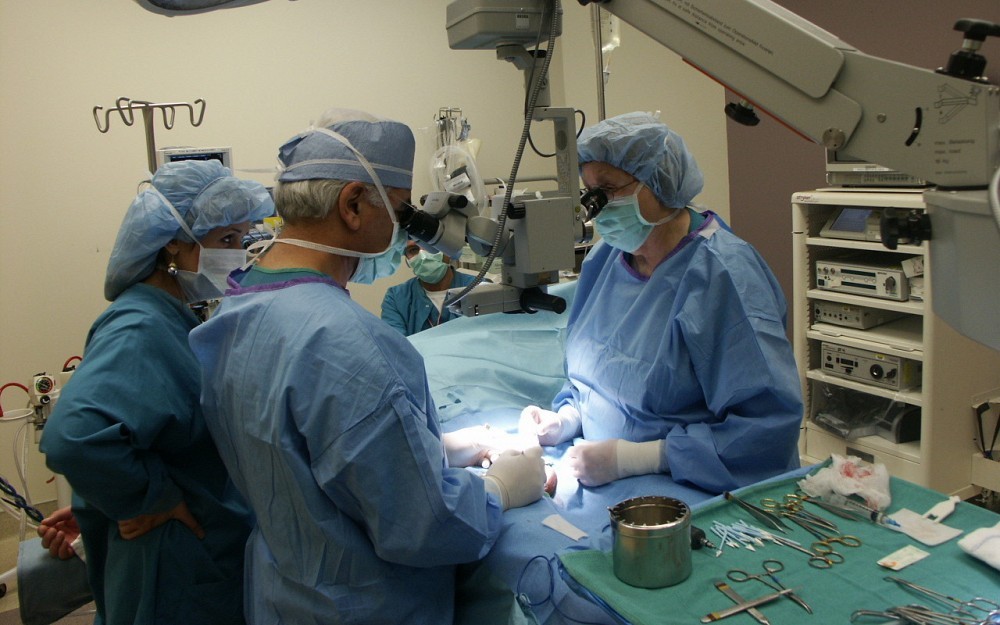
Vasectomy reversalknown medically as vasovasostomyinvolves reattaching the tubes that were cut during the initial surgery to reestablish sperm flow. The procedure is done through small incisions on each side of the scrotum using a microscope and specialized tools. It is performed under general aesthesia and takes 1 ½ to 2 ½ hours. Patients can usually go home the next day and return to normal activitiesincluding sexwithin three weeks.
Not every man is a good candidate for this surgery, though, Hamidinia cautions, because reversing the operation can be complicated and involve more risks than the initial sterilization.
Its important to remember that it takes two to make a baby, so before a man decides to have his vasectomy reversed, a physician should confirm that heand his partnerare fertile and physically capable of conceiving a child naturally, says Hamidinia.
For couples who are capable, he adds, vasectomy reversal yields better results for becoming pregnant and having a live birth than most means of artificial conception. It also gives the couple the option to have more children in the future, without additional costs.
Vasectomy reversal costs about $7,000 (including physician, operating room and anesthesia fees) and results in a 70 percent pregnancy success rate compared with in vitro fertilization, which typically results in about a 25 to 40 percent success rate and can cost up to $12,000 per treatment.
Another key factor influencing pregnancy success after vasectomy reversal is the length of time that has elapsed between initial surgery and reversal.
Men who are more than five or six years out from their initial surgery are more likely to have scar tissue from fluid build-up in the tubes where sperm develops, explains Hamidinia. This causes irreparable damage that has to be carefully bypassed before sperm flow can be reestablished.
There are alternative conception options for men who have had surgical sterilization, including sperm extraction combined with in vitro fertilization. This involves syringing sperm from the testicles, then combining it with the female partners egg in the lab and injecting the fertilized egg into the womans womb.
It isnt just about helping a couple get pregnantits about managing the emotions and expectations involved with having a child, adds Hamidinia. A team of gynecologists and urologists can help the couple make an educated decision about their fertility and choose what will give them the very best chance to conceive a baby.
For more information, visit www.netwellness.org, a collaborative health-information Web site staffed by

Ahmad Hamidinia, MD, is a urological surgeon and professor in UC's department of surgery.
Tags
Related Stories
Cancer Center plays key role in lab research, clinical trials for new pancreatic cancer drug
September 1, 2026

WLWT and WCPO highlighted the contributions of University of Cincinnati Cancer Center researchers that helped lead to the recent FDA approval of daraxonrasib, a new treatment for pancreatic cancer.
Cancer Center physician receives $150,000 New Investigator Research Grant to study treatment-resistant leukemia
September 1, 2026
The University of Cincinnati Cancer Center’s Sarah Skuli, MD, PhD, received a two‑year, $150,000 Leukemia Research Foundation New Investigator Grant to study TP53‑mutated leukemia, a treatment‑resistant subtype with very poor outcomes.
Heavy social media use linked to depression
August 31, 2026

U.S. News and World Report, Yahoo! News, MSN, USA Today and other national media highlight a new study by the University of Cincinnati and Northwestern University that found a correlation between heavy social media use and depression in adults.