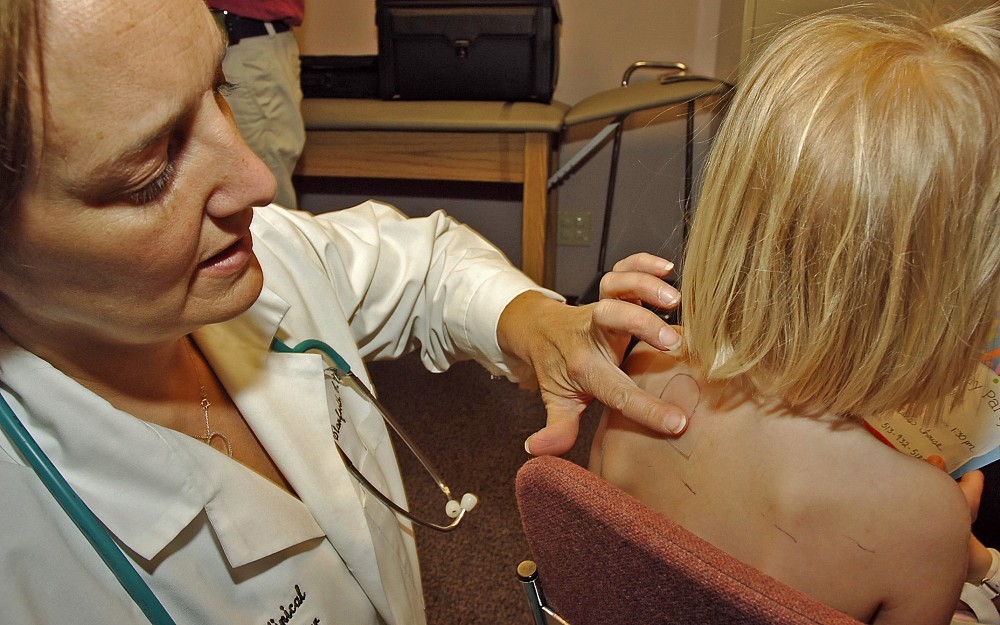
Children of Allergy Sufferers Prone to Same Problem

CINCINNATIInfants whose parents have allergies that produce symptoms like wheezing, asthma, hay fever or hives risk developing allergic sensitization much earlier in life than previously reported, according to a study by Cincinnati researchers.
The study suggests that the current practice of avoiding skin testing for airborne allergens before age 4 or 5 should be reconsidered, so children in this high-risk group can be detected early and monitored for the possibility of later allergic respiratory disease.
Produced by scientists in UCs departments of environmental health and internal medicine and at Cincinnati Childrens
The
Using the skin-prick allergy test, the Swedish group found that in their general populationwhich included children whose parents did not suffer from allergies7 percent had allergic sensitivity at age 1. The Swedes tested five allergens, two of which were food allergens.
The
According to UC epidemiologist Grace LeMasters, PhD, principal investigator for CCAAPS and the lead author of the report, the
Working with LeMasters on the study were David Bernstein, MD, Jocelyn Biagini, James Lockey, MD, Patrick Ryan, Manuel Villareal, MD, all UC, and Gurjit Khurana Hershey, MD, PhD, Cincinnati Childrens.

Grace LeMasters, PhD, is principal investigator of the Cincinnati Childhood Allergy and Air Pollution Study.
Tags
Related Stories
On-site training in Speech & Hearing Clinic sets UC’s programs apart
August 27, 2026
At the University of Cincinnati’s Speech & Hearing Clinic, Doctor of Audiology and Speech-Language Pathology graduate students gain real-world experience while providing free speech and hearing services to the community.
Funding expands UC research into weight gain side effects of bipolar medication
August 26, 2026
University of Cincinnati researchers have been approved for funding by the Patient-Centered Outcomes Research Institute (PCORI) to expand the implementation of healthy lifestyle interventions and metformin prescription to help manage weight gain in overweight or obese youth taking second-generation antipsychotic medications.
One in four NFL players had CTE at death
August 25, 2026

Forbes cites research on concussions and football helmets by the University of Cincinnati in a report that found one in four NFL players had brain damage at death.