Researchers Assess Exposure to Metal Emissions in Marietta

Erin Haynes, DrPH, is leading a pilot study to evaluate about 100 residents from
Manganese exposure is a significant global public health problem that merits further study, says Haynes, assistant professor of environmental health at UC. Its a known neurotoxin, yet the specific neurological effects from environmental exposure have not been fully explored.
According to the U.S. Environmental Protection Agency (EPA), all three metals are being emitted at from
Manganese is a metal used widely in the production of aluminum alloys, batteries and fertilizers. It is also added to unleaded gasoline to reduce engine knocking during combustion.
The problem is that during the refinery process, manganese particles are released into the air, says Haynes. When we breathe them in, they can travel directly to the brain and potentially cause neurological and behavioral disorders. We dont know at what level these effects occur, and we are specifically interested in studying the effects of these metals on infants and children.
A certain amount of manganese is essential for bone metabolism and enzyme reactions in the human body, but research has shown that excessive amounts can lead to a neurological disorder (manganism) similar to Parkinsons disease. Previous research also suggests that exposure to manganese may magnify the toxicity of lead, which can cause stunted intellectual and physical growth in children.
Haynes is recruiting 100 people of all ages who have lived within a 10-mile radius of Eramet for at least five years.
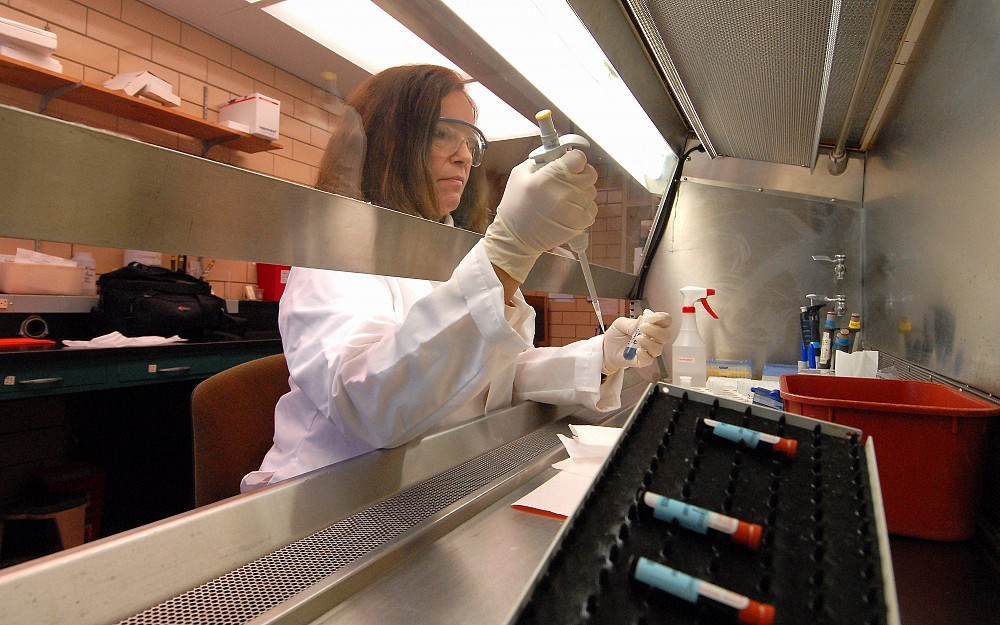
Her team will collect small blood samples from each study participant and analyze them for the metals manganese, lead and chromium. The researchers will also collect hair samples for manganese testing.
Researchers will ask an additional 50 study participants to participate in a postural sway test to measure their ability to maintain balance. These participants will complete a brief health survey and have their height and weight measured. This data will be used to help determine whether there is a correlation between levels of metals in the blood and the bodys ability to maintain balance.
We want to determine the extent of metal exposure in this community, adds Haynes. Data from this pilot study will be used to justify a larger study of the
UC researchers will collect study data from to on Friday, Oct. 27, and Saturday, Oct. 28, at
This pilot study is supported by grants from the National Institutes of Environmental Health Sciences (NIEHS), EPA and UCs Center for Environmental Genetics.
For more information on enrolling in this study, contact Stephanie Wessel at (513) 558-5816 or stephanie.wessel@cchmc.org.
-30-
Tags
Related Stories
Cancer Center plays key role in lab research, clinical trials for new pancreatic cancer drug
September 1, 2026

WLWT and WCPO highlighted the contributions of University of Cincinnati Cancer Center researchers that helped lead to the recent FDA approval of daraxonrasib, a new treatment for pancreatic cancer.
Cancer Center physician receives $150,000 New Investigator Research Grant to study treatment-resistant leukemia
September 1, 2026
The University of Cincinnati Cancer Center’s Sarah Skuli, MD, PhD, received a two‑year, $150,000 Leukemia Research Foundation New Investigator Grant to study TP53‑mutated leukemia, a treatment‑resistant subtype with very poor outcomes.
Heavy social media use linked to depression
August 31, 2026

U.S. News and World Report, Yahoo! News, MSN, USA Today and other national media highlight a new study by the University of Cincinnati and Northwestern University that found a correlation between heavy social media use and depression in adults.