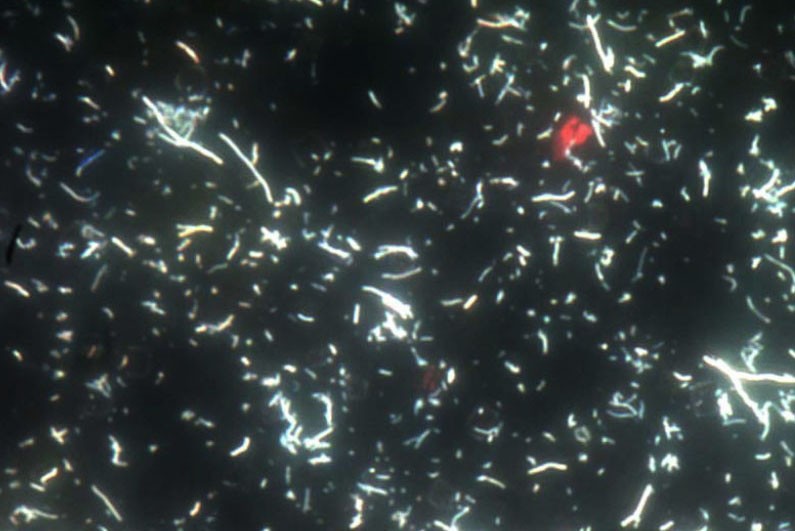
Conference Explores Health Effects of Tiny Engineered Particles

Nanoparticles are microscopic particles engineered to perform specific actions in the body and in manufactured products. The National Science Foundation estimates that by 2015 nanotechnology applications in medications and consumer products will have a more than $1 trillion impact on the global economy and will employ 2 million workers.
The Cincinnati meeting, the International Conference on Nanotechnology, Occupation Health and Environmental Health and Safety: Research to Practice, will be hosted by the University of Cincinnati (UC) and National Institute of Occupational Safety and Health (NIOSH) from Monday, Dec. 4, through Thursday, Dec. 7, at the
Researchers believe nanotechnology applicationssuch as tumor-targeting nanosensors and new drug therapiesmay help prevent, detect and treat human diseases, but they may also lead to unintended health risks.
Currently, the health effects of the nanoparticle life cyclestarting when the particle is manufactured up to when it is disposed ofare not well understood.
Nanotechnology is an emerging science, so we still have a lot of research to do before we fully understand its potential health and safety implications, explains Judy Jarrell, EdD, professor of environmental health at UC. We need to know what happens after these products are used and disposed of, so we can identify and control any harmful effects they may have on humans or the environment.
Guest speakers will discuss the latest scientific research on how nanoparticles enter the body and the correlating health effects, as well as current nanotechnology practices and how workplace exposures can be assessed and controlled. Speakers will also address the legal and regulatory ramifications of nanotechnology.
For scientists, says John Howard, MD, director of NIOSH, this is a rare opportunity to meet in a dedicated forum to discuss new information, research strategies and pathways for moving research to practice. For practitioners, the conference will offer the latest insights into interim best practices for managing nanomaterials in the workplace and controlling exposures.
Anyone interested in the potential health and safety effects of nanotechnologyincluding scientists, industry representatives and clinicianscan attend the conference.
Registration costs $295 for all four days, or $195 for a single day. Reservations can be made by calling (513) 558-1810 or by e-mail at univconf@uc.edu.
For full conference details, visit www.uc.edu/noehs.
Conference sponsors include the University of Cincinnati NIOSH Education & Research Center, U.S. Air Force Office for Scientific Research, the U.S. Environmental Protection Agency, the American Industrial Hygiene Association, the National Science Foundation, The Ohio State University, Ohio University and TSI.
Tags
Related Stories
On-site training in Speech & Hearing Clinic sets UC’s programs apart
August 27, 2026
At the University of Cincinnati’s Speech & Hearing Clinic, Doctor of Audiology and Speech-Language Pathology graduate students gain real-world experience while providing free speech and hearing services to the community.
Funding expands UC research into weight gain side effects of bipolar medication
August 26, 2026
University of Cincinnati researchers have been approved for funding by the Patient-Centered Outcomes Research Institute (PCORI) to expand the implementation of healthy lifestyle interventions and metformin prescription to help manage weight gain in overweight or obese youth taking second-generation antipsychotic medications.
One in four NFL players had CTE at death
August 25, 2026

Forbes cites research on concussions and football helmets by the University of Cincinnati in a report that found one in four NFL players had brain damage at death.