Sunflower Revolution Bike Ride Nets $300,000 for Parkinson s Research

The Sunflower Revolution III fundraiser netted $300,000 for Parkinsons research and wellness programs, the Davis Phinney Foundation, the Neuroscience Institute at the
The Denver-based Davis Phinney Foundation, which hosted the Sunflower Revolution gala and bike ride in October, will donate the funds in the form of grants to Neuroscience Institute researchers working in basic-science laboratories and clinical settings.
Cycling legend Davis Phinney, who in 1986 became the first American to win a stage of the Tour de France, was diagnosed with early-onset Parkinsons at age 40. He assumed the role of Parkinsons advocate with the formation of his foundation in 2004.
Were very pleased with the support and generosity demonstrated by the
John Tew, MD, clinical director of the Neuroscience Institute, thanked the institute, the Davis Phinney Foundation and the Greater Cincinnati community for their important team effort.
The Sunflower Revolution and related events have raised $540,000 for Parkinson's programs since 2004. Earlier this year the Davis Phinney Foundation named the Neuroscience Institute and
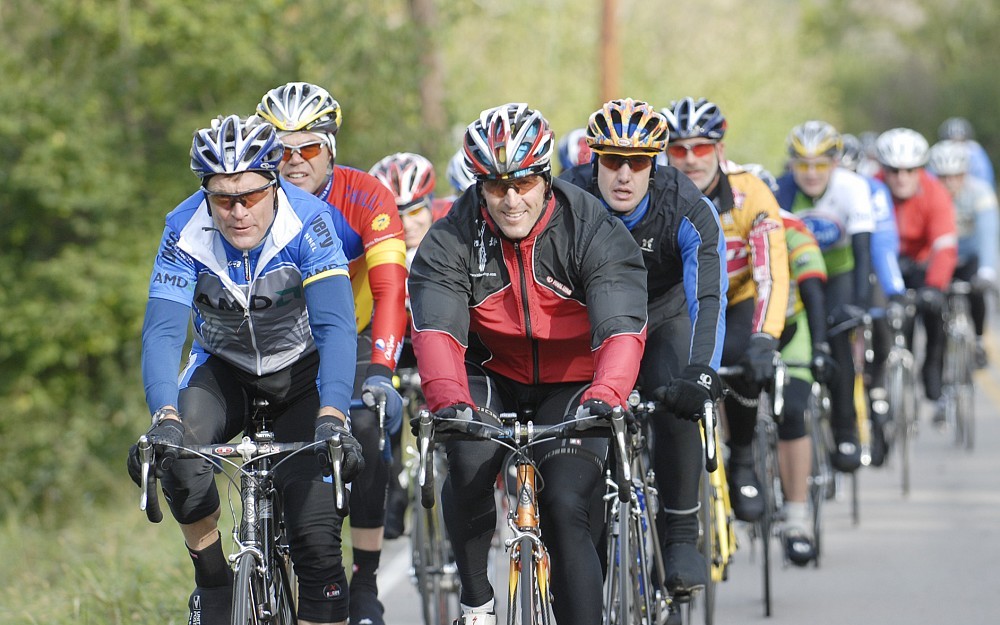
A three-day event, the Sunflower Revolution featured a gala, an educational symposium, and bike rides of 62 and 25 miles.
An estimated 1.5 million Americans live with Parkinsons disease, a degenerative neurological disorder involving the death of dopamine-producing nerve cells deep within the brain. Parkinsons affects one of every 100 people over the age of 60, and 50,000 new cases are diagnosed each year. As yet there is no cure for Parkinsons, and physicians are unable to slow or halt its progression.
A regional center of excellence at the University of Cincinnati and University Hospital, the Neuroscience Institute is dedicated to patient care, research, education and the development of new treatments for stroke, brain and spinal tumors, epilepsy, multiple sclerosis, trauma and Parkinsons and Alzheimers disease.
Tags
Related Stories
Cancer Center plays key role in lab research, clinical trials for new pancreatic cancer drug
September 1, 2026

WLWT and WCPO highlighted the contributions of University of Cincinnati Cancer Center researchers that helped lead to the recent FDA approval of daraxonrasib, a new treatment for pancreatic cancer.
Cancer Center physician receives $150,000 New Investigator Research Grant to study treatment-resistant leukemia
September 1, 2026
The University of Cincinnati Cancer Center’s Sarah Skuli, MD, PhD, received a two‑year, $150,000 Leukemia Research Foundation New Investigator Grant to study TP53‑mutated leukemia, a treatment‑resistant subtype with very poor outcomes.
Heavy social media use linked to depression
August 31, 2026

U.S. News and World Report, Yahoo! News, MSN, USA Today and other national media highlight a new study by the University of Cincinnati and Northwestern University that found a correlation between heavy social media use and depression in adults.