UC HEALTH LINE: Battling a Painful Condition

Stanford, dually trained in family medicine and psychiatry, treats patients for the chronic condition known as fibromyalgia.
Some doctors dont even believe fibromyalgia exists. And many who believe its a real condition still disagree about what causes it and who should be responsible for managing and treating it. But one things for sure: Patients who have fibromyalgia are suffering.
Affecting 2 to 4 percent of the population, fibromyalgia is seven times more likely to show up in women than in men. There is no blood test for fibromyalgia, and this misunderstood condition is often mistaken for lupus, multiple sclerosis or rheumatoid arthritis. So these diseases must be ruled out before fibromyalgia is diagnosed.
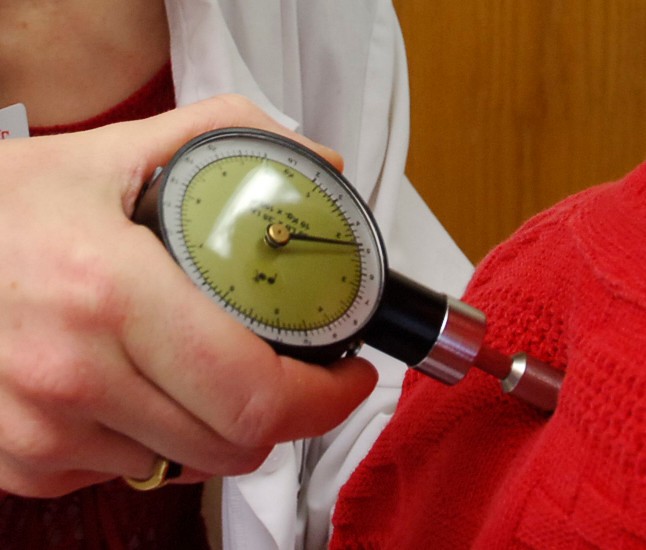
On the surface, fibromyalgia is virtually invisible. Patients describe intense pain throughout the body. Some describe it as an ache or a tingling or shocking feeling. Others, Stanford says, have described what feels like fire or burning in the connective tissue under their skin.
The painful condition often carries with it other symptoms, including fatigue, depression, anxiety, headaches, sleep disturbances, stiffness, irritable bowel syndrome, restless legs, forgetfulness and difficulty concentrating.
Many people are able to develop coping strategies to deal with the pain, but have a hard time handling the fatigue or depression that often comes along with fibromyalgia, says Stanford.
At UCs Womens Health Research Program (WHRP)
And because shes based in the WHRP, her patients have access to cutting-edge research trials that test a variety of medications for fibromyalgia.
Stanford sees both adolescents and adults with fibromyalgia. She says its particularly tough on teens.
They feel horrible, she says. Many times it keeps them from enjoying the activities they love. The age of the person really has a lot to do with how fibromyalgia affects their lives.
Stanford sees her background in psychiatry as a major advantage for patients seeking treatment.
Because many fibromyalgia symptoms, including pain, are helped by medications used to treat certain neurological and psychiatric conditions linked to changes in the brains chemistry, knowing more about these types of drugs, their dosing and any interactions is extremely important.
For more information about the treatment center, call (513) 475-9477.

Fibromyalgia expert Shay Stanford, MD
Tags
Related Stories
Cancer Center plays key role in lab research, clinical trials for new pancreatic cancer drug
September 1, 2026

WLWT and WCPO highlighted the contributions of University of Cincinnati Cancer Center researchers that helped lead to the recent FDA approval of daraxonrasib, a new treatment for pancreatic cancer.
Cancer Center physician receives $150,000 New Investigator Research Grant to study treatment-resistant leukemia
September 1, 2026
The University of Cincinnati Cancer Center’s Sarah Skuli, MD, PhD, received a two‑year, $150,000 Leukemia Research Foundation New Investigator Grant to study TP53‑mutated leukemia, a treatment‑resistant subtype with very poor outcomes.
Heavy social media use linked to depression
August 31, 2026

U.S. News and World Report, Yahoo! News, MSN, USA Today and other national media highlight a new study by the University of Cincinnati and Northwestern University that found a correlation between heavy social media use and depression in adults.