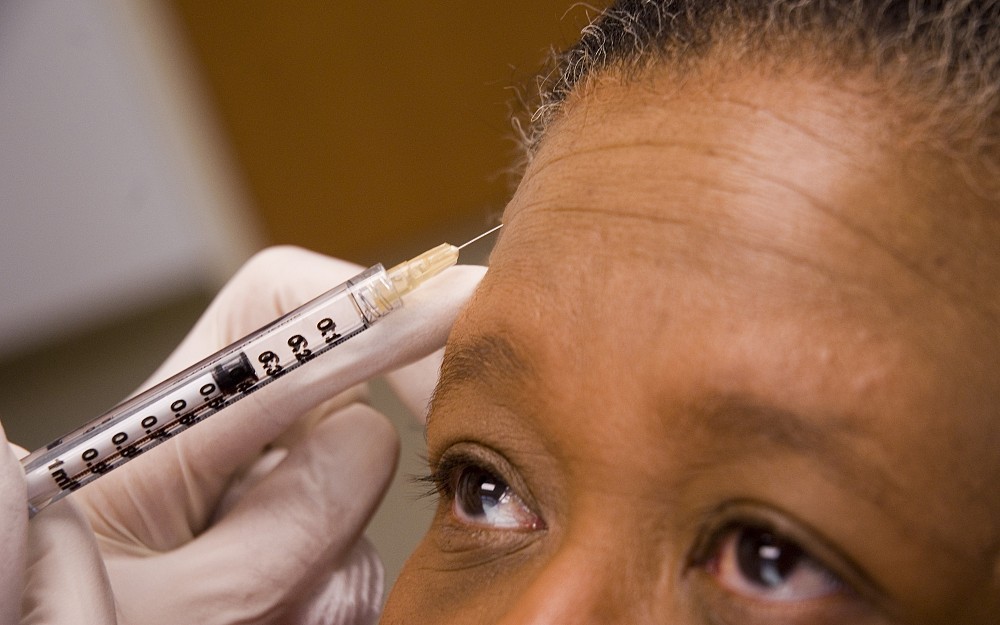
UC HEALTH LINE: Botox It s Not Just a Cure for Wrinkles

Botox is a great method to help erase signs of aging in the skin, but it can also be a good solution for people with other medical issues that dont respond to traditional therapy, explains Lana Hawayek, MD, a board-certified dermatologist and assistant professor at the University of Cincinnati (UC).
Hawayek offers cosmetic and therapeutic Botox injections to her patients through the Cosmetic Dermatology Clinics at University Pointe and Montgomery.
Known medically as botulinum (BOTT-you-lie-num) toxin, Botox is approved by the Food and Drug Administration to treat migraine headaches and excessive sweating, in addition to several cosmetic applications aimed at maintaining the youthful appearance of facial skin.
For wrinkle correction, Botox is injected directly into specific muscles to block neurotransmitters that cause the muscles to contract. The injection temporarily relaxes those specific muscles and softens of the overlying wrinkles. This effect can last up to four months.
For the more than 1 million Americans with axillary hyperhidrosisa condition that causes people to sweat four times more than normala treatment of Botox injections into the underarm sweat glands can effectively stop excessive sweating for up to one year. The treatment will also reduce excessive sweating in other areas, such as the palms and soles.
Botox can also provide short-term relief to people with incapacitating migraine and tension headaches. A treatment cycle typically consists of 10 to 25 injections in the head, neck and shoulders. Relief from the headaches usually occurs within minutes of the treatment, and may last up to four months. Physicians believe the drug works by inhibiting some of the neurotransmitters that cause headache pain.
Hawayek has specialized training in cosmetic dermatologic surgery and lasers, which allows her to offer a wide array of minimally invasive surgeries and procedures designed to refresh, rejuvenate and restore the skin.
In addition to Botox injections for wrinkles, excessive sweating and headaches, the UC Cosmetic Dermatology Clinic offers:
· Cosmetic consultations, for improving the overall condition of the skin and facial rejuvenation
· Injectable filler treatments, (including collagen and hyaluronic acid) for the improvement of wrinkles
· Chemical peeling, to improve the surface quality of the skin (dark spots, acne, wrinkles, scars and other conditions)
· Laser surgery, including hair removal, treatment of vascular conditions and scars, removal of pigmented skin lesions and tattoos, and laser skin resurfacing
· Sclerotherapy, to eliminate superficial veins (spider veins)
· Tumescent liposuction, to remove fat from problem areas of the face or body
· Body-fat harvesting and transfer (autologous fat grafting)
· Ear lobe repairs
· Cyst, benign tumor and mole excisions
· Hair transplants, and
· Skin cancer surgery
Hawayek sees patients at University Pointe in
For more information on cosmetic dermatology procedures, visit www.netwellness.org, a collaborative health-information Web site staffed by
Hawayek has no financial interest in Allergan Medical, which markets Botox.
Tags
Related Stories
Cancer Center plays key role in lab research, clinical trials for new pancreatic cancer drug
September 1, 2026

WLWT and WCPO highlighted the contributions of University of Cincinnati Cancer Center researchers that helped lead to the recent FDA approval of daraxonrasib, a new treatment for pancreatic cancer.
Cancer Center physician receives $150,000 New Investigator Research Grant to study treatment-resistant leukemia
September 1, 2026
The University of Cincinnati Cancer Center’s Sarah Skuli, MD, PhD, received a two‑year, $150,000 Leukemia Research Foundation New Investigator Grant to study TP53‑mutated leukemia, a treatment‑resistant subtype with very poor outcomes.
Heavy social media use linked to depression
August 31, 2026

U.S. News and World Report, Yahoo! News, MSN, USA Today and other national media highlight a new study by the University of Cincinnati and Northwestern University that found a correlation between heavy social media use and depression in adults.