UC HEALTH LINE: Spring Allergies Expected to Be Worse This Year

Nearly 40 million people suffer from seasonal allergies, also known as hay fever, with symptoms such as a stuffy, runny nose, itchy eyes, and sneezing and wheezing.
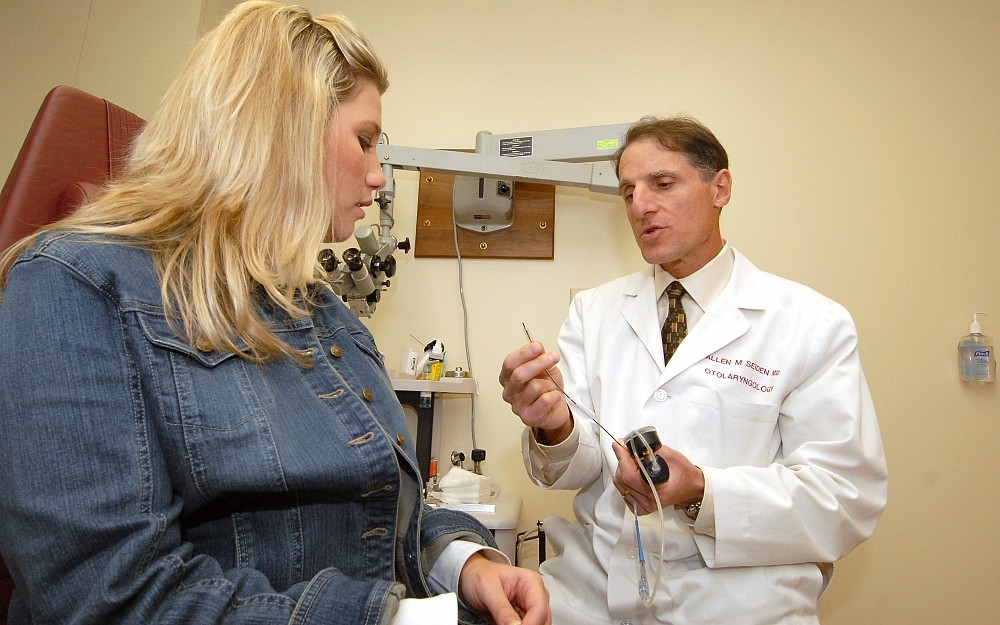
We actually expect seasonal allergies to be worse this year for many people, says Allen Seiden, MD, an otolaryngologist (ear, nose and throat specialist) at the
Seiden says that although the cold winter froze trees, plants and grass and halted their growth, heavy rain and warmer weather came early this year and sped up pollen production, especially in trees. Pollen, the dust-like, male reproductive part of plants, is dispersed into the air as trees and plants begin to bloom. Trees typically pollinate in late March and early April, followed by grass later in the season.
Seiden recommends taking the following steps to help reduce your exposure and to control symptoms:
- Since the peak hour for pollen dispersal is 510 a.m., try to avoid the outdoors during that time. If you do need to be outside, wear a face mask.
- To help remove pollen from skin and hair, shower immediately after being outdoors, and especially before going to bed.
- Wash clothing that has been worn outside in hot water. Do not dry it outdoors.
- Wash bedding in hot water once a week and avoid hanging it outside.
- Keep the windows and doors of your home and car closed. Use an air conditioner to cool the air, not window or attic fans.
Its important for people to know what theyre actually allergic to, so an allergist or otolaryngologist can accurately diagnose and help them manage their condition, says Seiden.
Seiden says treatment can include antihistamines, decongestants, prescription nasal corticosteroids and/or immunotherapy (allergy shots).
What works best for one person may not be as effective for another, says Seiden. Thats why its important to see a doctor before your allergies get out of control.
Seiden is one of nearly 150 UC experts answering health-related questions from consumers on NetWellness, a collaborative, health-information Web site staffed by
Tags
Related Stories
Cancer Center plays key role in lab research, clinical trials for new pancreatic cancer drug
September 1, 2026

WLWT and WCPO highlighted the contributions of University of Cincinnati Cancer Center researchers that helped lead to the recent FDA approval of daraxonrasib, a new treatment for pancreatic cancer.
Cancer Center physician receives $150,000 New Investigator Research Grant to study treatment-resistant leukemia
September 1, 2026
The University of Cincinnati Cancer Center’s Sarah Skuli, MD, PhD, received a two‑year, $150,000 Leukemia Research Foundation New Investigator Grant to study TP53‑mutated leukemia, a treatment‑resistant subtype with very poor outcomes.
Heavy social media use linked to depression
August 31, 2026

U.S. News and World Report, Yahoo! News, MSN, USA Today and other national media highlight a new study by the University of Cincinnati and Northwestern University that found a correlation between heavy social media use and depression in adults.