Better Seizure Control Seen Among Patients Treated at Epilepsy Centers

Epilepsy patients treated in a specialized center experienced significantly fewer seizures than those cared for at general neurology facilities, according to University of Cincinnati (UC) researchers.
An abstract presented May 1, 2007, at the American Academy of Neurology meeting by UC epileptologist David Ficker, MD, and neurology resident Tarek Zakaria, MD, shows that 69.1 percent of epilepsy patients managed at Cincinnati Epilepsy Center remained seizure free for one year. Prior to treatment at the center, only 48.2 percent of patients experienced one year without seizures.
Seizure frequency also decreased from 4.9 seizures per month to 2.2 following treatment by an epileptologist.
Of 56 patients originally treated at the centeraveraging 39.2 years old and 14.4 years since diagnosis with epilepsy53 were evaluated in a follow-up visit.
Seizures can really affect quality of life, said Ficker, associate professor of neurology at UC and a member of the Neuroscience Institute at UC and University Hospital. Successfully controlling seizures can improve relationships and may allow people the opportunity to gain employment and driving privileges that they might not have had before.
In 2001, following managed-care changes at a large private-practice neurology group in Cincinnati, more than 50 epilepsy patients turned to the Cincinnati Epilepsy Center for treatment.
Ficker, medical director of the centers EEG Lab and Epilepsy Monitoring Unit, saw this influx of patients as an ideal opportunity for gathering key outcomes data that hadnt existed before.
We have little data comparing seizure-control success of patients treated at specialized epilepsy centers versus general neurology practices, said Ficker. And because this particular patient group wasnt specifically referred to us for treatment, we saw it as a great opportunity to evaluate outcomes and continued improvement.
The benefits of treatment at an epilepsy centerbeyond being seen by epilepsy specialistssays Ficker, include more opportunities to be involved in neuroimaging research and the testing of novel medications for seizure control.
Epilepsy is a neurological disorder that causes dysfunction in the electrical system within the brainleading to seizures. Seizures take on many forms, from brief moments of unconsciousness to convulsions. Epilepsy can be treated with medication, but if medication alone does not control seizures, other treatment options are available, including surgery and vagus nerve stimulation. Epilepsy surgery is only available at specialized epilepsy centers.
According to the Epilepsy Foundation, more than 3 million Americans are living with epilepsy and each year, 200,000 will develop the disorder. Epilepsy affects people of all ages, races and ethnicities.
Coauthors for the study include Jennifer Cavitt, MD, Michael Privitera, MD, Jerzy Szaflarski, MD, PhD, and Tarek Zakaria, MD.
UC partnered with the Health Alliance of Greater Cincinnati to establish the Neuroscience Institute in 1998, as part of an effort to build upon its national reputation for excellence in neuroscience. The institute includes or is developing research centers that focus on the main diseases of the brain and nerves, such as stroke, brain tumors, brain trauma, Parkinsons, Alzheimers, epilepsy, ALS and multiple sclerosis.
The Cincinnati Epilepsy Center celebrates its 20th anniversary in 2007. Rated a level IVthe highest rating for epilepsy careby the National Association of Epilepsy Centers, the center provides evaluation and coordinated medical and surgical treatment of epilepsy.

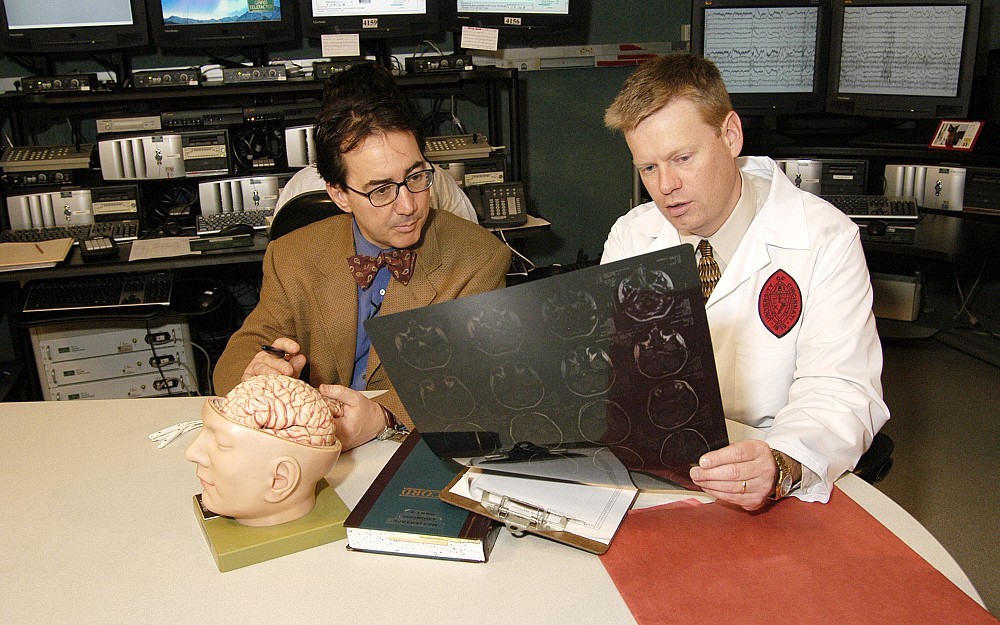
David Ficker, MD
Tags
Related Stories
Cancer Center plays key role in lab research, clinical trials for new pancreatic cancer drug
September 1, 2026

WLWT and WCPO highlighted the contributions of University of Cincinnati Cancer Center researchers that helped lead to the recent FDA approval of daraxonrasib, a new treatment for pancreatic cancer.
Cancer Center physician receives $150,000 New Investigator Research Grant to study treatment-resistant leukemia
September 1, 2026
The University of Cincinnati Cancer Center’s Sarah Skuli, MD, PhD, received a two‑year, $150,000 Leukemia Research Foundation New Investigator Grant to study TP53‑mutated leukemia, a treatment‑resistant subtype with very poor outcomes.
Heavy social media use linked to depression
August 31, 2026

U.S. News and World Report, Yahoo! News, MSN, USA Today and other national media highlight a new study by the University of Cincinnati and Northwestern University that found a correlation between heavy social media use and depression in adults.