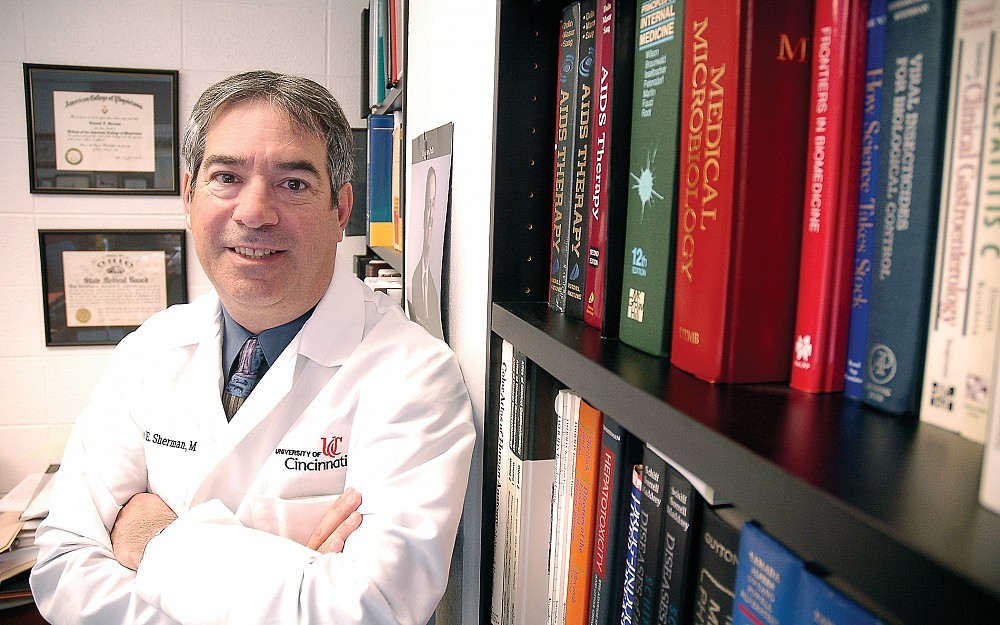
UC HEALTH LINE: New Drugs May Halt Rise In Hepatitis

According to UC expert Kenneth Sherman, MD, of the division of digestive diseases, about 40,000 new cases of hepatitis Cthe most common type of hepatitisare reported each year. Most of those infected may not know it until late in the illness.
It may take 20 to 30 years after contracting the illness for symptoms to appear,
May is National Hepatitis Awareness Month, and
Hepatitis C is spread mostly through bodily fluid and blood exposure due to unprotected sex and using intravenous drugs,
Those at risk who should seek screening include:
- Intravenous drug users (even if the use was one time many years prior)
- People who have multiple sex partners
- Recipients of an organ transplant or blood transfusion prior to 1992
- Those exposed to contaminated blood, including health care workers and children with infected parents
Medications used against the HIV virus often give patients a sense of complacency, and they feel its safe to have unprotected sex, he said. As a result, the bath houses and parties where men once met for sex with multiple partners are becoming popular again.
There is no confirmed cure for hepatitis C, but UC researchers are currently involved in several clinical trials testing new medication combinations that could improve treatment response.
We know the genetic structure of hepatitis C,
He said the more commonly used hepatitis C drugs on the market cause a variety of side effects, including fever and aches as well as anemia, rashes and nausea.
Over the last 15 years weve moved from hepatitis C virus cure rates of 5 to 6 percent to nearly 50 percent today,
Tags
Related Stories
Cancer Center plays key role in lab research, clinical trials for new pancreatic cancer drug
September 1, 2026

WLWT and WCPO highlighted the contributions of University of Cincinnati Cancer Center researchers that helped lead to the recent FDA approval of daraxonrasib, a new treatment for pancreatic cancer.
Cancer Center physician receives $150,000 New Investigator Research Grant to study treatment-resistant leukemia
September 1, 2026
The University of Cincinnati Cancer Center’s Sarah Skuli, MD, PhD, received a two‑year, $150,000 Leukemia Research Foundation New Investigator Grant to study TP53‑mutated leukemia, a treatment‑resistant subtype with very poor outcomes.
Heavy social media use linked to depression
August 31, 2026

U.S. News and World Report, Yahoo! News, MSN, USA Today and other national media highlight a new study by the University of Cincinnati and Northwestern University that found a correlation between heavy social media use and depression in adults.