Ultrasound Prodedures Coupled to Improve Lung Cancer Care

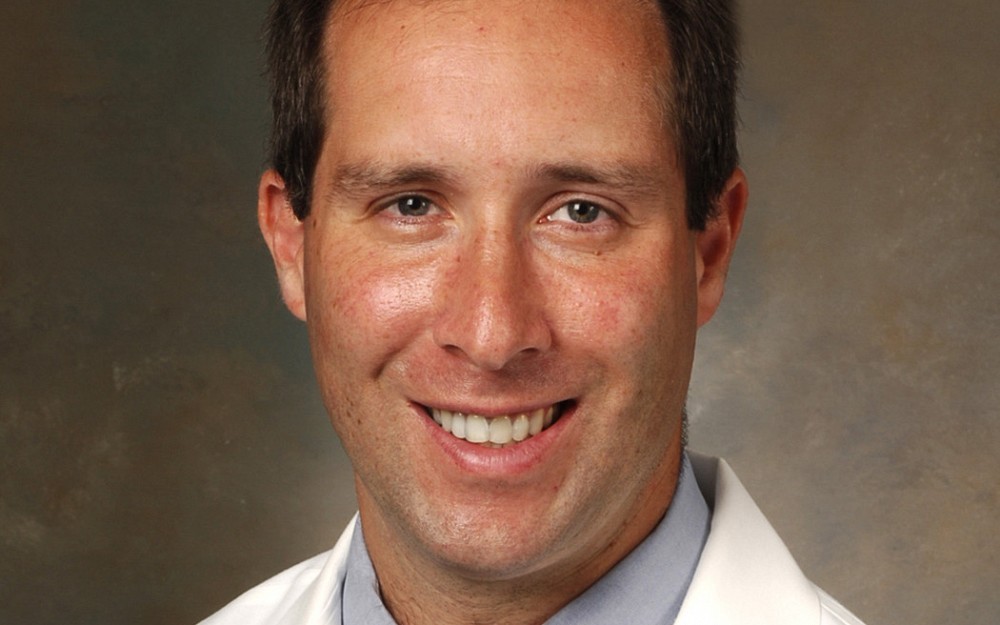
James Knepler, MD, is using endobronchial ultrasound (EBUS) via the airway walls to examine the mediastinum (media-STY-num)the cavity containing the lungs and heart that lung cancer often spreads toin order to obtain biopsy tissue.
His collaborator Nathan Schmulewitz, MD, is heading a clinical trial that will couple EBUS with endoscopic ultrasound (EUS)which examines the mediastinum through the esophagus. The EBUS and EUS procedures will be done on the same day to improve the chances of locating the cancer. Both are performed on an outpatient basis.
According to the American Lung Association, lung cancer is the leading cancer killer in both men and women in the
Knepler, assistant professor of pulmonary medicine, and other UC colleagues are the only physicians performing EBUS in the region.
Before the introduction of EBUS, Knepler said doctors had to perform blind biopsies through the wall of the trachea using a small needle.
Now, we can actually see where the mass is and stick it the first time, he said. EBUS increases our yield and our accuracy.
Schmulewitz, assistant professor of digestive diseases, said coupling EBUS and EUS will help locate cancer in patients.
This study is important, he said. By the time most lung cancer is found, its often advanced to other areas of the body, and small tumors dont usually cause symptoms.
Schmulewitz said in many cases, cancer has spread to lymph nodes in the mediastinum by the time medical symptoms are recognized. Although some of these patients remain good candidates for surgical removal of tumors, most would not benefit from surgery unless the cancer can be shrunk with chemotherapy.
Once lung cancer spreads, the chances of curing the patient with surgery are slim, Schmulewitz explained.
Knepler said coupling the procedures will save people from having to undergo a surgical procedure called a mediastinoscopy to see inside the mediastinum.
Oftentimes we can make a diagnosis without a more invasive procedure, he said. We dont want someone to have to go to surgery if it isnt beneficial or necessary.
Schmulewitz said this will be the first study in the
We can possibly save patients a trip to the operating room if we find we cant cure them surgically, he said. We hope these combined technique will give us more accurate results.
Tags
Related Stories
Cancer Center plays key role in lab research, clinical trials for new pancreatic cancer drug
September 1, 2026

WLWT and WCPO highlighted the contributions of University of Cincinnati Cancer Center researchers that helped lead to the recent FDA approval of daraxonrasib, a new treatment for pancreatic cancer.
Cancer Center physician receives $150,000 New Investigator Research Grant to study treatment-resistant leukemia
September 1, 2026
The University of Cincinnati Cancer Center’s Sarah Skuli, MD, PhD, received a two‑year, $150,000 Leukemia Research Foundation New Investigator Grant to study TP53‑mutated leukemia, a treatment‑resistant subtype with very poor outcomes.
Heavy social media use linked to depression
August 31, 2026

U.S. News and World Report, Yahoo! News, MSN, USA Today and other national media highlight a new study by the University of Cincinnati and Northwestern University that found a correlation between heavy social media use and depression in adults.