Preclinical Study Links Gene to Brain Aneurysm Formation

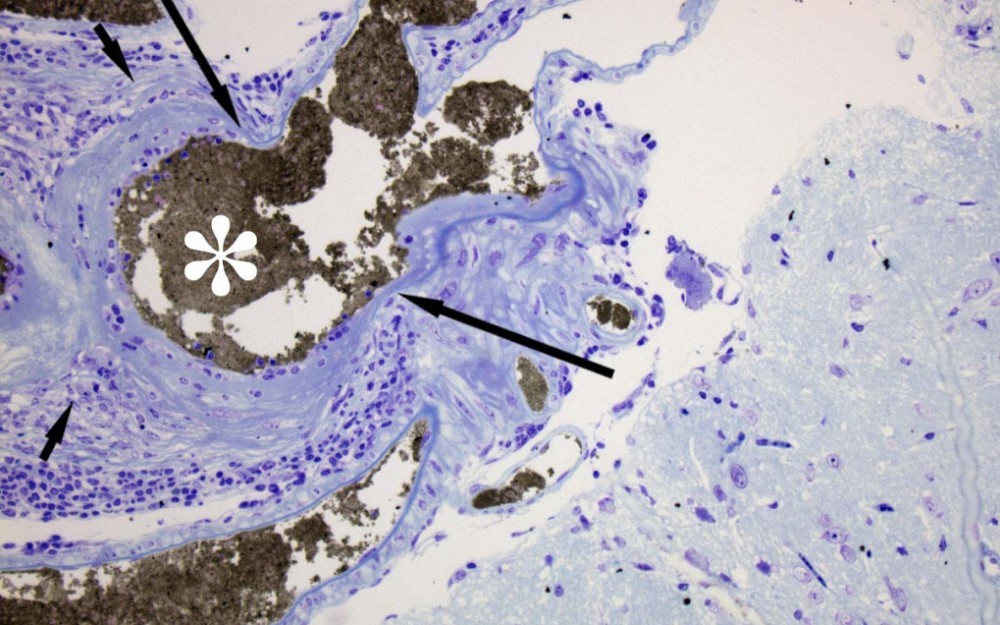
Todd Abruzzo, MD, and his colleagues demonstrated that knocking out a gene known as endothelial nitric oxide synthase (NOS-3) in an animal model led to intracranial aneurysm formation in 33 percent of study subjects.
Scientists say this suggests that the gene may play an important role in the development of intracranial aneurysms.
An aneurysm occurs when a blood vessel weakens and stretches, forming a bulge in the vessel wall that can rupture and hemorrhage. Intracranial arterial aneurysms are bulges that develop in the arteries that carry blood to the brain.
Previous studies have shown that variants of the NOS-3 gene are markers for vascular disease. The gene also plays an important role in remodeling of blood vessels in response to changes in blood flow.
When a vessel experiences increased blood flow, it attempts to reduce the shear stress to even levels by enlarging its luminal caliber through a process known as remodeling. This involves reabsorbing the inner layers of the vessel wall and forming new outer layers to replace them, explains Abruzzo.
Although we dont fully understand the genetic determinants that control an individuals susceptibility to aneurysm formation, he adds, this study is an important clue because it links a known gene with a known function to an increased risk for intracranial aneurysm formation.
Abruzzo says this study supports the idea that the NOS-3 gene is just one step in a complex molecular pathway that links flow-dependent vascular remodeling to intracranial aneurysm formation.
Our findings suggest that if something goes wrong in the vascular remodeling process, it could trigger formation of an aneurysm, he adds.
Abruzzo reports these findings in the August 2007 issue of Current Neurovascular Research.
The UC-led team analyzed 30 female mice bred to suppress (knock out) one of three genes and molecular pathways associated with vascular disease: inducible nitric oxide synthase (NOS-2), endothelial nitric oxide synthase (NOS-3) or the plasminogen activator inhibitor (PAI-1).
To determine whether absence of the genes resulted in an increased rate of aneurysm formation, researchers blocked one of the two carotid arteries that carry blood to the brain. They then examined brain artery samples for signs of aneurysm formation.
The researchers found no indications of aneurysm formation in the PAI-1, NOS-2 or wild type control groups. Mice with the NOS-3 knock out, however, formed intracranial aneurysms.
Collaborators in the study include UC's Ady Kendler, PhD, and Jane Khoury, PhD, Michael Workman, of Springfield Neurological and Spine Institute, Harry Cloft, MD, of Mayo Clinic and the late Robert Apkarian, PhD, of Emory University.
Abruzzo is affiliated with the Neuroscience Institute at UC and University Hospital, a center of excellence that focuses on the main diseases of the brain and nerves such as stroke, brain tumors, brain trauma, Parkinsons and Alzheimers disease, epilepsy, ALS and multiple sclerosis.

Todd Abruzzo, MD, assistant professor of neuroradiology
Tags
Related Stories
Heavy social media use linked to depression
August 31, 2026

U.S. News and World Report, Yahoo! News, MSN, USA Today and other national media highlight a new study by the University of Cincinnati and Northwestern University that found a correlation between heavy social media use and depression in adults.
On-site training in Speech & Hearing Clinic sets UC’s programs apart
August 27, 2026
At the University of Cincinnati’s Speech & Hearing Clinic, Doctor of Audiology and Speech-Language Pathology graduate students gain real-world experience while providing free speech and hearing services to the community.
Funding expands UC research into weight gain side effects of bipolar medication
August 26, 2026
University of Cincinnati researchers have been approved for funding by the Patient-Centered Outcomes Research Institute (PCORI) to expand the implementation of healthy lifestyle interventions and metformin prescription to help manage weight gain in overweight or obese youth taking second-generation antipsychotic medications.