Pulsed Light System Offers Safe Treatment for Common Skin Problems

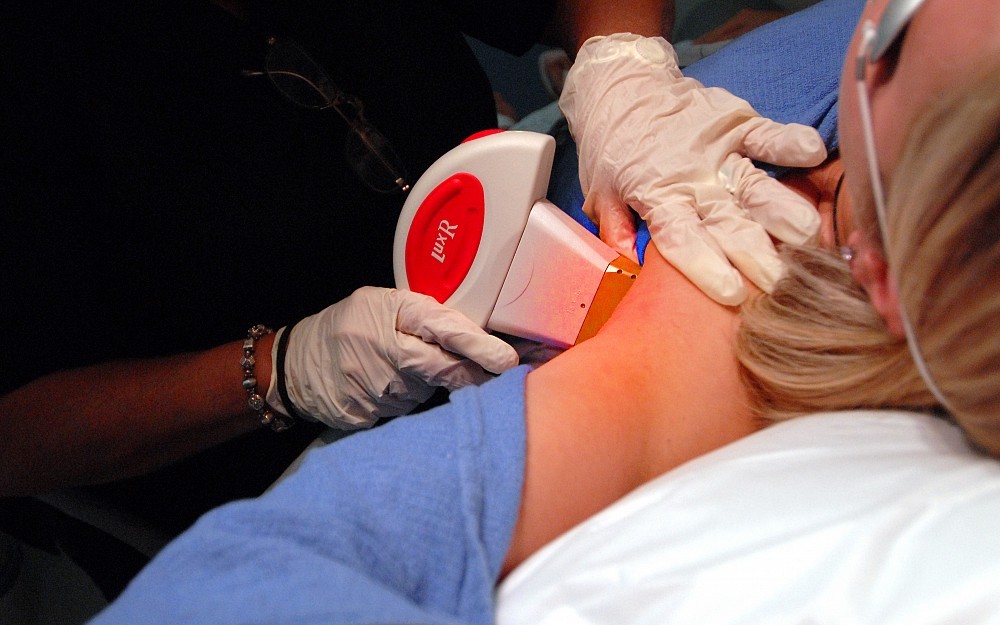
Known as StarLux, this pulsed light system uses specialized handpieces to deliver targeted wavelengths of light effective for treating specific layers of skin.
Pulsed light systems are similar to lasers, but they use a much larger reflective lens, explains Cathy Fricke, clinical skin care specialist with the
During treatment, filtered light is directed at the target skin area and given in a smooth pulse, versus a series of more powerful energy spikes associated with lasers and other treatment systems.
The system incorporates a photon-recycling process that uses mirrors within the individual handpieces to recapture scattered energy. The mirrors then send the energy back to the target area, increasing treatment effectiveness.
Hair reduction is accomplished through concentrated pulses of light that create heat in the hair follicle. The heat loosens the hair and disables the cells responsible for new growth.
For pigment-related issues such as visible veins and sun spots, pulsed light is absorbed and converted to heat by blood in the veins or pigment cells in the skin. This shrinks the vessels and dissolves the cells responsible for abnormal pigmentation.
This is a proven way of improving or eliminating common patient concerns such as prominent capillaries, hemangiomas, undesirable hair growth and benign brown age spots, says John Kitzmiller, MD, assistant professor and director of plastic, reconstructive and hand surgery at UC. Patients experience only minor discomfort during treatmentit feels like a series of little rubber band snapsand recovery time is minimal.
Most patients experience a mild sunburn-like sensation that lasts about a day, but the treatment area must be protected from the sun for about four weeks.
UC physicians are currently using the system to treat patients for hair reduction, sun damage, minor capillaries, hemangiomas and rosacea.
On Thursday, Sept. 13, people can learn more about clinical skin care options by attending Night of Beauty, a free informational open house. The event takes place from 5:30 p.m. to 8:30 p.m. at Cosmetic Surgery at University Pointe,
Attendees can speak one-on-one with the UC team of board-certified cosmetic surgeons and learn more about cosmetic procedures, including clinical skin care, breast enhancement, face-lifts, body contouring and other procedures.
Registration is required and can be made by calling (513) 475-8886. For more information about services available at the Cosmetic Surgery at University Pointe facility, visit www.cosmeticsurgeryuc.com.
For general information on cosmetic surgery procedures, visit www.netwellness.org, a collaborative health-information Web site staffed by

John Kitzmiller, MD, chief of plastic, reconstructive and hand surgery at UC.
Tags
Related Stories
On-site training in Speech & Hearing Clinic sets UC’s programs apart
August 27, 2026
At the University of Cincinnati’s Speech & Hearing Clinic, Doctor of Audiology and Speech-Language Pathology graduate students gain real-world experience while providing free speech and hearing services to the community.
Funding expands UC research into weight gain side effects of bipolar medication
August 26, 2026
University of Cincinnati researchers have been approved for funding by the Patient-Centered Outcomes Research Institute (PCORI) to expand the implementation of healthy lifestyle interventions and metformin prescription to help manage weight gain in overweight or obese youth taking second-generation antipsychotic medications.
One in four NFL players had CTE at death
August 25, 2026

Forbes cites research on concussions and football helmets by the University of Cincinnati in a report that found one in four NFL players had brain damage at death.