Parkinson's Center Established With $5.5 Million Gift

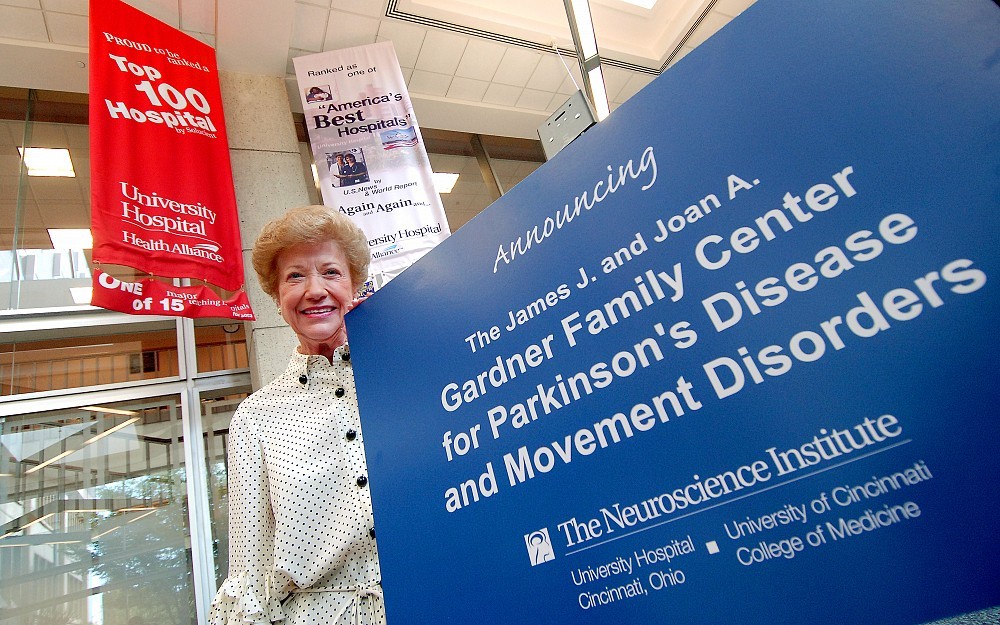
CINCINNATIA $5.5 million gift has established the James J. and
The gift to the University Hospital Foundation from the James J. and Joan A. Gardner Family Foundation will endow clinical and research programs while accelerating collaboration among scientists and physicians.
The Gardner Family endowment will propel Parkinsons disease research and care in
The center treats 2,000 patients from the region and beyond and conducts numerous laboratory and clinical research projects. In 2006 it was named the first national
The
As good stewards of our resources,
UC President Nancy Zimpher noted the wonderful generosity of the
The commitment shown by Mr. and Mrs. Gardner will greatly affect the lives of many people in our region and will be a lasting legacy to them in our community. We are proud that they have put their trust in us to advance this important effort, Zimpher said.
Joseph Broderick, MD, research director of the Neuroscience Institute and chair of the UC department of neurology, said the gift guarantees the centers continued rise in national stature.
We have assembled a world-class team of clinicians and researchers in
The
The announcement was made at the start of the fourth annual Sunflower Revolution, the largest Parkinsons event in the region. In addition to a fundraising gala and bike ride, the Sunflower Revolution provides a free symposium and expo for patients and physicians. It also brings together scientists from the national
Clinicians at the
In an effort to understand how the disease begins and progressesand with the ultimate goal of curing the diseaselaboratory researchers at the
- cellular replacement therapy, including transplantation of dopamine-producing neurons;
- examination of the accumulation of markers of brain cell degeneration as they change over a lifespan;
- examination of exacerbated dopamine cell loss in a rodent model of combined depression and Parkinsons disease;
- delivery of novel, beneficial growth factors to the precise region of the brain that degenerates in Parkinsons disease; and
- study of a dual-risk model, in which an animal exposed to a toxin early in life develops Parkinsons over the course of a long lifespan.
The
The Neuroscience Institute also is dedicated to the treatment of stroke, brain and spinal tumors, epilepsy, traumatic brain and spinal injury, Alzheimers disease, disorders of the senses (swallowing, voice, hearing, pain, taste and smell), and psychiatric conditions (bipolar disorder, schizophrenia and depression).

John Tew, MD, professor of neurosurgery.

Joseph Broderick, MD
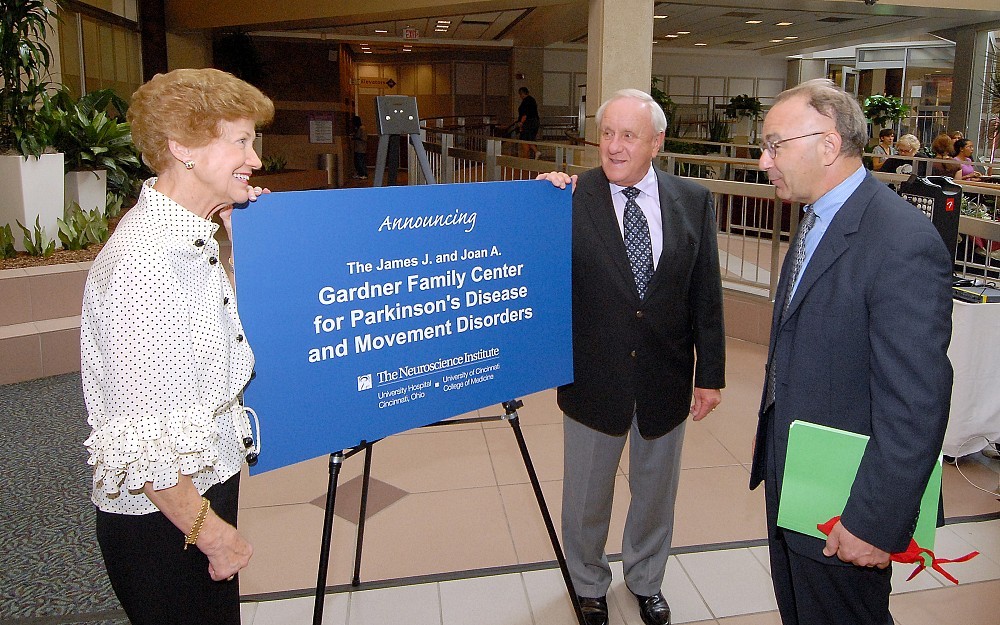
Gardner family with College of Medicine dean David Stern, MD (right)

James and Joan Gardner

Parkinson's disease experts Alberto Espay, MD, (left) and Kim Seroogy, PhD.
Related Stories
On-site training in Speech & Hearing Clinic sets UC’s programs apart
August 27, 2026
At the University of Cincinnati’s Speech & Hearing Clinic, Doctor of Audiology and Speech-Language Pathology graduate students gain real-world experience while providing free speech and hearing services to the community.
Designing with cancer patients' needs in focus
August 27, 2026
Kristina Shin is designing garments that prioritize the comfort, function and confidence of breast cancer patients, addressing a need often overlooked by traditional fashion.
UC, NKU renew longstanding partnership supporting Army ROTC cadets
August 26, 2026
The University of Cincinnati Army ROTC and Northern Kentucky University (NKU) have renewed a longstanding partnership that supports students preparing to become Army officers and leaders in their communities. The universities formalized the renewed agreement during a signing event Aug. 11 at NKU.