UC HEALTH LINE: Free Vascular Screenings Available at UC Heart and Vascular Center

If youre over 60, says Amy Reed, MD, making time for three simple vascular screening tests could save your life.
Most people dont understand how their vascular health can affect the body, explains Reed, a vascular surgeon and assistant professor of surgery with the University of Cincinnati (UC). People understand the risks associated with blockages in heart vessels, but the reality is that blockages in the vessels leading to your brain and legs can be just as harmful.
The human vascular system is a complex arrangement of vessels that carry blood to specific parts of the body. Arteries, which carry oxygen-rich blood away from the heart, distribute blood throughout the body. Veins, smaller vessels, return blood to the heart.
Vascular problems occur when fat and cholesterol (plaque) build up on the artery walls. As plaque increases, the arteries harden and become narrow. Gradually, blood flow decreases and parts of the body are deprived of the oxygen they need to function properly.
People need to take steps to improve their vascular health and get screening tests when its appropriate, adds Reed. Detecting vascular disease early can help prevent serious problemslike stroke or crippling leg painin the future.
Reed says three of the most common non-cardiac vascular diseasesabdominal aortic aneurysms, carotid artery disease and peripheral arterial diseasecan be detected through screening tests and then treated with minimally invasive surgery techniques.
The UC Heart and
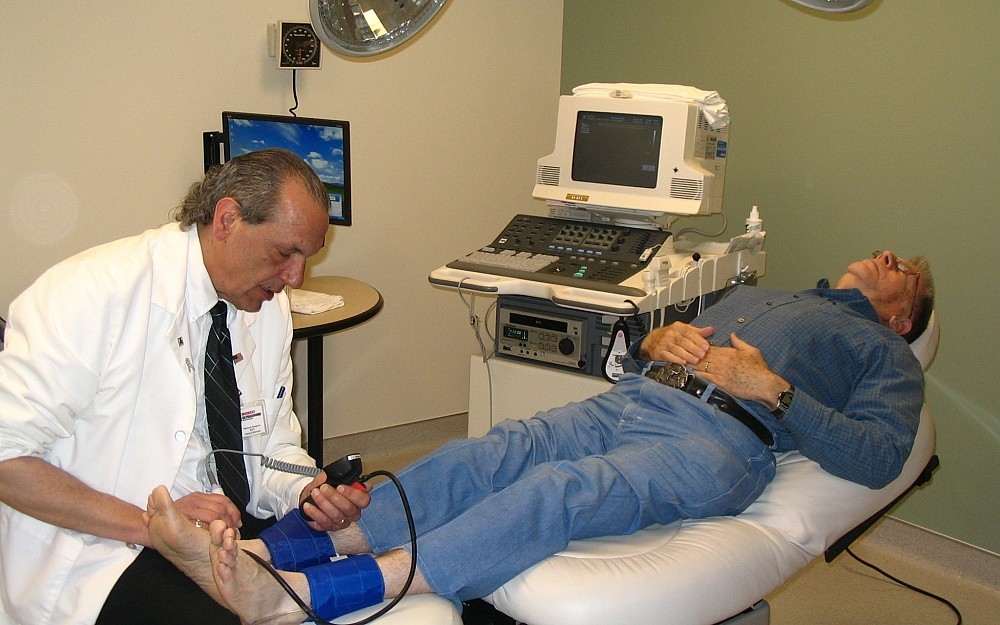
The tests, which combined take about 15 minutes, include a carotid artery ultrasound to detect blockages in the vessels that feed blood to the brain, an abdominal aorta ultrasound to identify aneurysms or bulges that indicate vessel weakness, and an ankle blood pressure test to detect blockages in the legs.
All the tests are noninvasive, so youll experience no pain or discomfort, adds Dr. Reed. But youll leave armed with information about your vascular health.
Reeds notes that a persons risk for vascular disease is influenced by family history and it increases with age. Also at elevated risk are diabetics and people who are obese, have high blood pressure or high cholesterol, or have ever smoked.
Screenings will take place between 8 a.m. and 3:30 p.m. at the UC Heart and
Starting in 2007, new Medicare Part B health insurance enrollees are also eligible for a preventive abdominal aortic aneurysm screening. Upon completion of a mandatory physical examination, new male Medicare patients who have smoked at least 100 cigarettes during their lifetime and anyone with a family history of vascular disease can request the abdominal aortic aneurysm screening exam. For more information, call (513) 558-8272.
According to the American Vascular Association, more than 15,000 Americans die of ruptured abdominal aortic aneurysms each year. People with peripheral arterial disease are three times more likely than the average person to die of heart attacks or strokes.

A patient undergoes a vascular screening.
Tags
Related Stories
Cancer Center plays key role in lab research, clinical trials for new pancreatic cancer drug
September 1, 2026

WLWT and WCPO highlighted the contributions of University of Cincinnati Cancer Center researchers that helped lead to the recent FDA approval of daraxonrasib, a new treatment for pancreatic cancer.
Cancer Center physician receives $150,000 New Investigator Research Grant to study treatment-resistant leukemia
September 1, 2026
The University of Cincinnati Cancer Center’s Sarah Skuli, MD, PhD, received a two‑year, $150,000 Leukemia Research Foundation New Investigator Grant to study TP53‑mutated leukemia, a treatment‑resistant subtype with very poor outcomes.
Heavy social media use linked to depression
August 31, 2026

U.S. News and World Report, Yahoo! News, MSN, USA Today and other national media highlight a new study by the University of Cincinnati and Northwestern University that found a correlation between heavy social media use and depression in adults.