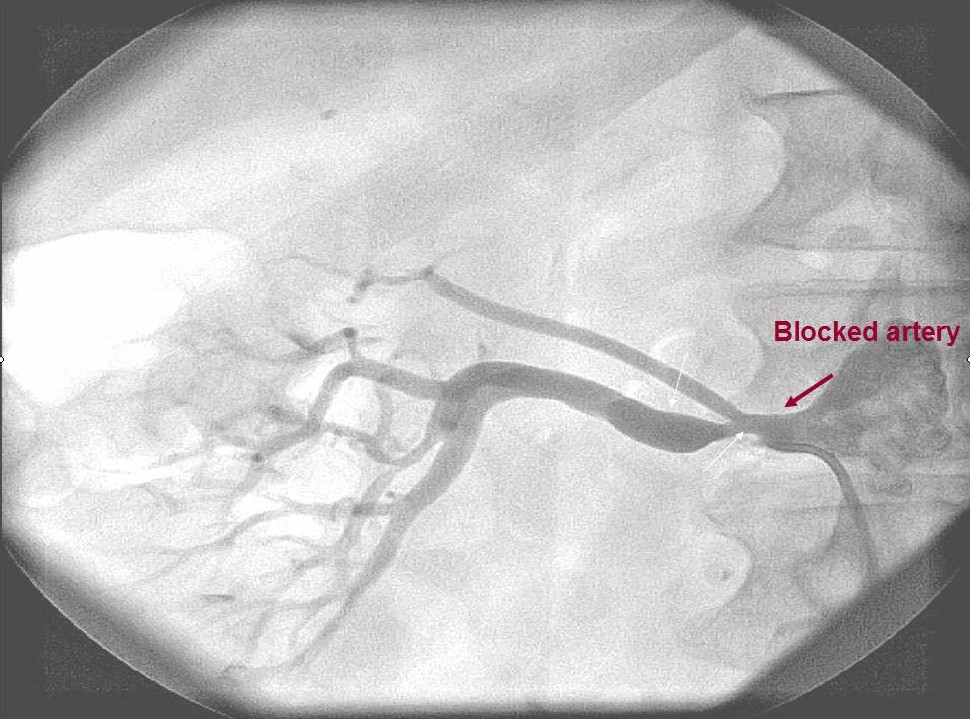
Procedure for Finding Blocked Arteries Gives Patients Options

The procedure, which is being offered for the first time at
Stents are implantable tube-shaped devices made up of a metallic support structure that are used to support weak vessels.
When blockage is discovered in a renal or coronary artery, stents are often the first option, says Leesar, who recently left
Intravascular ultrasound involves using an ultrasound image to determine the extent of a blockage in the heart or kidney and develop the most appropriate treatment recommendations.
The ultrasound is accompanied by the use of a wire that is inserted into arteries that appear to have blockage to test blood pressure in those areas.
Sometimes, an artery that appears to be severely clogged may have more blood flow than one that appears to be open, he says. This procedure could save people from undergoing surgery.
Leesar was the first to perform the pressure wire and ultrasound catheter to determine the severity of blocked arteries in the heart and kidneys in 2004.
He will speak about this technique along with alcohol septal ablation, which involves injecting alcohol into the heart to decrease thickening that can slow blood flow, at the annual Transcatheter Cardiovascular Therapeutics meeting Oct. 20-25 in
In addition, Leesar and his division colleagues are leading the local arm of the Cardiovascular Outcomes in Renal Atherosclerotic Disease (CORAL) study, a phase-3 trial evaluating treatment options for patients who have high blood pressure and blockage of the renal artery.
Sponsored by the National Institutes of Health, the study will enroll 1,000 patients500 using stents to clear blockage and 500 using medical management and monitor them over a five-year period.
Our hope is to come up with new guidelines that will help us better diagnose and treat our patients, he says.
Tags
Related Stories
On-site training in Speech & Hearing Clinic sets UC’s programs apart
August 27, 2026
At the University of Cincinnati’s Speech & Hearing Clinic, Doctor of Audiology and Speech-Language Pathology graduate students gain real-world experience while providing free speech and hearing services to the community.
Funding expands UC research into weight gain side effects of bipolar medication
August 26, 2026
University of Cincinnati researchers have been approved for funding by the Patient-Centered Outcomes Research Institute (PCORI) to expand the implementation of healthy lifestyle interventions and metformin prescription to help manage weight gain in overweight or obese youth taking second-generation antipsychotic medications.
One in four NFL players had CTE at death
August 25, 2026

Forbes cites research on concussions and football helmets by the University of Cincinnati in a report that found one in four NFL players had brain damage at death.