UC HEALTH LINE: Virtual Exams Ease Patient Anxiety About Colorectal Cancer Screening

A study recently published in the New England Journal of Medicine (NEJM) reported that virtual colonoscopiesperformed using computed tomography (CT) technologyare as effective for detecting polyps (growths) and early-stage colorectal cancers as the traditional colonoscopy exam.
Colorectal cancer is one of the most preventable and curable types of cancer, but unfortunately only about 40 percent of the Americans who should get a screening colonoscopy actually do, says Howard Feigelson, MD, a UC volunteer assistant professor of radiology and body imaging specialist at
Major medical studies have proven that virtual colonoscopies are just as accurate as traditional colonoscopies for diagnosing colorectal cancer, adds Feigelson. We hope that more people will get this life-saving screening test now that a scientifically proven, less-invasive option is available.
Prior to both traditional and virtual colonoscopy, patients are required to follow a liquid-only diet for 24 to 48 hours and take laxatives to cleanse the colon and rectum. The colon is then inflated with carbon dioxide as a contrast material to improve the visual field.
During a traditional colonoscopy, the patient is sedated and the physician uses a fiber optic scope equipped with a camera to inspect the entire colon for potentially cancerous growths. In contrast, the virtual exam requires no sedation and uses a series of rapidly acquired CT scans to diagnose any problems. The virtual procedure takes about 20 minutes and the patient can immediately resume normal activities. The traditional procedure takes about an hour.
UC gastroenterologists caution, however, that virtual colonoscopies do not allow physicians to immediately address any growths they find.
Using traditional screening colonoscopies, were able to remove any polyps immediately, says Jonathan Kushner, MD, an associate professor of internal medicine and gastroenterologist.This can save the patient the time and emotional stress of booking a second procedure to explore any problem areas identified during a virtual exam.
According to the NEJM study, 8.3 percent of patients who had a virtual colonoscopy had to return for a traditional procedure.
Although opinions vary on the merits of virtual versus traditional colonoscopy, the entire UC Physicians team agrees on the bottom line: If virtual colonoscopies entice more people to get timely colorectal cancer screenings, its a good thing.
Colorectal cancer is one of only a few human cancers with a precancerous, completely curable (polyp) stage. Yet more than 150,000 people are diagnosed with invasive colorectal cancer each year, says Janice Rafferty, MD, UC chief of colon and rectal surgery. With proper screening and surveillance, the vast majority of colorectal cancer can be found early enough to be cured.
According to the American Cancer Society (ACS), 90 percent of all early-stage colorectal cancers are curable, and about 75 percent of Americans who get the disease are over age 50.
The ACS recommends that all adults get an initial colorectal screening exam at age 50, with periodic surveillance exams to follow. People with a family history of colon polyps or colon cancer should begin screening at age 40, or earlier if young relatives are affected.
UC radiologists offer virtual colonoscopy screening exams at the UC Physicians Medical Arts Building (MAB)
Traditional colonoscopy procedures are available with UC gastroenterologists at the, University Pointe Surgical Hospital in West Chester, University Hospital and
Montgomery Medical Center. For appointments call (513) 936-4510 or (513) 475-7452.
For appointments with a UC colorectal surgeon, call (513) 929-0104.

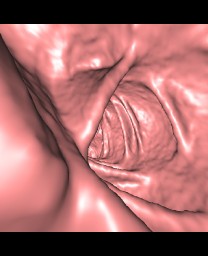
This dual-contrast image of the large intestine is used to cross-reference problem areas identified on CT scans.

Howard Feigelson, MD, is a volunteer assistant professor of radiology.

Chief, Division of Colon and Rectal Surgery
Tags
Related Stories
Cancer Center plays key role in lab research, clinical trials for new pancreatic cancer drug
September 1, 2026

WLWT and WCPO highlighted the contributions of University of Cincinnati Cancer Center researchers that helped lead to the recent FDA approval of daraxonrasib, a new treatment for pancreatic cancer.
Cancer Center physician receives $150,000 New Investigator Research Grant to study treatment-resistant leukemia
September 1, 2026
The University of Cincinnati Cancer Center’s Sarah Skuli, MD, PhD, received a two‑year, $150,000 Leukemia Research Foundation New Investigator Grant to study TP53‑mutated leukemia, a treatment‑resistant subtype with very poor outcomes.
Heavy social media use linked to depression
August 31, 2026

U.S. News and World Report, Yahoo! News, MSN, USA Today and other national media highlight a new study by the University of Cincinnati and Northwestern University that found a correlation between heavy social media use and depression in adults.