New Sickle Cell Network Promotes Transitional, Holistic Care

But according to physicians at UC and
Now, Thomas Webb, MD, and his colleagues are collaborating with sickle cell experts to create a comprehensive treatment network in
Many of the secondary conditions accompanying sickle cell anemia present themselves in adulthood, says Webb, assistant professor of medicine and pediatrics at UC. Those children who have sickle cell anemia may not have the resources to deal with the disorder, both medically and financially, as adults.
Last fall, the researchers received a $1.28 million grant from the federal Health Resources and Services Administration (HRSA) to launch a program that will help with transitional care from childhood through the adult years.
Sickle cell disease is an inherited disorder in which red blood cells are abnormally shaped. This abnormality can result in episodes of severe pain, serious infections, chronic anemia and organ damage.
According to the Center for Disease Control and Prevention, more than 70,000 people have sickle cell disease in the
The program is a partnership between the sickle cell centers at the UC College of Medicine,
Webb says the program will have three branches: collaborative patient care, patient education/counseling and pediatric-to-adult transitional treatment.
We want to develop a chronic disease self-management training program to help patients deal with their disease and adapt to living life with it, he says.
During a six-week course, patients will learn the importance of caring for their bodies through proper nutrition, exercise and pain management.
In addition, the sickle cell network will provide access to psychologists, social workers and job counselors to ensure each patients emotional and vocational needs are addressed. Gwendolyn Brown, a sickle cell patient and health educator with UC, says people with sickle cell are often under-employed because of their medical complications.
We can offer patients additional training and employment options, she says.
Patients will also receive genetic counseling and learn how sickle cell anemia is passed from generation to generation.
Webb says training will be offered to primary care doctors, who can help co-manage the disease for patients. Webb adds that because diagnosis usually takes place in childhood, pediatric physicians were historically more likely to treat the illness.
As the longevity of patients has continued to improve, sickle cell disease has become a chronic adult condition as well, Webb says. It is beneficial for adult patients to receive care from an adult care provider. In this program, doctorsfrom the pediatrician to the adult primary care doctor to the hematologisthave direct access to each other and share information to ensure quality, tailored care for patients.
Stephen Wilson, MD, assistant professor of medicine and pediatrics, who is also helping to facilitate the network, says this program will help consolidate existing treatment guidelines with newer treatment recommendations for primary care physicians.
Two decades ago, the life span for those with sickle cell anemia was about 25 to 30 years, he says. Now, patients are living into their 50s and 60s. This program will assist in developing a medical home for patients and will create a better care system for individuals living with sickle cell.

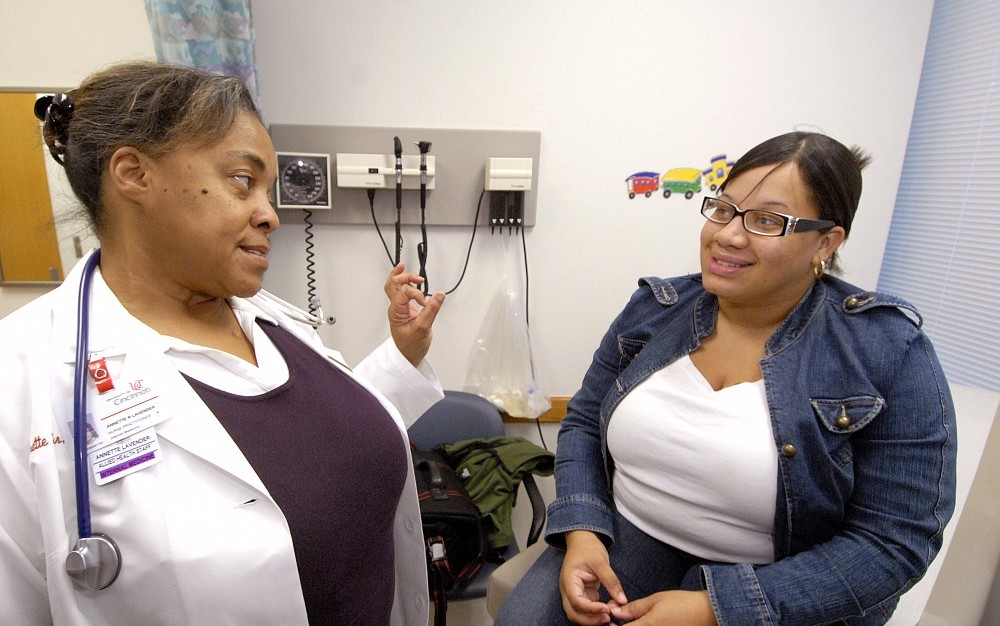
Annette Lavender, Thomas Webb, MD, Gwendolyn Brown, health educator, and Stephen Wilson, MD, are all helping to facilitate the sickle cell network at UC.

Thomas Webb, MD, assistant professor of medicine and pediatrics
Related Stories
On-site training in Speech & Hearing Clinic sets UC’s programs apart
August 27, 2026
At the University of Cincinnati’s Speech & Hearing Clinic, Doctor of Audiology and Speech-Language Pathology graduate students gain real-world experience while providing free speech and hearing services to the community.
Designing with cancer patients' needs in focus
August 27, 2026
Kristina Shin is designing garments that prioritize the comfort, function and confidence of breast cancer patients, addressing a need often overlooked by traditional fashion.
UC, NKU renew longstanding partnership supporting Army ROTC cadets
August 26, 2026
The University of Cincinnati Army ROTC and Northern Kentucky University (NKU) have renewed a longstanding partnership that supports students preparing to become Army officers and leaders in their communities. The universities formalized the renewed agreement during a signing event Aug. 11 at NKU.