UC HEALTH LINE: Growing Number of Older Adults Increases Need for Caregivers

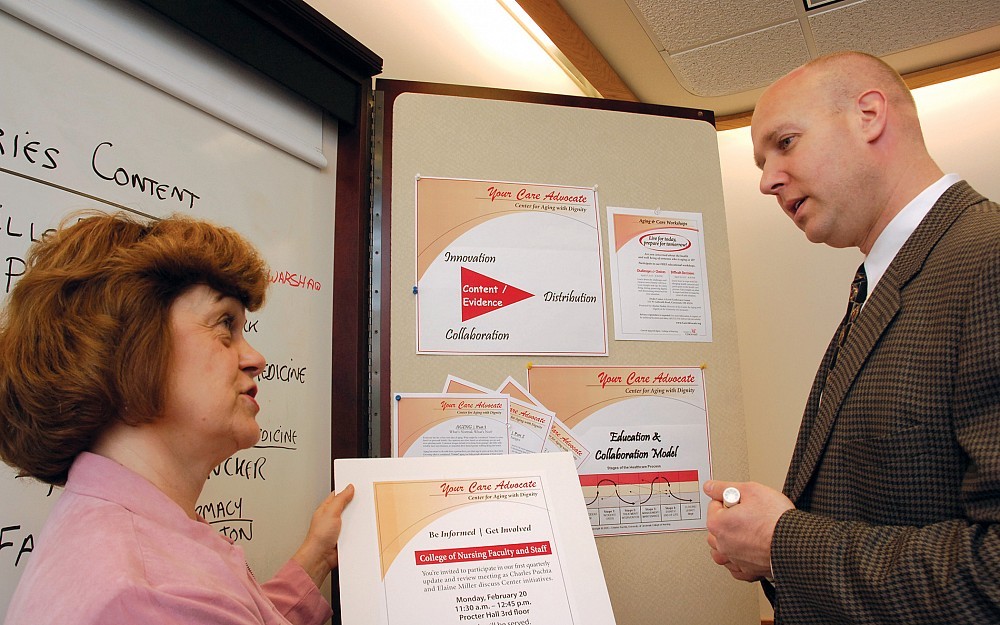
If youre not already providing care or support for a family member or a friend, chances are you will some time during your life, says Charles Puchta, director of the University of Cincinnati College of Nursing Center for Aging with Dignity.
According to the National Family Caregivers Association, more than 50 million people provide care for a chronically ill, disabled or aged family member or friend during any given year.
Most people lack the information, skills and confidence they need to be a caregiver, says Puchta. The best time to prepare and become familiar with a caregivers roles and responsibilities is before theres a need to provide support.
Puchta says the types of assistance people often need includes:
- Emotionallistening and responding to concerns, providing encouragement and moral support, maintaining contact and simply being there when needed.
- Financialorganizing bills, writing checks, balancing the checkbook and providing money to help cover expenses.
- Physicalassisting with daily living including personal care, household chores, meals, driving, medication, etc.
- Spiritualhelping people find meaning and purpose in life, maintaining hope, coping and finding peace through prayer or meditation based on their cultural and religious preferences.
A caregiver has many responsibilities and roles and its important for them to recognize their own limitations and to ask for help, he says.
The Center for Aging with Dignity focuses on helping people understand their situation, find the information they need to take the appropriate action and make informed decisions. The center is designed to complement existing services and organizations.
The center offers a series of publications on topics related to caregiving, including helpful resources on paying for care and living arrangements and providing care from out of town.
In addition, information is available that addresses whats normal and whats not in aging, when its time for an older adult to stop driving and how you can approach them, and how caregivers and older adults can address the concerns of dying, among other topics.
For more information on the center, call (513) 558-2428 or visit www.careadvocate.org.
Tags
Related Stories
Cancer Center plays key role in lab research, clinical trials for new pancreatic cancer drug
September 1, 2026

WLWT and WCPO highlighted the contributions of University of Cincinnati Cancer Center researchers that helped lead to the recent FDA approval of daraxonrasib, a new treatment for pancreatic cancer.
Cancer Center physician receives $150,000 New Investigator Research Grant to study treatment-resistant leukemia
September 1, 2026
The University of Cincinnati Cancer Center’s Sarah Skuli, MD, PhD, received a two‑year, $150,000 Leukemia Research Foundation New Investigator Grant to study TP53‑mutated leukemia, a treatment‑resistant subtype with very poor outcomes.
Heavy social media use linked to depression
August 31, 2026

U.S. News and World Report, Yahoo! News, MSN, USA Today and other national media highlight a new study by the University of Cincinnati and Northwestern University that found a correlation between heavy social media use and depression in adults.