Low-Level Exposure to Asbestos-Like Mineral From Montana Vermiculite May Increase Risk for Lung Disease

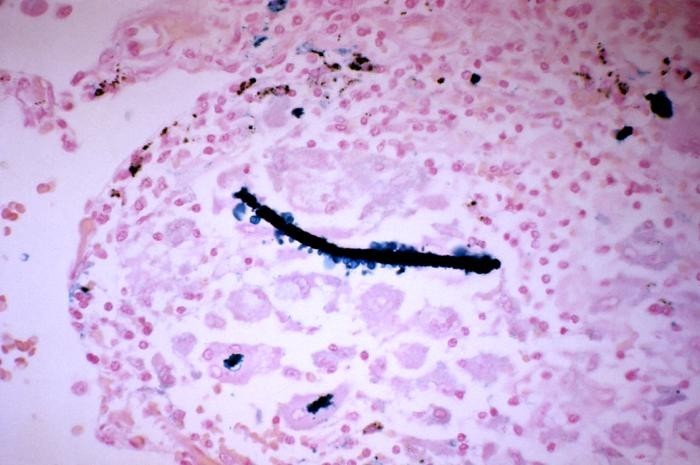
Vermiculite is a mineral with a flaky, fluffy-looking structure. Previous studies revealed that the vermiculite ore mined in
In a 25-year follow-up study of workers at a plant which stopped using Libby vermiculite in 1980, current chest X-rays revealed that 20 percent of workers who experienced low cumulative exposure to these fibers had changes in the lining around their lungs. In the group with the highest exposure, changes on chest X-rays were noted in 54 percent of workers.
James Lockey, MD, senior research investigator, says the study indicates that this particular asbestos-like mineral contained in the Libby vermiculite ore can cause chest X-ray changes at previously unrecognized lower exposure levels.
Workers with low-level exposures to Libby vermiculite ore may not have obvious health effects right away, but the past exposure is something of which their physicians should be aware, says Lockey, a UC professor of pulmonary and environmental health.
Once inhaled, these fibers are very persistent and stay in the lung for a long time, he explains. They lodge in the lung tissue and the tissue that lines the chest wall and cause inflammation, which can lead to chronic lung problems and diseases.
His team reports its findings in the March 15, 2008, issue of American Journal of Respiratory and Critical Care Medicine.
Records show that until the
The chest X-ray changes associated with the low cumulative fiber exposure are a public health concern, Lockey adds. The Libby vermiculite ore was widely distributed across the
Lockeys team conducted a 25-year review of available data on workers who used the Libby vermiculite as an inert carrier for lawn care products. About 84 percent of the original 513 workers were living and 280 workers were able to participate fully in the study.
Former workers were asked to get a current chest X-ray and complete an interview with researchers about their lung health and job history since the original study was conducted.
Chest X-rays were taken and reviewed independently by three radiologists to determine the extent of changes in the chest cavity.
Our findings indicate that exposure within an industrial process to Libby vermiculite ore is associated with pleural thickening at low lifetime cumulative fiber exposure levels, says Lockey. Weve discovered the high propensity of these asbestos-like fibers in Libby vermiculite to dramatically increase the prevalence of pleural changes 25 years after exposure ended.
This study serves as a reminder that there are naturally occurring asbestos-like mineral fibers in our environment that are not currently regulated, he adds. More attention should be given to this issue so we can properly regulate and control these substances to minimize human health exposure risks.
Funding for this study was provided by the Centers for Disease Control and Preventions Agency for Toxic Substances and Disease Registry and National Institute of Environmental Health Sciences.
Members of the research team included UCs Amy Rohs, MD; Kari Dunning, PhD; Rakesh Shukla, PhD; Huihao Fan; Tim Hilbert; Eric Borton; Jerome Wiot, MD; Ralph Shipley, MD; and Grace LeMasters, PhD. Former UC faculty member Cristopher Meyer, MD, and Vikas Kapil, DO, of the CDC, were also involved in the study.

James Lockey, MD, is a professor in UC's environmental health department.
Tags
Related Stories
Cancer Center plays key role in lab research, clinical trials for new pancreatic cancer drug
September 1, 2026

WLWT and WCPO highlighted the contributions of University of Cincinnati Cancer Center researchers that helped lead to the recent FDA approval of daraxonrasib, a new treatment for pancreatic cancer.
Cancer Center physician receives $150,000 New Investigator Research Grant to study treatment-resistant leukemia
September 1, 2026
The University of Cincinnati Cancer Center’s Sarah Skuli, MD, PhD, received a two‑year, $150,000 Leukemia Research Foundation New Investigator Grant to study TP53‑mutated leukemia, a treatment‑resistant subtype with very poor outcomes.
Heavy social media use linked to depression
August 31, 2026

U.S. News and World Report, Yahoo! News, MSN, USA Today and other national media highlight a new study by the University of Cincinnati and Northwestern University that found a correlation between heavy social media use and depression in adults.