UC HEALTH LINE: UC Surgeons Encourage Area Residents to Donate Organs, Save Lives

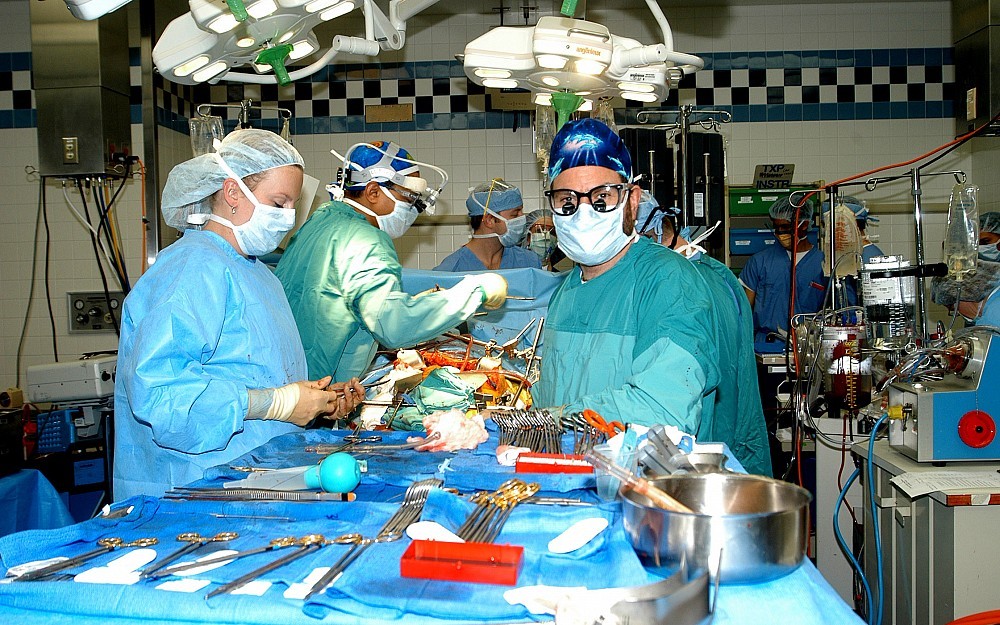
With April being National Donate Life Month, UC experts are encouraging local residents to think about giving a piece of themselves to save lives.
According to the Ohio Organ Donation Web site, nearly 2,500
Hundreds more need eye and tissue donations to improve their quality of life.
Steven Rudich, MD, PhD, a professor in the UC transplant surgery division, says there is a shortage of donors in the
He says that despite what many potential donors think, young people arent the only ones who can give.
We can use skin, tissue or organs from donors 70 years old and up, he says.
He adds that one donor could give up to seven organs, including the heart, liver, kidney and pancreas.
This simple act could save the lives of many people in the local area, he says.
Rudich says there has been a shortage of live organ donors, especially for kidneys.
Between 50 and 65 percent of our kidney transplants should come from live donors, he says. However, the numbers in our local area are only 40 to 50 percent.
There is also a need for minority donors.
Rudich, who specializes in the transplant of livers, says that although more people are waiting for kidney transplantsup to four times more than those waiting for a liverthe need for liver transplants can come on very suddenly. That means its important to have healthy livers on hand.
People with hepatitis C or alcohol problems are most of our transplant recipients, he says.
Hepatitis C is a blood-borne infectious disease caused by the hepatitis C virus which infects the liver. The infection can cause liver inflammation that often shows no symptoms but can result later in cirrhosisscarring of the liverand liver cancer.
Rudich says that because symptoms of liver inflammation caused by hepatitis C and alcohol abuse are often rare, people often have no idea they have a problem until fairly late in the disease process.
People at risk for hepatitis C should be screened regularly, he says, adding that people who excessively use alcohol should also be on the lookout for liver problems. By being aware of the risks, a person could prevent him or herself from needing a liver transplant.
He adds that becoming a donor is as easy as surfing the Web.
There is an
For more information on becoming a donor, visit www.donatelifeohio.org.
Tags
Related Stories
Cancer Center plays key role in lab research, clinical trials for new pancreatic cancer drug
September 1, 2026

WLWT and WCPO highlighted the contributions of University of Cincinnati Cancer Center researchers that helped lead to the recent FDA approval of daraxonrasib, a new treatment for pancreatic cancer.
Cancer Center physician receives $150,000 New Investigator Research Grant to study treatment-resistant leukemia
September 1, 2026
The University of Cincinnati Cancer Center’s Sarah Skuli, MD, PhD, received a two‑year, $150,000 Leukemia Research Foundation New Investigator Grant to study TP53‑mutated leukemia, a treatment‑resistant subtype with very poor outcomes.
Heavy social media use linked to depression
August 31, 2026

U.S. News and World Report, Yahoo! News, MSN, USA Today and other national media highlight a new study by the University of Cincinnati and Northwestern University that found a correlation between heavy social media use and depression in adults.