UC Researchers Find New Ways to Regulate Genes, Reduce Heart Damage

Following a heart attack, cells die, causing lasting damage to the heart.
Keith Jones, PhD, a researcher in the department of pharmacology and cell biophysics, and colleagues are trying to reduce post-heart attack damage by studying the way cells die in the hearta process controlled by transcription factors.
Transcription factors are proteins that bind to specific parts of DNA and are part of a system that controls the transfer of genetic information from DNA to RNA and then to protein. Transfer of genetic information also plays a role in controlling the cycle of cellsfrom cell growth to cell death.
We call it gene regulatory therapy, says Jones.
So far, studies have identified the role for an important group of interacting transcription factors and the genes they regulate to determine whether cells in the heart survive or die after blood flow restriction occurs.
Often, scientists use virus-like mechanisms to transfer DNA and other nucleic acids inside the body.
The virus takes over other healthy cells by injecting them with its DNA. The cells, then transformed, begin reproducing the virus DNA. Eventually they swell and burst, sending multiple replicas of the virus out to conquer other cells and repeat the process.
Now, UC researchers are further investigating new, non-viral delivery mechanisms for this transfer of DNA.
We can use non-viral delivery vehicles to transfer nucleic acids, including transcription factor decoys, to repress activation of specific transcription factors in the heart, Jones says, adding that the researchers have made this successfully work within live animal models. This means we can block the activity of most transcription factors in the heart without having to make genetically engineered mice.
Jones presented these results at the International Society for Heart Research in
He says this delivery mechanism involves flooding the cells with decoys which trick the transcription factors into binding to the decoys rather than to target genes, preventing them from activating those genes.
We can use this technology to identify the target genes and then investigate the action of these genes in the biological process, Jones says.
He says that this delivery has limitations and advantages.
It can be used to block a factor at any point in time and is reversible, he says. However, right now, a specific delivery route must be used to target the tissue or cell.
Jones and other researchers are hoping that this new technology will allow them to directly address the effects of gene regulation in disease, as opposed to using classic drugs that treat symptoms or have significant adverse outcomes.
So far, this seems to cause no adverse effects in animals, he says. We are hopeful and are working toward pre-clinical studies.
This work was initiated by a Deans Discovery Grant and is funded by the National Institutes of Health.

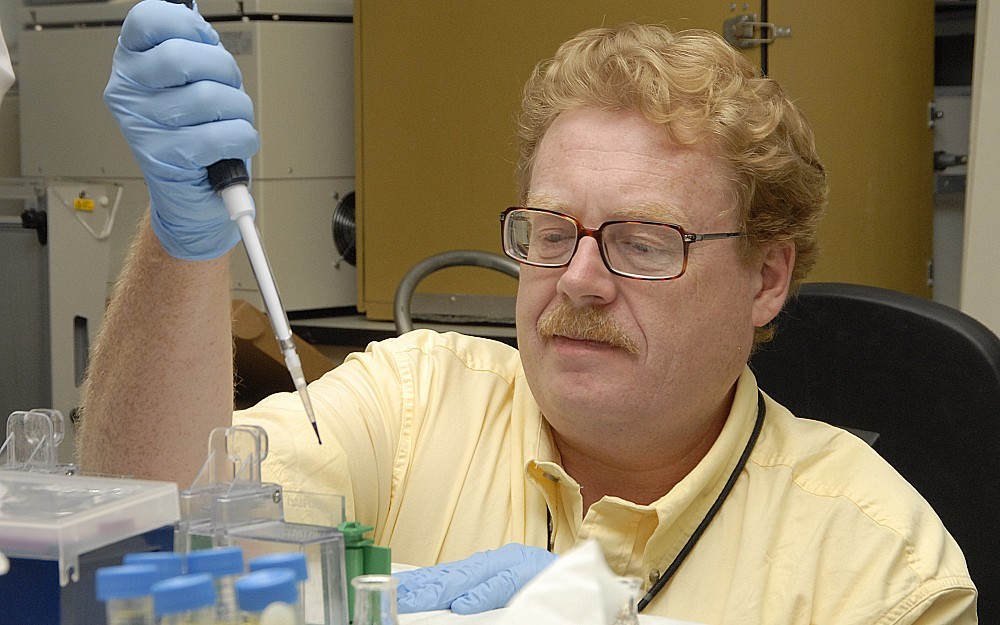
Keith Jones, PhD, a researcher in UC's department of pharmacology and cell biophysics
Tags
Related Stories
Cancer Center plays key role in lab research, clinical trials for new pancreatic cancer drug
September 1, 2026

WLWT and WCPO highlighted the contributions of University of Cincinnati Cancer Center researchers that helped lead to the recent FDA approval of daraxonrasib, a new treatment for pancreatic cancer.
Cancer Center physician receives $150,000 New Investigator Research Grant to study treatment-resistant leukemia
September 1, 2026
The University of Cincinnati Cancer Center’s Sarah Skuli, MD, PhD, received a two‑year, $150,000 Leukemia Research Foundation New Investigator Grant to study TP53‑mutated leukemia, a treatment‑resistant subtype with very poor outcomes.
Heavy social media use linked to depression
August 31, 2026

U.S. News and World Report, Yahoo! News, MSN, USA Today and other national media highlight a new study by the University of Cincinnati and Northwestern University that found a correlation between heavy social media use and depression in adults.