
Many U.S. Public Schools in Air Pollution Danger Zone

UC researchers have found that more than 30 percent of American public schools are within 400 meters, or a quarter mile, of major highways that consistently serve as main truck and traffic routes.
Research has shown that proximity to major highwaysand thus environmental pollutants, such as aerosolizing diesel exhaust particlescan leave school-age children more susceptible to respiratory diseases later in life.
This is a major public health concern that should be given serious consideration in future urban development, transportation planning and environmental policies, says Sergey Grinshpun, PhD, principal investigator of the study and professor of environmental health at UC.
To protect the health of young children with developing lungs, he says new schools should be built further from major highways.
Health risk can be mitigated through proper urban planning, but that doesnt erase the immediate risk to school-age children attending schools that are too close to highways right now, he adds. Existing schools should be retrofitted with air filtration systems that will reduce students exposure to traffic pollutants.
The UC-led team reports its findings in the September 2008 issue of the Journal of Environmental Planning and Management, an international scientific journal. This is believed to be the first national study of school proximity and health risks associated with major roadways.
For this study, Grinshpuns team conducted a survey of major metropolitan areas representative of all geographical regions of the
More than 8,800 schools representing 6 million students were included in the survey. Primary data was collected through the U.S. Department of Educations
Schools within this data set were then geocoded to accurately calculate distance to the nearest interstate,
Past research on highway-related air pollution exposure has focused on residences located close to major roads. Grinshpun points out, however, that school-age children spend more than 30 percent of their day on school groundsin classrooms, after-school care or extracurricular activities.
For many years, our focus has been on homes when it comes to air pollution. School attendance may result in a large dose of inhaled traffic pollutants thatuntil nowhave been completely overlooked, he adds.
These past studies suggest this proximity to highway traffic puts school-age children at an increased risk for asthma and respiratory problems later in life from air pollutants and aeroallergens.
This includes research from the UC Cincinnati Childhood Allergy and Air Pollution Study (CCAAPS) which has reported that exposure to traffic pollutants in close proximity to main roads has been associated with increased risk for asthma and other chronic respiratory problems during childhood.
Grinshpuns team found that public school students were more likely to attend schools near major highways compared to the general population. Researchers say the rapid expansion of metropolitan areas in recent yearsdeemed urban sprawlseems to be associated with the consistent building of schools near highways.
Major roads play an important role in the economy, but we need to strike a balance between economic and health considerations as we break ground on new areas, says Alexandra Appatova, the studys first author. Policymakers need to develop new effective strategies that would encourage urban planners to reconsider our current infrastructure, particularly when it comes to building new schools and maintaining existing ones.
The state of
This study was funded in part by grants from UCs Center for Sustainable Urban Engineering and the National Institute of Environmental Health Sciences. UCs Patrick Ryan, PhD, and Grace LeMasters, PhD, also participated in this study. Appatova was an intern in UCs department of environmental health when the study was being conducted.
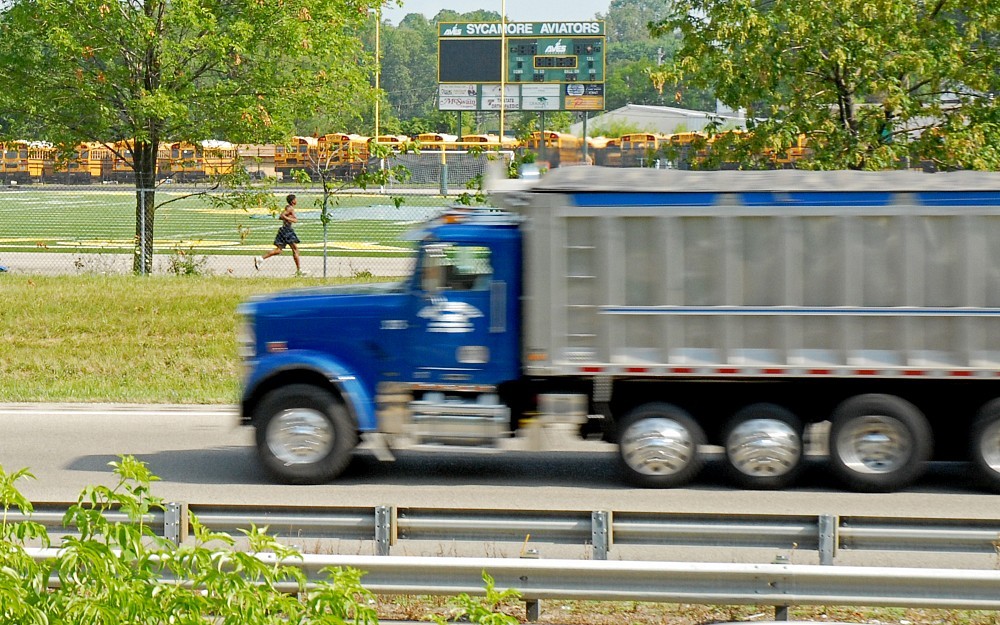
UC researchers have found that more than 30 percent of American public schools are within the  air pollution danger zone of a quarter mile of main truck and traffic routes.

Sergey Grinshpun, PhD, is a professor of environmental health at UC.
Tags
Related Stories
Heavy social media use linked to depression
August 31, 2026

U.S. News and World Report, Yahoo! News, MSN, USA Today and other national media highlight a new study by the University of Cincinnati and Northwestern University that found a correlation between heavy social media use and depression in adults.
On-site training in Speech & Hearing Clinic sets UC’s programs apart
August 27, 2026
At the University of Cincinnati’s Speech & Hearing Clinic, Doctor of Audiology and Speech-Language Pathology graduate students gain real-world experience while providing free speech and hearing services to the community.
Funding expands UC research into weight gain side effects of bipolar medication
August 26, 2026
University of Cincinnati researchers have been approved for funding by the Patient-Centered Outcomes Research Institute (PCORI) to expand the implementation of healthy lifestyle interventions and metformin prescription to help manage weight gain in overweight or obese youth taking second-generation antipsychotic medications.