Research Examines Variations of Rare Lung Disease

Researchers say the key to learning more about LAM might lie in better understanding how symptoms differ among LAM patients
UC scientists are recruiting LAM patients to participate in a new research study that examines why symptoms of the disease are different in certain subgroups of people with the goal of finding more successful therapies.
LAM occurs when an unusual type of cell begins to grow out of control and spread to restricted areas in the body, including the lungs, kidneys, lymph nodes and vessels.
A team led by Jean Elwing, MD, an assistant professor in UCs pulmonary, critical care and sleep division, is enrolling female LAM patients to see if pulmonary hypertension and pulmonary vascular disease may be contributing to their respiratory symptoms.
Pulmonary hypertension is a blood vessel disorder of the lungs in which pressure in the pulmonary artery, the blood vessel that leads from the heart to the lungs, rises above normal levels.
We plan to evaluate a group of women with LAM who are experiencing shortness of breath for the presence of pulmonary hypertension, she says. We will look at participants medical history, pulmonary function tests, exercise tolerance, echocardiogram results and previous biopsy samples.
We are hopeful this information will increase our understanding of how LAM can manifest in the patients it affects. In the future, this information may be useful in developing better management strategies for this disease.
Elwing says this study will compare LAM patients who also have pulmonary hypertension with those who do not to differentiate between the groups.
She says that researchers are hoping to enroll up to 40 people in this study.
Some participants will be seen once in clinic and undergo testing with an echocardiogram while participating in this study, she says. The individuals who have already undergone a clinical pulmonary hypertension evaluation may be able to participate through a review of select medical records and lung biopsy specimens. We welcome any patient with LAM who is interested in participating to contact us and discuss possible participation.
This study is investigator-initiated and is funded by a Rhen Family Grant from the

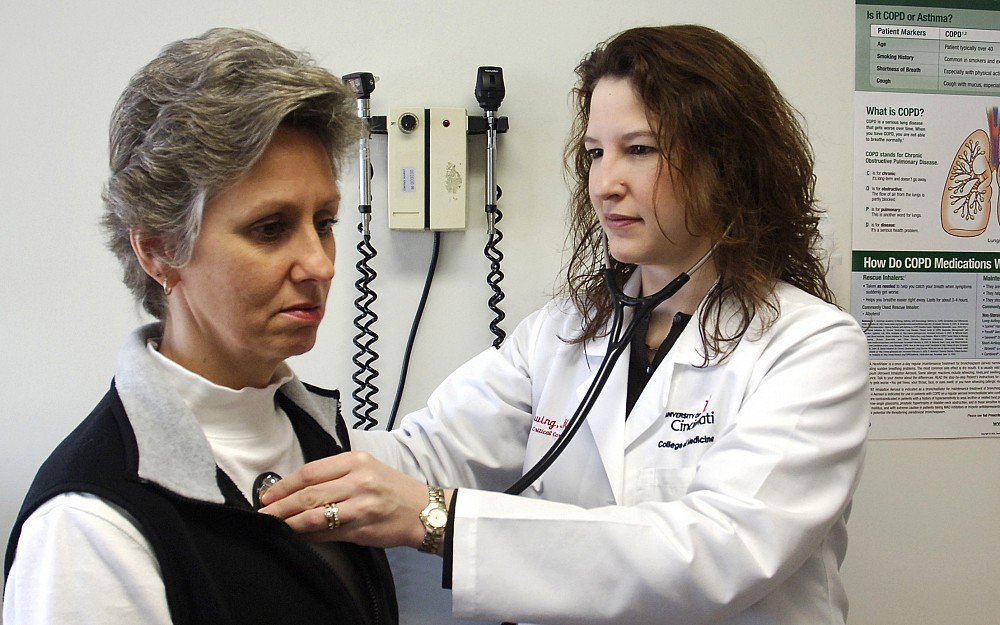
Jean Elwing, MD, pulmonologist in the division of pulmonary, critical care and sleep medicine

Jean Elwing, MD, pulmonologist in the division of pulmonary, critical care and sleep medicine
Tags
Related Stories
Heavy social media use linked to depression
August 31, 2026

U.S. News and World Report, Yahoo! News, MSN, USA Today and other national media highlight a new study by the University of Cincinnati and Northwestern University that found a correlation between heavy social media use and depression in adults.
On-site training in Speech & Hearing Clinic sets UC’s programs apart
August 27, 2026
At the University of Cincinnati’s Speech & Hearing Clinic, Doctor of Audiology and Speech-Language Pathology graduate students gain real-world experience while providing free speech and hearing services to the community.
Funding expands UC research into weight gain side effects of bipolar medication
August 26, 2026
University of Cincinnati researchers have been approved for funding by the Patient-Centered Outcomes Research Institute (PCORI) to expand the implementation of healthy lifestyle interventions and metformin prescription to help manage weight gain in overweight or obese youth taking second-generation antipsychotic medications.