Major Source of Radon Exposure Overlooked at Former Ohio Uranium Processing Plant

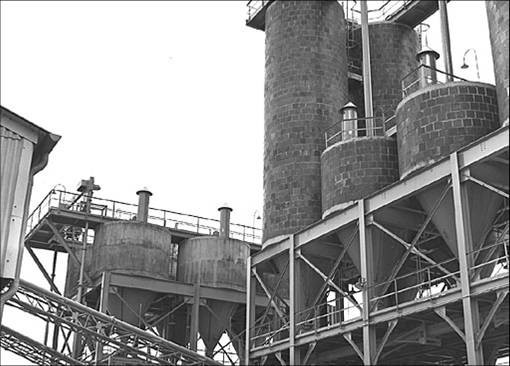
That sourcesix silos filled with uranium ore in the production arearesulted in relatively high levels of radon exposure to 12 percent of the workers. More than half (56 percent) of the workers were exposed to low levels of radon while working at the site.
Our findings have scientific and political ramifications, explains Susan Pinney, PhD, corresponding author of the study and associate professor of environmental health at UC. Now we know workers in the plants production area prior to 1959 may be at increased risk for developing lung cancer and other exposure-related health problems.
Third-shift plant workers were most affected, during some years being exposed to three times more harmful radon gas than workers on other shifts, according to the UC study. Researchers say the elevated exposure was the result of decreased air movement and less dispersion of radon gas during the night.
Pinney and Richard Hornung, PhD, recently reported their findings in the September issue of the Journal of Exposure Science and Environmental Epidemiology. This is the first time on-site radon exposure at the plant has been quantified in workers.
A previous study identified two silos, known by the code name K-65, as the only source of radon exposure. The silos were located on the west side of the U.S. Department of Energy Uranium Processing Plant in Fernald.
Our original intention was to develop and validate radon exposure estimates for the K-65 silos, explains Hornung. But when we studied radon tracks on film placed on window glass in the Fernald plant, we found evidence of a second, previously unidentified radon source.
UC researchers traced the radon to six silos, known by the code name Q-11, centrally located near a major production area. The silos were originally used to store high grade uranium ore and later held byproducts from the ore chemical separation process known as raffinate.
The initial site review conducted by the federal government overlooked the Q-11 silos as a source of radon emissions, says Hornung, a professor of environmental health at UC and director of the biostatistics and data core at Cincinnati Childrens
When the plant was in operation, employees wore badges to measure gamma radiation exposurebut not alpha radiation sources like radon, he adds.
According to company records, 7,143 people worked at the uranium processing plant between 1952 and the plants closing in 1989.
Uranium is a heavy metal that is essential for operation of electricity-producing nuclear reactors around the world. The metal can be removed from ore through a chemical separation process that leaves a soupy mixture of liquid and chemical byproducts known as raffinate. That raffinate was stored in the K-65 silos.
Uranium raffinate has high levels of radium and radon decay products, explains Pinney, and for more than 30 years the K-65 silos emitted radon gas into the plants atmosphere. The gas is odorless and colorless, so the workers never knew they were breathing it.
According to the National Academy of Sciences, radon is the second leading cause of lung cancer in the
Pinney's team conducted a four-year study, based on questionnaire information about actual work location and the time of work shifts, to determine how much radon workers from different areas of the plant were exposed to.
Fernald personnel records did not include work locations, so to accurately evaluate radon exposure levels the UC researchers developed a complex worker-location coding system to place employees at specific sites across the plant. They also used a specialized plastic film to measure radon exposure at the various plant locations. By studying the number of tracks left on the film by radon decay products, they found the second radon source.
Radon gas disperses widely, explains Pinney, and since the level of radon exposure is based on your proximity to a specific source, we had to know approximately where each worker stood or sat during their shift to figure out what level of radon they were being exposed to.
Pinneys team divided the 1,000-acre Fernald facility into numerous work locations within areas of the facility: the production area, which included all production plants and outlying buildings; controlled production areas other non-production areas where workers were also required to undergo decontamination measures; and uncontrolled areas, which included common destinations such as the cafeteria, administrative offices, laundry and laboratories. Employees were further differentiated into 41 categories based on what years and shifts they worked in the plant.
Using information from individual workers job history files, the team was able to assign workers to locations across the plant, for each calendar year. Worker locations were verified using data from more than 2,100 detailed questionnaires completed by employees enrolled in the plants medical monitoring program.
Although we cant determine the exact number, says Hornung, our research suggests that over 2,500 people may have been exposed to levels of radon gas that were higher than previously thought during their daily work, coming from a combination of the Q-11 silo and K-65 sources.
Researchers point out that the radon emitting materials in the K-65 and Q-11 silos were removed in the process of cleaning up the site, so there is no longer any source of radon gas related to the site.
This research was funded by the U.S. Public Health Service, the National Institute of Occupational Safety and Health and the National Institute of Environmental Health Sciences.
Study collaborators include David Brewer and James Nasuta. George Killough of Hendecagon Corp. and Jeffrey Lodwick, PhD, a former UC staff member who is now with the U.S. Department of Labor, also contributed to the study. Hornung has a dual affiliation with UC and Cincinnati Childrens.
Several medical screening programs are available to former Fernald workers. They include:
- Fernald Worker Medical Monitoring Program, (513) 870-0900
- Building Trades National Medical Screening Program, www.btmed.org or (800) 866-9663.
- Worker Health Protection Program, www.worker-health.org or (513) 367-1333.
More information about radon is available at www.epa.gov/radon. Specific questions from workers should be directed to the Centers for Disease Control and Prevention by calling (800)-CDC-INFO.

Susan Pinney, PhD, is a professor at UC.
Tags
Related Stories
Cancer Center plays key role in lab research, clinical trials for new pancreatic cancer drug
September 1, 2026

WLWT and WCPO highlighted the contributions of University of Cincinnati Cancer Center researchers that helped lead to the recent FDA approval of daraxonrasib, a new treatment for pancreatic cancer.
Cancer Center physician receives $150,000 New Investigator Research Grant to study treatment-resistant leukemia
September 1, 2026
The University of Cincinnati Cancer Center’s Sarah Skuli, MD, PhD, received a two‑year, $150,000 Leukemia Research Foundation New Investigator Grant to study TP53‑mutated leukemia, a treatment‑resistant subtype with very poor outcomes.
Heavy social media use linked to depression
August 31, 2026

U.S. News and World Report, Yahoo! News, MSN, USA Today and other national media highlight a new study by the University of Cincinnati and Northwestern University that found a correlation between heavy social media use and depression in adults.