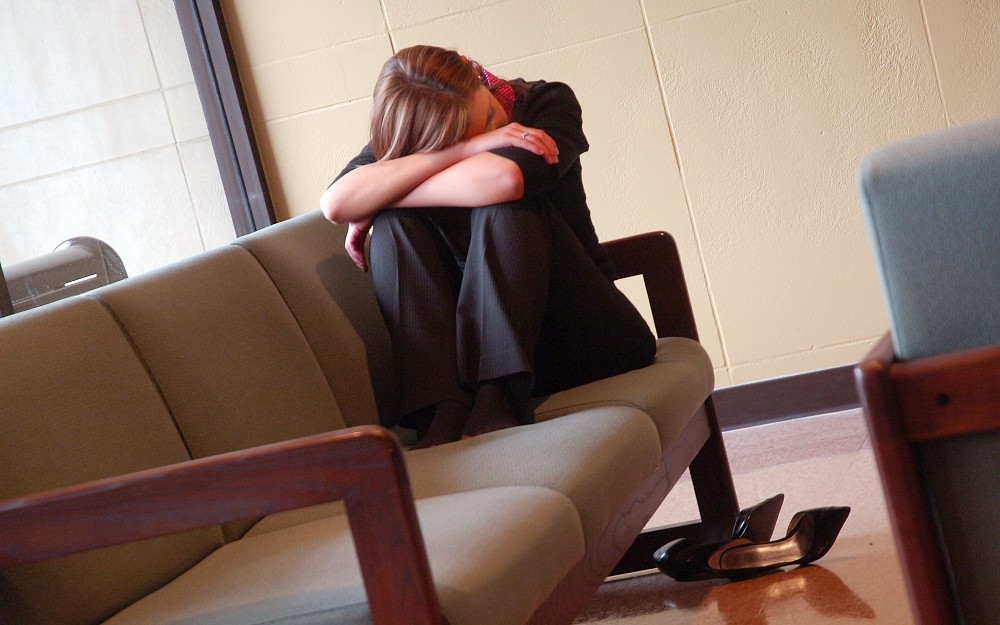
Researchers Study Depression in Newly Diagnosed Breast Cancer Patients

According to
Too often physicians focus exclusively on patients medical needs and overlook the personal challenges they are struggling to overcome in day-to-day life, says Ruth Lavigne, MD, a UC assistant professor and radiation oncologist at the UC Barrett Cancer Center at University Hospital. Without intervention, these changes can lead to serious depression that may be detrimental to the patients physical recovery.
For this study, newly diagnosed breast cancer patients are given a 12-question survey to screen for signs of depression at the beginning of radiation treatment and during the two week and three month medical follow-up visits. The survey measures patients perceived functioning, symptoms and emotional distress as a gauge of overall mental and physical well being.
Study participants who demonstrate warning signs of depression are referred to Cancer Family Care for follow-up behavioral health services at no cost. Personal interactions with the physician will be taken into account when deciding whom to refer for counseling services.
Studies have shown there is a connection between mental and physical health, adds Carol Huber, director of clinical services at Cancer Family Care and study collaborator. Cancer treatment makes a lot of patients feel awful, but the worst typically happens during and after treatment because the patient is tired, stressed and dealing with changing relationships.
Since the study began, 35 percent of women in the study have tested positive for depression. Patients will be reassessed at the conclusion of treatment to determine if the patients experienced better health outcomes as a result of behavioral health services.
Were focused on treating the whole patient and understanding how their mental state of mind impacts physical health, says Carla Williams, department of psychiatry research consultant and study collaborator. We want to help patients get through the psychosocial challenges of a chronic illness while improving their overall quality of life.
The multidisciplinary research project is a collaboration of UCs departments of radiation oncology and psychiatry, the Barrett Center and Cancer Family Care, a nonprofit organization that provides counseling, education and emotional support to people affected by cancer or cancer-related death.
Funding for the project came from the Marlene Harris-Ride Cincinnati Fund, a pilot grant program administered through the joint cancer program. Three to five grants are awarded to scientists annually, based on the amount of funds generated at the Ride Cincinnati cycling event held in June.
For more information on this study enrollment, contact Lisa Scott at (513) 584-4073. To find a UC cancer clinical trial, visit www.uccancercenter.uc.edu/research/clinicaltrials.

Carol Huber, Shannon Offerman, MD, Ruth Lavigne, MD, and Carla Williams are collaborating on a pilot study of depression in new breast cancer patients.

Ruth Lavigne, MD, is an assistant professor of radiation oncology.
Tags
Related Stories
Cancer Center plays key role in lab research, clinical trials for new pancreatic cancer drug
September 1, 2026

WLWT and WCPO highlighted the contributions of University of Cincinnati Cancer Center researchers that helped lead to the recent FDA approval of daraxonrasib, a new treatment for pancreatic cancer.
Cancer Center physician receives $150,000 New Investigator Research Grant to study treatment-resistant leukemia
September 1, 2026
The University of Cincinnati Cancer Center’s Sarah Skuli, MD, PhD, received a two‑year, $150,000 Leukemia Research Foundation New Investigator Grant to study TP53‑mutated leukemia, a treatment‑resistant subtype with very poor outcomes.
Heavy social media use linked to depression
August 31, 2026

U.S. News and World Report, Yahoo! News, MSN, USA Today and other national media highlight a new study by the University of Cincinnati and Northwestern University that found a correlation between heavy social media use and depression in adults.