New Technology Creates Options for Patients With Severe Heart Disease

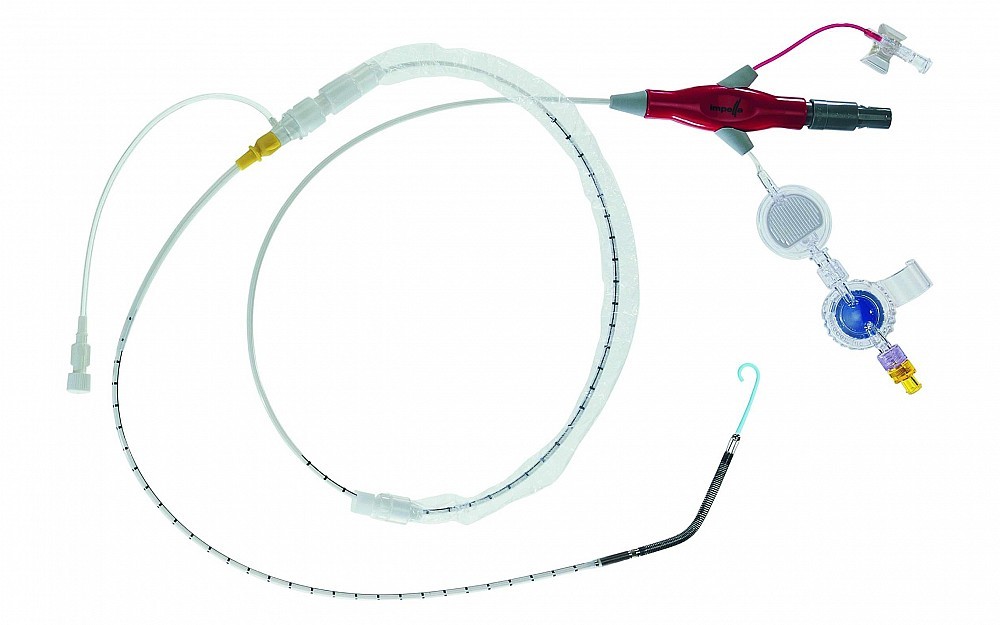
The devicethe Impella 2.5is a minimally invasive catheter designed to pump blood to the aorta and reduce the hearts workload and oxygen consumption. Massoud Leesar, The balloon pump requires placement of a thin balloon into an artery via catheter, usually in the groin, that leads to the largest artery in the body, the aorta. The catheter is connected to a computer that controls inflation, deflation, timing and pressure, so that the balloon will inflate when the heart muscle relaxes and deflate just before the heart pumps again. The new devicea circulatory assist deviceis implanted in the same way but has a miniature pump that pushes 2.5 liters of freshly oxygenated blood from the left ventricle of the heart into the aorta to maintain circulatory support in patients with severely limited function. This device will allow us to do high-risk interventions for patients while vastly eliminating stress on their hearts, Leesar says. He adds that this technology is fairly new to the In the clinical trialcalled PROTECT IIhalf of patients will be given the new device while the other half will be given the balloon therapy. Leesar says this technology is especially good news for people who suffer from cardiogenic shockinadequate circulation of blood due to failure of the heart ventricles to function effectively. Roughly 70 percent of people with this condition die because of the extreme loss of heart function, he says. This tool shows great promise in helping them survive while we perform angioplasty. After establishing blood supply to the heart, function improves, resulting in a positive impact on the patients survival. Weve seen success so far, and we hope this new device will continue to prove as a worthwhile treatment option for some of our high-risk patients. This study was funded in part by Abiomed, the manufacturers of Impella 2.5. Leesar has no financial interests in Abiomed.

Impella 2.5 heart device is now being used by Dr. Massoud Leesar, MD, and other UC cardiologists to help patients while they wait on other interventions.

Massoud Leesar, MD, associate chief in the division of cardiovascular diseases
Tags
Related Stories
Heavy social media use linked to depression
August 31, 2026

U.S. News and World Report, Yahoo! News, MSN, USA Today and other national media highlight a new study by the University of Cincinnati and Northwestern University that found a correlation between heavy social media use and depression in adults.
On-site training in Speech & Hearing Clinic sets UC’s programs apart
August 27, 2026
At the University of Cincinnati’s Speech & Hearing Clinic, Doctor of Audiology and Speech-Language Pathology graduate students gain real-world experience while providing free speech and hearing services to the community.
Funding expands UC research into weight gain side effects of bipolar medication
August 26, 2026
University of Cincinnati researchers have been approved for funding by the Patient-Centered Outcomes Research Institute (PCORI) to expand the implementation of healthy lifestyle interventions and metformin prescription to help manage weight gain in overweight or obese youth taking second-generation antipsychotic medications.