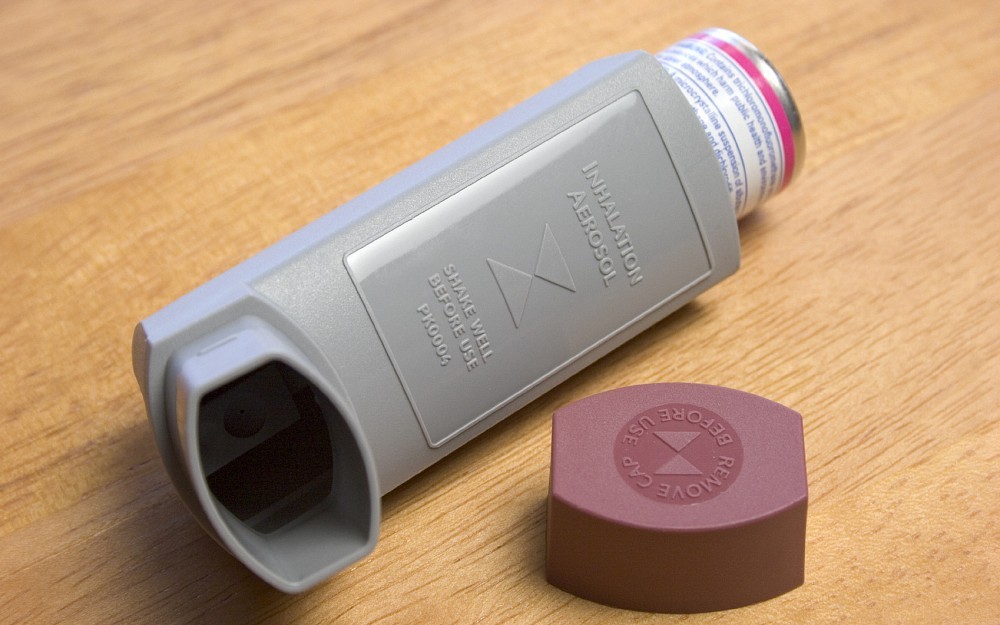
UC HEALTH LINE: 'Frightful' Winter Weather Leads to Asthma Flare-Ups

But for a person with asthma, the chilly weather can be especially unpleasantand even dangerous.
Asthma is a common, chronic illness involving the respiratory system in which the airways occasionally constrict or become inflamed and are lined with excessive amounts of mucus.
Michael Benedict, MD, an assistant professor at UC and physician for internal medicine and pediatrics at University Pointe, says exposure to environmental precipitants is known to increase the severity of asthma.
This is well recognized by physicians, he says. There are many known contributors to the worsening of asthma during winter.
He says cold weather, for many people, means holing up inside with tightly sealed windows and doors.
Dust mites can be another cause of asthma flare-up, he says. We shut ourselves inside the house during the winter, exposing ourselves to more allergens. Houses are so efficient now that there is not a steady flow of air so we have an increased exposure to irritants and triggers.
Benedict adds that a spotless house doesnt necessarily mean a healthy house.
We may be too clean, he says, noting that studies show children who are exposed to a number of germs or allergens at an early age are less likely to develop asthma in adulthood. Evidence suggests that exposing the immune system to a variety of germs may actually be beneficial.
However, he says if a child has already been diagnosed with asthma, keeping him or her away from a child care facility during the cold and flu season is advised, although not always feasible.
Cold and flu bugs are known triggers for asthma, he says. If your child gets ill, take the extra precautions to make sure the child is taking the correct medications, if applicable, and watch closely for breathing difficulties.
Benedict says its often hard to recognize the development of asthma during the cold and flu season. He advises you to watch for:
- Wheezing
- Breathing troubles
- Persistent cough that may or may not be accompanied by wheezing and is made worse in cold air or with exertion
- Rapid breathing or hyperventilation
- Chest pain in children
Most of all, pay attention to what your body is telling you or what your children may be telling you about their breathing to handle the situation in a timely, healthy manner.

Michael Benedict, MD, department of internal medicine and pediatrics
Tags
Related Stories
Cancer Center plays key role in lab research, clinical trials for new pancreatic cancer drug
September 1, 2026

WLWT and WCPO highlighted the contributions of University of Cincinnati Cancer Center researchers that helped lead to the recent FDA approval of daraxonrasib, a new treatment for pancreatic cancer.
Cancer Center physician receives $150,000 New Investigator Research Grant to study treatment-resistant leukemia
September 1, 2026
The University of Cincinnati Cancer Center’s Sarah Skuli, MD, PhD, received a two‑year, $150,000 Leukemia Research Foundation New Investigator Grant to study TP53‑mutated leukemia, a treatment‑resistant subtype with very poor outcomes.
Heavy social media use linked to depression
August 31, 2026

U.S. News and World Report, Yahoo! News, MSN, USA Today and other national media highlight a new study by the University of Cincinnati and Northwestern University that found a correlation between heavy social media use and depression in adults.