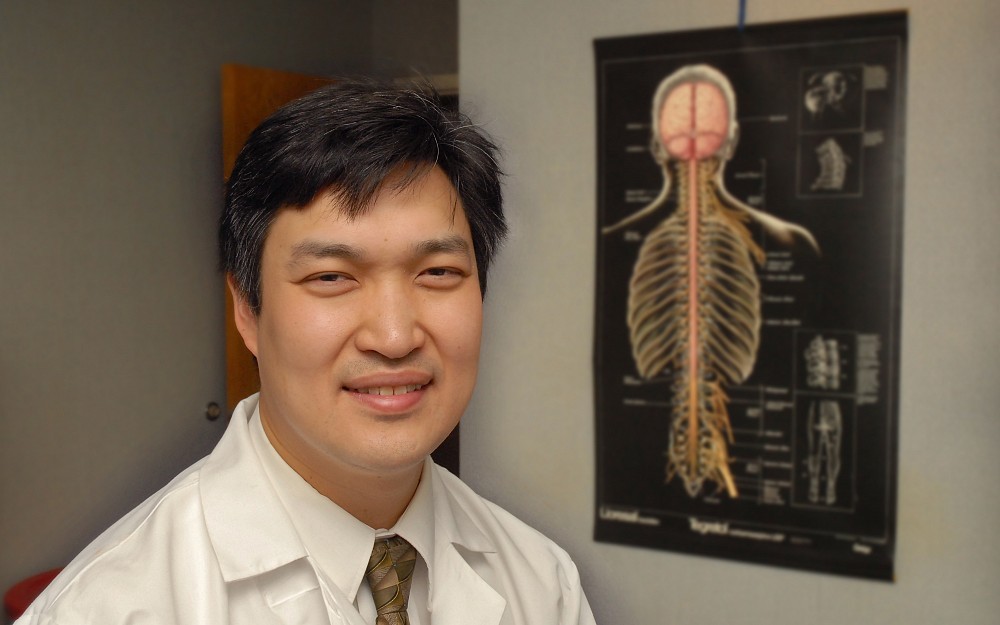
Aneurysms Don't Occur Earlier in 2nd Generation

CINCINNATIDoes genetic anticipation play a role in ruptured brain aneurysms?
Previous studies have suggested that it does, with the aneurysms occurring at younger ages in subsequent generations of families with at least one case of ruptured aneurysm. But they actually may tend to happen at an older age, according to a new study from University of Cincinnati (UC) researchers.
If thats the case, says the team headed by Daniel Woo, MD, an associate professor of neurology at UC, the genetic epidemiology of ruptured brain aneurysms is far more complicated with multiple genetic and environmental risk factors interacting with each other.
The study is being published in the Feb. 24, 2009, print issue of Neurology, the medical journal of the American Academy of Neurology (AAN). Woo is an AAN member.
A brain aneurysm is a weak or thin spot in a blood vessel that can rupture, causing bleeding into the brain, or hemorrhage. Its known that people whose parents or aunts and uncles have had a brain aneurysm are more likely to have one themselves, indicating that genetic risk factors passed down by generation are responsible.
Prior studies had suggested that aneurysm ruptures affect the offspring or second generation as much as 20 years younger than older generations, suggesting that a genetic risk factor is accumulating with each generation and that aggressive screening should be performed.
The new study, correcting for length of follow-up, shows that may not be the case, and the aneurysms actually may happen at an older age. Instead of occurring earlier, once the length of follow-up was accounted for, the study found that ruptured aneurysms tended to occur on average slightly later in life. Ruptured aneurysms were identified in the second generation 50 percent less often than the older generation of the family, but the study suggests that the second generation will catch up in the number of aneurysm ruptures as that generation gets older.
This finding is contrary to previous studies, which have suggested that genetic anticipation occurs in brain aneurysms, meaning that subsequent generations are affected at an earlier age, Woo says.
Our study accounted for a similar length of follow-up in both generations, which may explain the differing result and that the risk in subsequent generations is increased over their entire life, not just at a younger age. The finding also suggests that we should be looking for all types of genetic risks, not just those that accumulate over generations, which are a very small group of risk factors.
The study involved 26 clinical centers in the United States, Canada, New Zealand and Australia. Researchers identified 429 families with at least one case of a ruptured brain aneurysm. The researchers then evaluated all siblings in two generations of each family, for a total of 1,641 people. Of the 429 families, 54, or 12.5 percent, had cases of ruptured aneurysms in two generations of the familyeither parent and child or aunt/uncle and niece/nephew.
The study was supported by grants from the National Institute of Neurological Disorders and Stroke.
Tags
Related Stories
Heavy social media use linked to depression
August 31, 2026

U.S. News and World Report, Yahoo! News, MSN, USA Today and other national media highlight a new study by the University of Cincinnati and Northwestern University that found a correlation between heavy social media use and depression in adults.
On-site training in Speech & Hearing Clinic sets UC’s programs apart
August 27, 2026
At the University of Cincinnati’s Speech & Hearing Clinic, Doctor of Audiology and Speech-Language Pathology graduate students gain real-world experience while providing free speech and hearing services to the community.
Funding expands UC research into weight gain side effects of bipolar medication
August 26, 2026
University of Cincinnati researchers have been approved for funding by the Patient-Centered Outcomes Research Institute (PCORI) to expand the implementation of healthy lifestyle interventions and metformin prescription to help manage weight gain in overweight or obese youth taking second-generation antipsychotic medications.