UC HEALTH LINE: Radiofrequency Ablation Can Ease Breathing Difficulties

CINCINNATIIf youre experiencing chronic breathing difficulties, a simple procedure with a complicated name could be the answer to your problem.
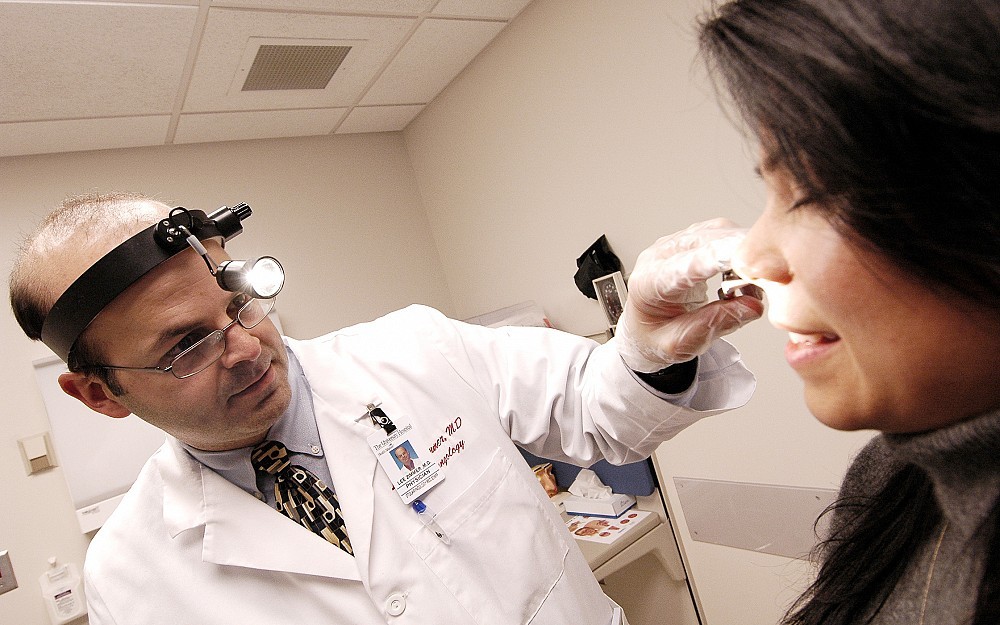
Radiofrequency ablation of the turbinatesput more simply, reducing the size of tissue within the nose with the aid of a needle-equipped heating deviceis a procedure that can be done in a physicians office under local anesthesia.
That gives it a big advantage over traditional surgery, which involves removing part of the turbinates under general anesthesia in an operating room, says Lee Zimmer, MD, an assistant professor in the University of Cincinnati (UC) Department of OtolaryngologyHead and Neck Surgery.
Its quicker, safer, convenient and painless, says Zimmer, adding that the procedure itself only takes about 12 minutes after the local anesthetic takes effect.
Turbinates are structures located inside the nosethree on each sidecovered with mucus membranes. They warm and moisten air that is breathed in and also trap allergens, bacteria and viruses, keeping them from gaining access to the body.
Enlarged turbinates hinder air intake, so the goal of radiofrequency ablation is to shrink them so the patient gains more volume for breathing.
Every time you increase the radius of space in the nose youre increasing airflow to the power of 4, Zimmer says. So you dont need a lot.
Inserting a needle into three points on each of the two inferior (lowest) turbinates, Zimmer heats the tissue to approximately 70 degrees Celsius (158 degrees Fahrenheit). That breaks down protein, shrinking the size of the turbinate, and causes an inflammatory reactionscarringwhich also serves to shrink the turbinate.
During the first few days of recovery, Zimmer recommends saltwater sprays and a decongestant spray for two or three days, plus over-the-counter Tylenol as needed for discomfort. It takes about four weeks to get 80 percent healing from the scarring, Zimmer says, and the typical patient feels a difference in breathing by that time.
Likely candidates for the procedure are patients who complain of nasal congestionnot sinusitis (inflammation of the sinuses)who have been treated with prescription medications without success. Because of the electrical current involved, the procedure is not performed on patients who use pacemakers.
Tags
Related Stories
Heavy social media use linked to depression
August 31, 2026

U.S. News and World Report, Yahoo! News, MSN, USA Today and other national media highlight a new study by the University of Cincinnati and Northwestern University that found a correlation between heavy social media use and depression in adults.
On-site training in Speech & Hearing Clinic sets UC’s programs apart
August 27, 2026
At the University of Cincinnati’s Speech & Hearing Clinic, Doctor of Audiology and Speech-Language Pathology graduate students gain real-world experience while providing free speech and hearing services to the community.
Funding expands UC research into weight gain side effects of bipolar medication
August 26, 2026
University of Cincinnati researchers have been approved for funding by the Patient-Centered Outcomes Research Institute (PCORI) to expand the implementation of healthy lifestyle interventions and metformin prescription to help manage weight gain in overweight or obese youth taking second-generation antipsychotic medications.