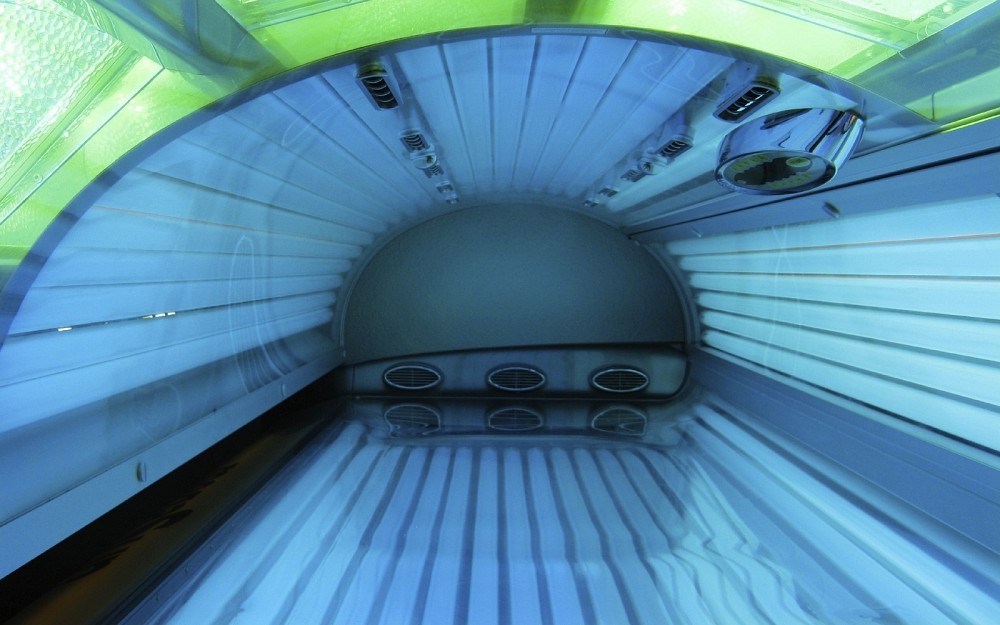
UC HEALTH LINE: Get Your Vitamin D From Food or Supplements Not Tanning Beds

CincinnatiTheres no question that vitamin D does the body good, but tanning beds and unprotected sun exposure are not the best ways to get it, according to dermatologists with UC Physicians.
The risk for skin cancer from UV light exposure outweighs the benefit of obtaining your necessary vitamin D from intentional UV exposure, says Ann Neff, MD, a dermatologic surgeon with UC Physicians and assistant professor of dermatology at the University of Cincinnati (UC) College of Medicine. There are much safer ways to acquire your daily dose of vitamin D that wont increase your risk for skin cancer.
Neff suggests taking a healthier approach to ensuring proper vitamin D intake: eating foods that are naturally rich in vitamin Dsuch as catfish, salmon, tuna and other fishand foods fortified to contain vitamin D, including milk, yogurt and certain cereals and breads.
Studies suggest it only takes a small amount of time10 to 15 minutes twice a weekof sun exposure to 15 percent of your body to get the required dose of vitamin D. But the impact of that light exposure on cancer risk varies greatly based on your skin type, the time of year, your proximity to the equator, and other factors such as cloud cover and smog, adds Neff, who specializes in Mohs surgery for skin cancer.
There are two types of ultraviolet radiation thought to contribute to skin damage from sun exposureUVB and UVA. Broad-spectrum sunscreens protect against both, allowing the body to be exposed to the sun without burning and reducing the risk of skin cancer. Tanning beds can utilize UVA, UVB or a combination of UVA/UVB waves. Even if tanning beds emit the non-burning UVA rays, they are still damaging, contributing to premature skin aging.
Research has shown that UVB exposure is directly linked to skin cancer. The results on UVA exposure are less conclusive, but clinicians do know that the rays penetrate deeper into the layers of the skin, which will cause deterioration of the dermis and acceleration of the aging process.
UVA lightwhich is often touted as a safe way to tanhas no vitamin D benefit and is still associated with an increased risk for skin cancer, explains Neff. Only UVB exposure will trigger the conversion of the vitamin D precursor to sun-generated vitamin D3 that impacts bone health. The problem is that UVB rays are also responsible for burning and linked directly to skin cancer.
For non-fish eaters, Neff says the safest way to ensure you get the proper amount of vitamin D is through supplements.
You can get a six month supply of vitamin D supplements for about $10 and its much safer in terms of skin cancer riskand cheaperthan going to a tanning bed or hanging out in the sunshine without protection, she adds.
According to the American Cancer Society, more than 1 million people are diagnosed with superficial skin cancers annually. An additional 100,000 are diagnosed with melanoma, a more severe form of skin cancer that affects pigment-producing cells called melanocytes.
Neff says tanning is only recommended under medical supervision for certain skin conditions after other medical treatments have failed or are deemed too risky.
If someone has severe eczema, psoriasis, or other problematic skin conditions, different treatments such as immunosuppressive drugs or creams have a host of risk factors to consider. In some cases, the benefits do outweigh the risk and tanning is prescribed, but it is done in a highly controlled setting under medical supervision. Even at that, we still caution people to wear their sunscreen and be safe in the sun, she explains.
Neff recommends that all people use a daily facial moisturizer with an SPF of 15 or higher even in the winter, and sunscreen or moisturizer with an SPF of 30 in the summer or when in areas with a higher UV index. Sunscreen should be used in conjunction with protective clothing and hats while practicing sun-safe habits, including avoidance of the sun during midday. Fair skinned individuals with a high propensity to burn should consider using an SPF of at least 50, as should people with a family history of melanoma or skin cancer.
For more information on vitamin D or skin cancer, visit www.netwellness.org, a collaborative health-information Web site staffed by
To schedule an appointment with UC Physicians Dermatology, call (513) 475-8268 or visit www.ucphysicians.com.
Related Stories
Cancer Center plays key role in lab research, clinical trials for new pancreatic cancer drug
September 1, 2026

WLWT and WCPO highlighted the contributions of University of Cincinnati Cancer Center researchers that helped lead to the recent FDA approval of daraxonrasib, a new treatment for pancreatic cancer.
Cancer Center physician receives $150,000 New Investigator Research Grant to study treatment-resistant leukemia
September 1, 2026
The University of Cincinnati Cancer Center’s Sarah Skuli, MD, PhD, received a two‑year, $150,000 Leukemia Research Foundation New Investigator Grant to study TP53‑mutated leukemia, a treatment‑resistant subtype with very poor outcomes.
Heavy social media use linked to depression
August 31, 2026

U.S. News and World Report, Yahoo! News, MSN, USA Today and other national media highlight a new study by the University of Cincinnati and Northwestern University that found a correlation between heavy social media use and depression in adults.