Vital Minutes Lost to Screening in Severe Ischemic Strokes, Study Shows

CINCINNATIWhen it comes to stroke, every second countsand that includes the time it takes to perform and interpret diagnostic tests.
Research being presented by a University of Cincinnati (UC) neurologist at the European Stroke Conference in Stockholm this week indicates that a common method of screening patients with symptoms of severe ischemic stroke for blocked arteries results in more instances of death or severe disability compared to simply taking these patients directly to treatment. (An ischemic stroke is a stroke caused by an interruption in the flow of blood to the brain, such as a blood clot.)
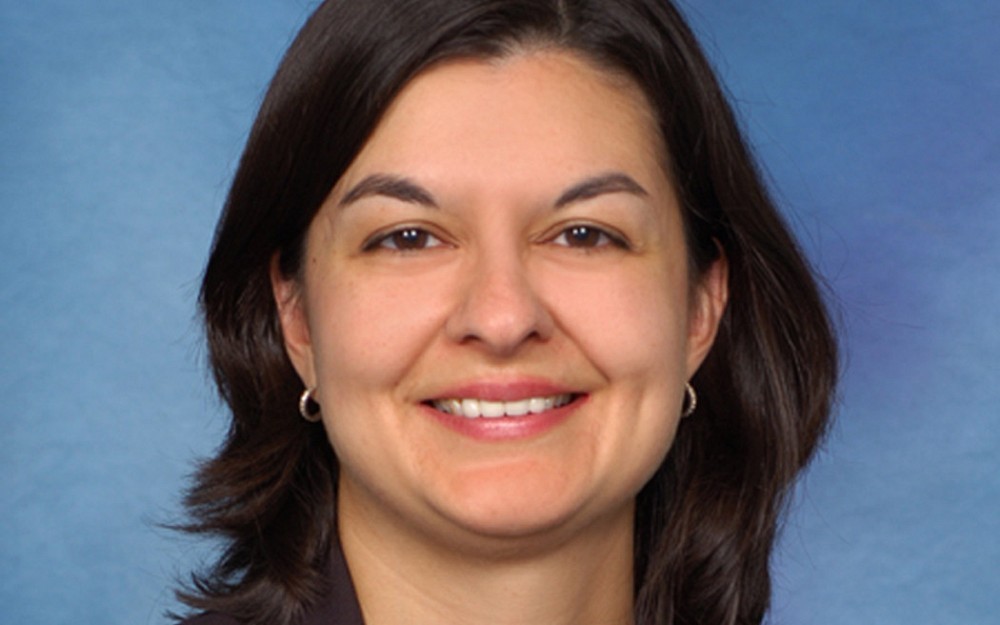
Pooja Khatri, MD, an assistant professor in UCs neurology department, is the principal investigator of the study that examined the use of computed tomography angiography (CTA) to screen for blocked brain arteries in patients with severe ischemic strokes who were already being treated intravenously with the clot-busting drug rtPA within three hours of symptom onset.
CTAa non-invasive procedure which provides three-dimensional views of cerebral blood vesselsis often used to screen for blocked arteries in the brain before mobilizing a neurointerventional team and performing a slightly riskier but more accurate screening procedure, digital subtraction angiogram (DSA).
Considered the gold standard for identifying blocked arteries, DSA is an invasive procedure in which a catheter is inserted into a major artery of the leg and navigated through the carotid arteries to inject a dye for use as a contrast medium in X-ray images of the blood vessels. Immediately after identifying a blockage by DSA, more rtPA can also be injected directly into the clot via the catheter, or the blockage can be extracted using other types of mechanical device catheters during the procedure.
Because patients with severe ischemic strokes are likely to have blockages, Khatri says, the time lost in performing the CTA instead of going directly to the angiogram could decrease their chances of a good clinical outcome.
Khatris team performed a decision analysis using data from a comprehensive literature review and the multi-center Interventional Management of Stroke pilot trials I/II. According to the analysis, going straight to DSA instead of triaging patients with CTA would lead to better outcomes on average.
The study concludes that patients with severe ischemic stroke within three hours of the first symptoms are best served by forgoing CTA screening and expediting digital subtraction angiogram after administering intravenous rtPA. This approach would lead to 16 additional DSAs but three fewer cases of death or severe disability for every 100 patients.
In cases of severe ischemic stroke, the probability of seeing an occlusion is so high and the risk of doing a diagnostic angiogram is so small that its not worth wasting the time to perform and assess a CTA, says Khatri. That time is lost brain.
We have previously shown that every 30-minute delay to opening up that blockage leads to a 10 percent decline in the probability of a good outcome.
CTA could be considered if it does not delay treatment, Khatri says, or if the suspicion of an arterial blockage is low.
Khatris co-investigators from UC were Joseph Broderick, MD, professor and chair of the neurology department, and Matthew Flaherty, MD, an assistant professor in the neurology department. Other co-investigators were Sharon Yeatts, PhD, and Edward Jauch, MD, both of the Medical College of South Carolina. Myriam Hunink, MD, PhD, adjunct professor at Harvard University and professor at Erasmus University in Rotterdam, Netherlands, was the study's senior author.
The study was sponsored by Khatris NIH/NINDS K23 grant and will be the basis for her masters thesis at the Harvard School of Public Health.
The European Stroke Conference is held annually, with this years meeting May 26-29 in Stockholm. Last years meeting in Nice, France, was attended by more than 3,700 people from 82 countries.
Tags
Related Stories
Cancer Center plays key role in lab research, clinical trials for new pancreatic cancer drug
September 1, 2026

WLWT and WCPO highlighted the contributions of University of Cincinnati Cancer Center researchers that helped lead to the recent FDA approval of daraxonrasib, a new treatment for pancreatic cancer.
Cancer Center physician receives $150,000 New Investigator Research Grant to study treatment-resistant leukemia
September 1, 2026
The University of Cincinnati Cancer Center’s Sarah Skuli, MD, PhD, received a two‑year, $150,000 Leukemia Research Foundation New Investigator Grant to study TP53‑mutated leukemia, a treatment‑resistant subtype with very poor outcomes.
Heavy social media use linked to depression
August 31, 2026

U.S. News and World Report, Yahoo! News, MSN, USA Today and other national media highlight a new study by the University of Cincinnati and Northwestern University that found a correlation between heavy social media use and depression in adults.