Supplement Could Reduce Risk of Gestational Diabetes in Pregnant Women

CINCINNATI
Women who enter pregnancy with a higher body weight face serious risks: higher rates of gestational diabetes, high blood pressure and the risk of a larger baby who could go on to have obesity, diabetes and heart disease in the future.
But a nutritional supplement, already shown to benefit fetal brain and vasculature development, could reduce those risks in both mother and child.
That's why a nutrition researcher at the University of Cincinnati is launching a local, two-year clinical trial to study the effects of the supplement in pregnant women.
Principal investigator Debra Krummel, PhD, UC department of nutritional sciences, believes the nutrient, omega-3 fatty acid docosahexaenoic acid (DHA), can lower blood sugar levels and improve insulin sensitivity in pregnant women.
Krummel says DHA has proven benefits, but most women do not get an adequate amount of it in their diet.
"It's already been shown to be safe and good for the brain, but we're studying whether it might have another benefit, which is improving insulin resistance," she says.
National health officials are recognizing the risks associated with obesity during pregnancy. This year, the Institute of Medicine and the National Research Council revised their gestational weight gain guidelines for the first time since 1990, lowering the recommended levels of weight gain for women entering pregnancy with a higher body weight.
But Krummel says those guidelines don't help women right now.
"We have to find a way to help these women once they're already pregnant, and thats what this supplement is about," she says. "If this supplement can improve insulin sensitivity and markers of inflammation in pregnant women, it's a huge clinical benefit. It's already good for the baby but if it can have this other benefit, it's huge."
For this trial, researchers are looking for 90 pregnant women 18-40 years old who are less than 26 weeks pregnant and in good health overall.
Trial participants are expected to visit the General Clinical Research Center at Cincinnati Children's Hospital Medical Center three times during their pregnancy.
On their first visit, women will be randomly assigned to a control group or an omega-3 group. The control group will not receive omega-3. Then, and on subsequent visits, researchers will take a blood sample and discuss dietary habits with the participants. After birth, samples will be taken from placentas.
In addition to receiving prenatal vitamins and dietary analysis, participants will be compensated for their time.
The trial is supported by the Office of Research on Women's Health (ORWH), the National Institutes of Health (NIH) and the National Heart, Lung and Blood Institute (NHLBI) with additional support from Mead Johnson and Martek Biosciences Corporation. Krummel reports no conflicts of interest with the trial's sponsors.
For more information about the study, visit www.uc.edu/pregnancystudy or contact study coordinator Margaret Andrews at (513) 558-7042 or andrewsmt@ucmail.edu.

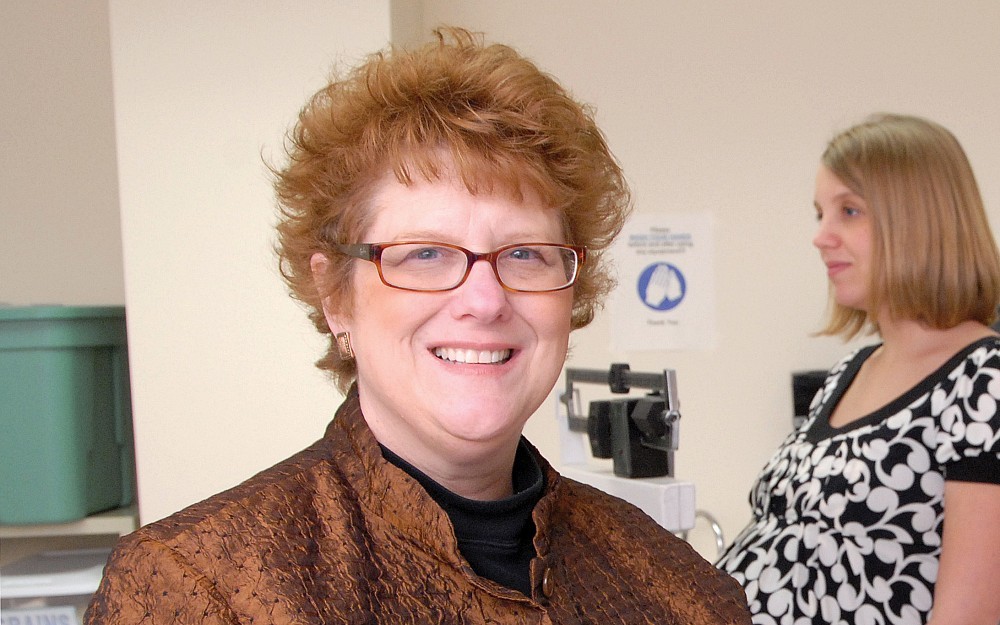
Debra Krummel, PhD, department of nutritional sciences, is studying the effect of an omega-3 supplement in pregnant women.
Tags
Related Stories
Cancer Center plays key role in lab research, clinical trials for new pancreatic cancer drug
September 1, 2026

WLWT and WCPO highlighted the contributions of University of Cincinnati Cancer Center researchers that helped lead to the recent FDA approval of daraxonrasib, a new treatment for pancreatic cancer.
Cancer Center physician receives $150,000 New Investigator Research Grant to study treatment-resistant leukemia
September 1, 2026
The University of Cincinnati Cancer Center’s Sarah Skuli, MD, PhD, received a two‑year, $150,000 Leukemia Research Foundation New Investigator Grant to study TP53‑mutated leukemia, a treatment‑resistant subtype with very poor outcomes.
Heavy social media use linked to depression
August 31, 2026

U.S. News and World Report, Yahoo! News, MSN, USA Today and other national media highlight a new study by the University of Cincinnati and Northwestern University that found a correlation between heavy social media use and depression in adults.