UC Students Earn Top Spots in National Biomedical Engineering Design Competitions

CINCINNATIA team of University of Cincinnati (UC) students has reached the top levels of two national competitions designed to find the best new medical devices in the nations universities.
Members of the Single Port Solutions team placed in the final round of the 2009 American Society of Mechanical Engineers Innovation Showcase (ASME IShow). They also placed among the top three teams in the BMEidea competition, sponsored by National Collegiate Investors and Innovators and the National Science Foundation.
To be successful, students must show judges their products are both innovative and commercially feasibleif they win, they receive seed money to commercialize their device. UCs team will spend early June traveling from New York City to California to present its work and accept its awards.
The UC teams device, a single port laparoscopic access tool, allows surgeons to perform common laparoscopic surgeries with only one entry pointlocated in the umbilicus, or belly button. Usually, those surgeries are done through four or five entry points, said team leader and student Michael Wirtz.
What our tool does is consolidate all the ports into the access tool, says Wirtz. Using our device, the surgeon is able to perform a normal laparoscopic procedure, like a gall bladder removal or appendectomy, through the single port. Theyll still be able to insert all the instruments they need while hiding the scar in the umbilicusso you have little scarring and it reduces trauma and improves recovery time of the patient.
The single entry port also decreases the risk of herniation from cuts in the abdominal wall, says Wirtz.
The team, part of UCs Medical Device Innovation & Entrepreneurship Program, includes three senior biomedical engineering students, one graduate student from the College of Design, Architecture, Art and Planning and many faculty advisors.
Mary Beth Privitera, an assistant professor in the biomedical engineering department, is director of the program, which brings students from the Colleges of Business, Engineering, Design, Art, Architecture and Planning, to solve problems in the medical fields.
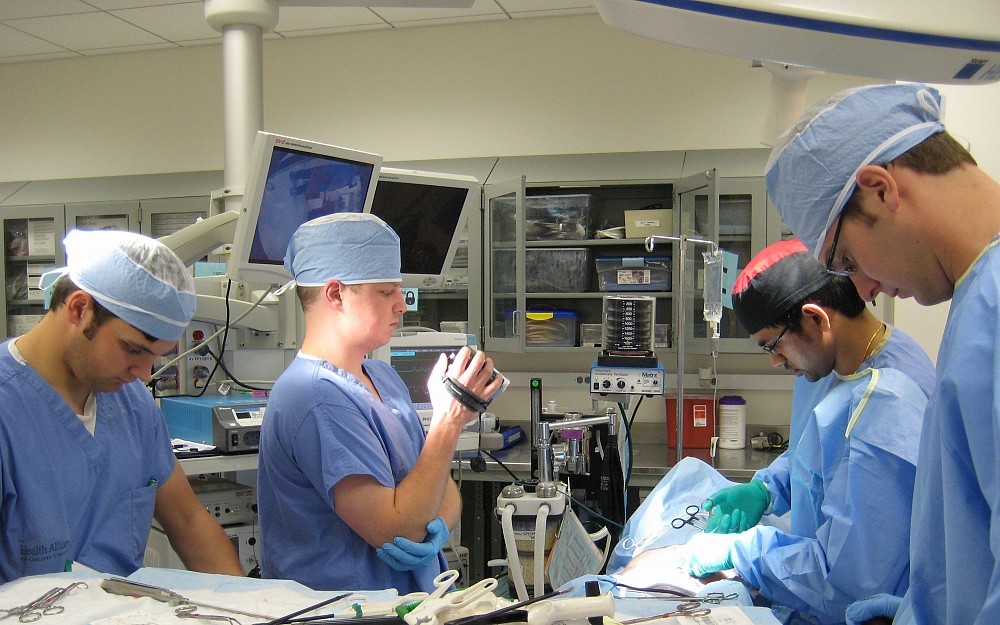
The team developed the single port access tool with suggestions from UC surgeons, spending the following months developing their concept, creating prototypes and verifying their design in surgical labs.
Without careful design, Privitera says the device could be very, very cumbersome for surgeons.
But the team has done a very good job of giving the doctors little features and benefits that will make their job easier, she says.
In addition to recognizing UC as a high-ranking program in device design and biomedical engineering, Privitera says the ASME IShow and BMEidea results will help propel the students careers: Theyll meet other award winners, investors and device design professionals. It will put them in front of the right people.
This particular group of students has excelled all along the way, she says. With access from Department of Surgery to support from (Vice President for Research) Sandra Degens office, weve made it a really successful process.
In addition to Wirtz and Privitera, members of the Single Port Solutions team include Kyle Fath, UC Biomedical Engineering; Miao Wang, UC Industrial Design; Steve Haverkos, UC Biomedical Engineering, and Prakash Gatta, MD, UC Department of General Surgery, clinical advisor for the team.
Related Stories
London fashion in focus
August 31, 2026
Since 2016, the University of Cincinnati's College of Design, Architecture, Art, and Planning (DAAP) has offered a study abroad trip called “United Kingdom: The Style Studies.” This year, 15 students embarked across the Atlantic right before the fall semester to see all the retail expertise London has to offer.
Heavy social media use linked to depression
August 31, 2026

U.S. News and World Report, Yahoo! News, MSN, USA Today and other national media highlight a new study by the University of Cincinnati and Northwestern University that found a correlation between heavy social media use and depression in adults.
On-site training in Speech & Hearing Clinic sets UC’s programs apart
August 27, 2026
At the University of Cincinnati’s Speech & Hearing Clinic, Doctor of Audiology and Speech-Language Pathology graduate students gain real-world experience while providing free speech and hearing services to the community.