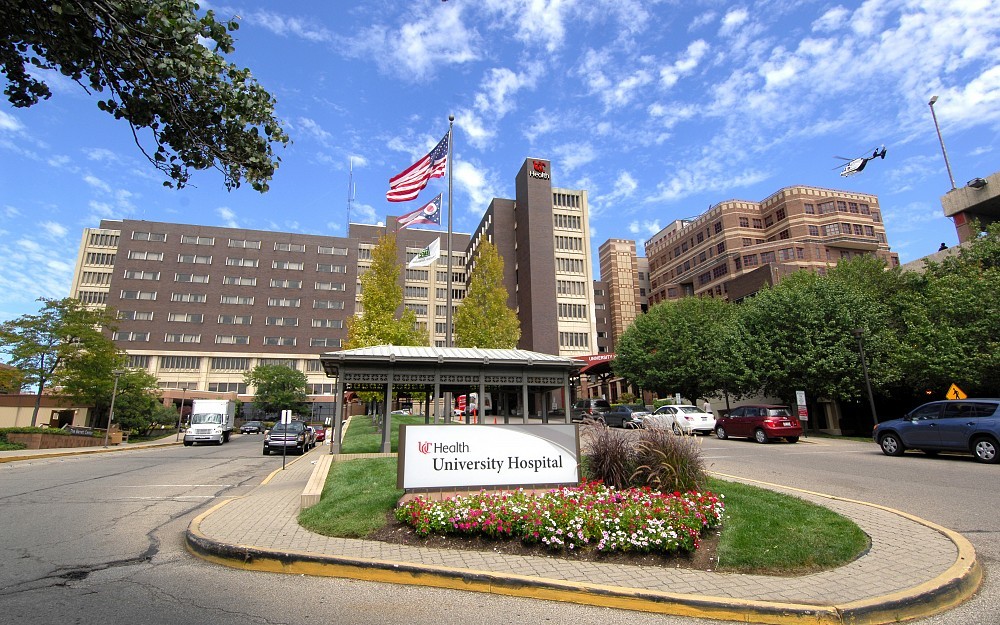
University Hospital Kidney Transplant Program Outperforms Regional, National Results

CINCINNATIIn a new report from a national database on U.S. transplant programs, UC Health University Hospitals kidney transplant program outpaces regional and national results on transplant survival rates, organ acceptance rates and wait-list times.
The University Hospital kidney transplant program recorded its busiest year ever in 2009, with 78 transplants performed and a 23 percent growth in the kidney transplant waiting list. Still, the program maintains waiting times comparable to regional transplant programs and almost a year shorter than programs outside the region.
The results are listed in the latest report from the Scientific Registry of Transplant Recipients (SRTR), released twice each year. The SRTR contains data on all transplant recipients, transplant donors and transplant centers in the United States as mandated by the National Organ Transplant Act and overseen by the U.S. Department of Health and Human Services.
E. Steve Woodle, MD, chief of transplant surgery at UC, says the 78 transplants performed in 2009 represent almost a doubling in the number of kidney transplants performed a decade ago.
"The increase is likely due to a combination of factors, says Woodle. "One factor is the high proportion of living-donor kidney transplants performed in our program. This is important because living-donor transplants last for an average of 20 years, compared to 11 years for deceased-donor transplants.
SRTR data shows more than 64 percent of UC Healths patients received living-donor transplants, higher than the national average of 45 percent.
Woodle says
University Hospital
achieved the growth in living-donor transplants by offering programs to address incompatibilities between potential donors and recipients and pioneering kidney exchange and nondirected donor programs.
The data also showed a 100 percent one-year and 92.4 percent three-year survival rate for living donor transplants at
University Hospital
, exceeding national results.
"Importantly, the data shows these excellent results were achieved by our program even though the patients transplanted were a higher risk group than the national population, says Gautham Mogilishetty, MD, medical director for University Hospital's renal transplant program. "Patients were older, more obese, and included more African-Americans and more patients with immunity against kidney donors.
With an increase in referrals to the program, University Hospital's transplant wait list grew 23 percent over fiscal years 2008 and 2009, compared to regional and national growth rates under 6 percent. Despite this,
University Hospital
maintains a median wait-list time of just under 35 months.
Woodle credits new monitoring programs with increasing the efficiency and success of the transplant program.
"Patients are routinely seen in University Hospital transplant clinics within three weeks of referral, after which they undergo a more efficient evaluation process, he says.

Gautham Mogilishetty, MD, medical director of University Hospital's renal transplant program
Tags
Related Stories
Cancer Center plays key role in lab research, clinical trials for new pancreatic cancer drug
September 1, 2026

WLWT and WCPO highlighted the contributions of University of Cincinnati Cancer Center researchers that helped lead to the recent FDA approval of daraxonrasib, a new treatment for pancreatic cancer.
Cancer Center physician receives $150,000 New Investigator Research Grant to study treatment-resistant leukemia
September 1, 2026
The University of Cincinnati Cancer Center’s Sarah Skuli, MD, PhD, received a two‑year, $150,000 Leukemia Research Foundation New Investigator Grant to study TP53‑mutated leukemia, a treatment‑resistant subtype with very poor outcomes.
Heavy social media use linked to depression
August 31, 2026

U.S. News and World Report, Yahoo! News, MSN, USA Today and other national media highlight a new study by the University of Cincinnati and Northwestern University that found a correlation between heavy social media use and depression in adults.