'Starving' Fat Suppresses Appetite

CINCINNATIPeptides that target blood vessels in fat and cause them to go into programmed cell death (termed apoptosis) could become a model for future weight-loss therapies, say University of Cincinnati (UC) researchers.
A research team led by Randy Seeley, PhD, of UCs Metabolic Diseases Institute, has found that obese animal models treated with proapoptotic peptide experienced decreased food intake and significant fat loss.
The study was published online ahead of print Jan. 26, 2010, in Diabetes, the official journal of the American Diabetes Association.
White adipose (fat) tissue is vascularized, much like a tumor, and growth of fat tissue is highly dependent on the tissues ability to build new blood vesselsa phenomenon called angiogenesis.
Inhibiting adipose angiogenesisessentially starving fat tissuecan reverse the effects of a high-fat diet in mice and rats, says Seeley.
The body is extremely efficient at controlling energy balance, says Seeley, a professor in UCs internal medicine department and recipient of the 2009 Outstanding Scientific Achievement Award from the American Diabetes Association.
Think of fat tissue like a bathtub, he says. To keep the amount of water the same, you have to make sure that the speed of the water coming in and the water going out match. If the water is coming in faster than the water is going out, eventually you have to build a bigger bathtub.
Obesity is the same. People who eat more calories than they burn have to build a bigger fat tissue bathtub, and building new blood vessels is crucial to building this bigger bathtub. For each additional pound of fat tissue, you need to build a mile of blood vessels.
What we found is that if we can target these fat tissue blood vessels, animals eat less and lose weight as their bathtubs get smaller.
Seeley and his team treated lean and obese mice and rats with the proapoptotic peptide for periods of four or 27 days. They measured energy intake and expenditure daily in all animalssome on low-fat diets, others on high-fat diets. The team found that the peptide completely reversed high-fat-diet-induced obesity in already obese mice and also reduced body weight in the mice and rats placed on high-fat diets. No changes were recorded in animals on low-fat diets.
Seeleys team found that fat loss was occurring without major changes to energy expenditure, but with reduced food intake. The authors noted that there were no signs of illness with this treatment and results were independent of the actions of the appetite-controlling hormone leptin.
These experiments indicate that there is a novel system that informs our brains about the size of our fat tissue bathtubs and can influence how much we eat, says Seeley. The findings highlight the ability to provide new therapeutic strategies for obesity based on these dynamics of blood vessels in our fat tissue.
The next step, Seeley says, is to figure out the important signals that come from fat that cause the weight loss.
This study was supported by grants from the National Institute of Diabetes and Digestive and Kidney Diseases. Co-authors include Dong-Hoon Kim, PhD, and Stephen Woods, PhD, both of the University of Cincinnati.
UCs Metabolic Diseases Institute, formerly the Genome Research Institute, is located on UCs Reading Campus and is home to a team of researchers who focus on the genetic, molecular and cellular mechanisms of metabolic disorders, cancer and cardiovascular disease.

Randy Seeley, PhD, was one of 29 scientists asked to present at the recently concluded 134th Nobel Symposium in Gothenburg, Sweden.

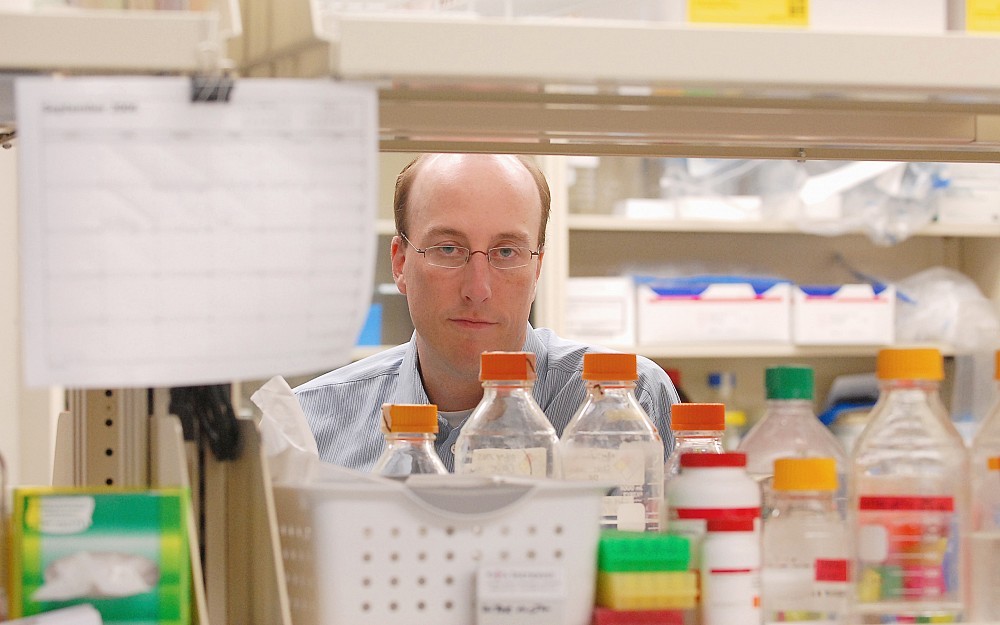
Obesity researcher Randy Seeley, PhD
Tags
Related Stories
Heavy social media use linked to depression
August 31, 2026

U.S. News and World Report, Yahoo! News, MSN, USA Today and other national media highlight a new study by the University of Cincinnati and Northwestern University that found a correlation between heavy social media use and depression in adults.
On-site training in Speech & Hearing Clinic sets UC’s programs apart
August 27, 2026
At the University of Cincinnati’s Speech & Hearing Clinic, Doctor of Audiology and Speech-Language Pathology graduate students gain real-world experience while providing free speech and hearing services to the community.
Funding expands UC research into weight gain side effects of bipolar medication
August 26, 2026
University of Cincinnati researchers have been approved for funding by the Patient-Centered Outcomes Research Institute (PCORI) to expand the implementation of healthy lifestyle interventions and metformin prescription to help manage weight gain in overweight or obese youth taking second-generation antipsychotic medications.