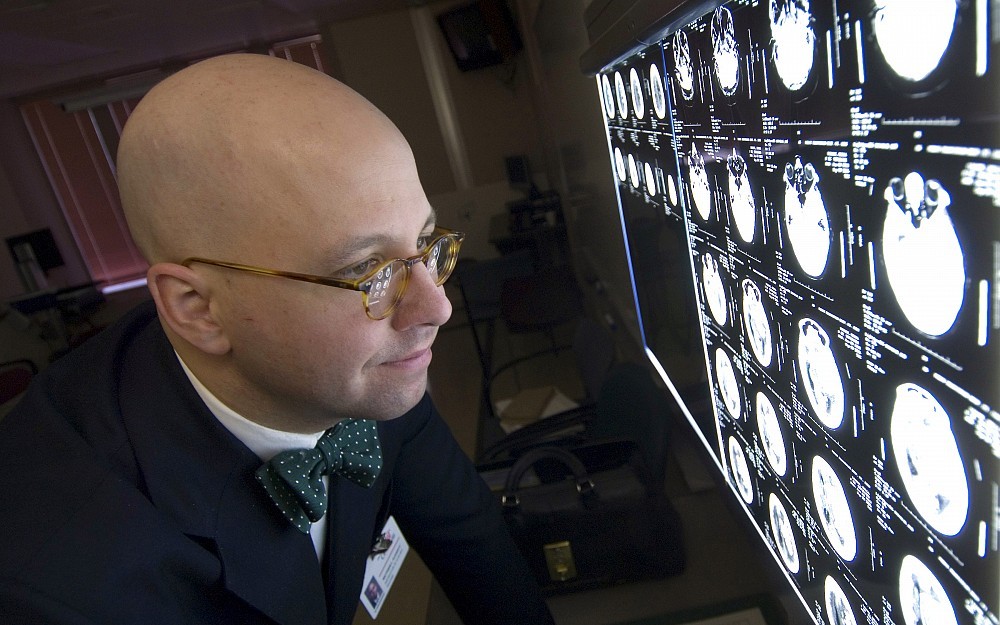
Study Indicates Extracranial Internal Carotid Artery Stenosis a Factor in 38,000 Strokes

CINCINNATIAbout 38,000 strokes may be attributed to extracranial internal carotid artery stenosis annually in the United States, new research from the University of Cincinnati (UC) shows.
Matthew Flaherty, MD, an associate professor in the department of neurology and a member of the UC Neuroscience Institute at University Hospital, is presenting his findings Friday, Feb. 26, at the American Stroke Associations International Stroke Conference 2010 in San Antonio.
Extracranial (outside the cranium, which houses the brain) internal carotid artery stenosis is a condition in which one or both of the two internal carotid arteries, which carry blood to the brain, become narrowedusually through a buildup of plaque in the inner lining of the artery. Stenosis heightens the risk for ischemic stroke, which results when a blood clot blocks circulation to the brain.
Approximately 750,000 strokes occur in the United States annually, of which 85 percent are ischemic strokes. (The other 15 percent are hemorrhagic strokes, which occur when a weakened blood vessel ruptures.)
Flaherty and his co-investigators, all from UCs neurology department, examined statistics for patients with first-ever or recurrent ischemic stroke in the Greater Cincinnati/Northern Kentucky area in 2005 using figures from the Greater Cincinnati/Northern Kentucky Stroke Study, which identifies all hospitalized and autopsied cases of stroke and transient ischemic attack (TIA) in a five-county region.
By breaking down the types of strokes and adjusting incidence rates to the United States population according to the 2000 census, Flahertys team estimated that 38,000 strokes may be attributed to extracranial internal carotid artery stenosis annually in the U.S.
"Previous studies have estimated that 15 percent of ischemic strokes are caused by atherosclerosis, or large vessel cerebrovascular disease, in which a major artery is either significantly narrowed or is completely blocked off, Flaherty says. "But those studies have generally not distinguished between stenosis and occlusion (blockage), anterior and posterior circulations or extracranial and intracranial locations.
"These factors are important, because the cause of the stroke influences the treatment to prevent another stroke.
Medical imaging tests can determine if a carotid artery has been narrowed, Flaherty says, and the condition can often be repaired surgicallyeither by a carotid endarterectomy (CEA), in which the surgeon opens the artery and removes the plaque, or by stenting, in which a stent is inserted via a catheter to hold the artery open.
"If someones had a minor stroke and they have a high-grade narrowing of the carotid artery and you perform the surgery, its much more effective at preventing another stroke than just using medications, Flaherty says.
Tags
Related Stories
Heavy social media use linked to depression
August 31, 2026

U.S. News and World Report, Yahoo! News, MSN, USA Today and other national media highlight a new study by the University of Cincinnati and Northwestern University that found a correlation between heavy social media use and depression in adults.
On-site training in Speech & Hearing Clinic sets UC’s programs apart
August 27, 2026
At the University of Cincinnati’s Speech & Hearing Clinic, Doctor of Audiology and Speech-Language Pathology graduate students gain real-world experience while providing free speech and hearing services to the community.
Funding expands UC research into weight gain side effects of bipolar medication
August 26, 2026
University of Cincinnati researchers have been approved for funding by the Patient-Centered Outcomes Research Institute (PCORI) to expand the implementation of healthy lifestyle interventions and metformin prescription to help manage weight gain in overweight or obese youth taking second-generation antipsychotic medications.