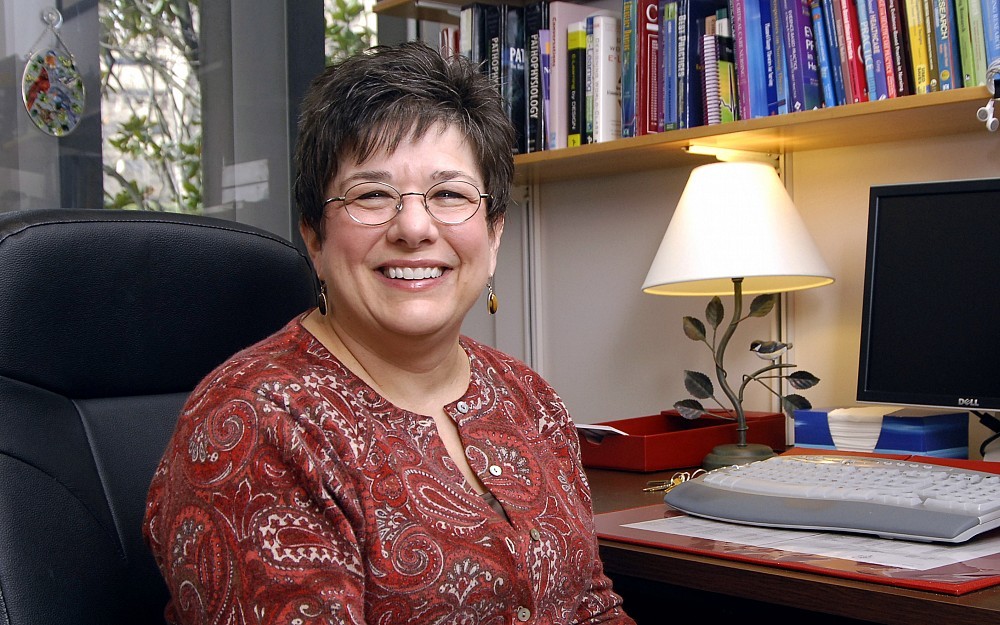
College of Nursing Works to Close Educators Gap With New Doctoral Program

CINCINNATITo help meet the growing demand for advanced practice nurses and nurse educators, the University of Cincinnati (UC) College of Nursing is in the final stage of approval to add a new doctoral degreea Doctorate in Nursing Program (DNP) to the nursing program.
"The ability to provide a doctoral degree that remains practice focused allows graduates to make a huge impact on health care delivery by providing the enhanced knowledge needed to improve nursing practice in increasingly complex leadership roles says Andrea Lindell, PhD, dean of the College of Nursing.
"This option, she adds, "provides even greater flexibility to the nursing role allowing us to attract and retain nurse leaders in the practice setting.
The focus nationwide is to prepare advance practice nurses who are better grounded in science and functioning in leadership roles, says the new programs development director, Robin Dennison, DNP, an associate professor in the college who earned her DNP at the University of Kentucky in 2005.
There are only about 100 DNP programs in the country, she says, with her graduating class the first to receive this doctoral degree.
Establishing the program at UC is consistent with an effort among leaders in nursing education to provide nurses the opportunity for a clinical doctorate with a strong emphasis on evidence-based practice.
With a DNP, Dennison says, graduates may choose to continue in their advanced practice role or assume roles such as faculty members, health policy nurses or nurse executives "where they would be better prepared to evaluate the current evidence and implement that evidence into practice.
According to the most recent American Association of Colleges of Nursing (AACN) reportings, almost two-thirds of the nursing school survey responders pointed to faculty shortages as a reason for not accepting all qualified applicants into entry-level baccalaureate programs.
Additionally, nursing schools in the United States turned away 49,948 qualified applicants from baccalaureate and graduate nursing programs in 2008 due to an insufficient number of faculty, clinical sites, classroom space, clinical preceptors and budget constraints.
This lack of nurse educators is among many factors leading to an expected nursing shortage. While not a panacea, the DNP option provides one more facet to the complex solution.
"Before the DNP, nurses who desired a doctorate only had the option of earning the research-focused PhD. Now, a nurse can maintain their clinical focus through the DNP and use this advanced knowledge to positively affect patient outcomes, says Dennison.
"Therefore, we look forward to the positive impact graduates from this program will have in health care delivery and nursing education both locally and globally.
Tags
Related Stories
Cancer Center plays key role in lab research, clinical trials for new pancreatic cancer drug
September 1, 2026

WLWT and WCPO highlighted the contributions of University of Cincinnati Cancer Center researchers that helped lead to the recent FDA approval of daraxonrasib, a new treatment for pancreatic cancer.
Cancer Center physician receives $150,000 New Investigator Research Grant to study treatment-resistant leukemia
September 1, 2026
The University of Cincinnati Cancer Center’s Sarah Skuli, MD, PhD, received a two‑year, $150,000 Leukemia Research Foundation New Investigator Grant to study TP53‑mutated leukemia, a treatment‑resistant subtype with very poor outcomes.
Heavy social media use linked to depression
August 31, 2026

U.S. News and World Report, Yahoo! News, MSN, USA Today and other national media highlight a new study by the University of Cincinnati and Northwestern University that found a correlation between heavy social media use and depression in adults.