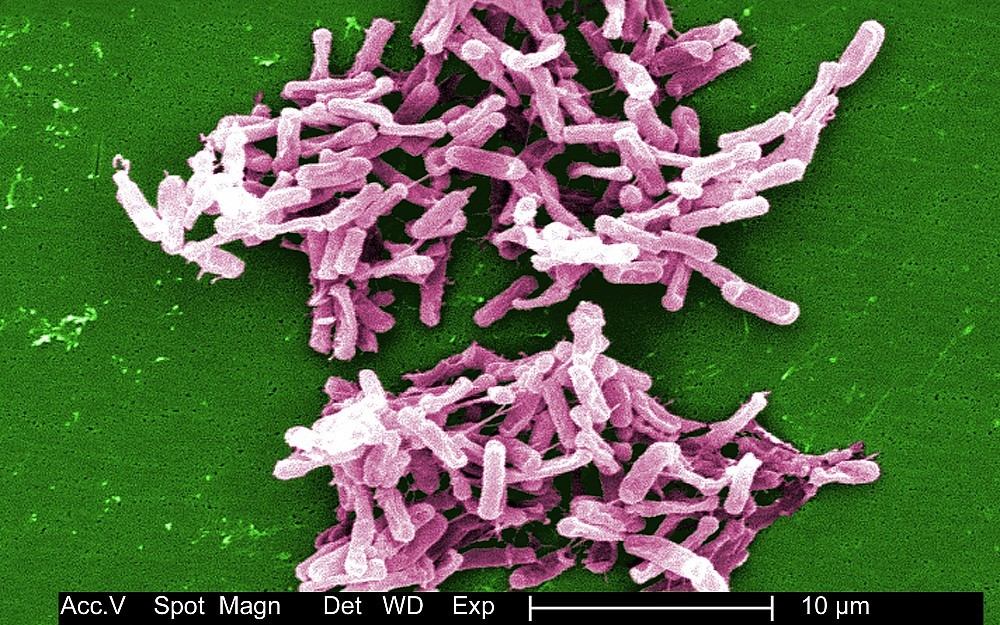
UC HEALTH LINE: C. Difficile on the Rise, UC Researchers Study Vaccine to Prevent Outbreaks

CINCINNATIThe thought of being infected with MRSA brings fear and panic to those who know how fatal the flesh-eating bacterial infection can be.
Now, recent reports show that a known bacterium is overtaking numbers of MRSA infections in hospital settings, making physicians re-evaluate prevention tactics nationally and leading to a local study which may help with the creation of a vaccine to stop the spread of the illness.
According to the Centers for Disease Control and Prevention, more than 28,000 people in the United States die from Clostridium difficile, or C. difficile, annually.
C. difficile is a bacterium that is naturally found inside the digestive tract, but if an overgrowth occurs, it can cause symptoms ranging from diarrhea to life-threatening inflammation of the colon. Illness from C. difficile most commonly affects older adults in hospitals or in long-term care facilities and typically occurs after use of antibiotic medications.
"In recent years, C. diff infections have become more frequent, more severe and more difficult to treat, says Bruce Yacyshyn, MD, a UC Health gastroenterologist, adding that treatment is expensive, ranging anywhere from $4,000 to $9,000. "Tens of thousands of people in the U.S. get sick from C. diff each year, including some otherwise healthy people who aren't hospitalized or taking antibiotics.
But now Yacyshyn is leading the local branch of a multi-center, national study to develop a vaccine that could help in preventing C. diff.
"The C. diff bacterium secretes a toxin, which is really what makes people ill, not the bacterium itself, he says. "By purifying these toxins and introducing them into an individuals immune system, we hope to get the bodys own immunity to recognize and fight the bacterium before it infects the patient.
Yacyshyn says that C. diff is likely to reoccur in roughly 20 to 40 percent of individuals who have contracted it in the past.
"We want to see what makes this population different from the other 60 to 80 percent of individuals who do not have a recurrence, he says, noting that the construction of this vaccine is similar to that of other toxoid vaccines, like tetanus, diphtheria and whooping cough.
The trial will look at patients who have had a recent C. diff infection prior to the introduction of the booster vaccine. Patients cannot have any pre-existing immune or inflammatory conditions, such as HIV or inflammatory bowel disease (IBD).
Patients will have a total of eight visits with a gastrointestinal specialist and will receive three doses of the vaccine.
"The criteria to participate in this trial are very specific; however, we are hoping to get at least 10 participants locally and roughly 612 nationally, he says. "If the vaccine proves beneficial in this population, it could be tested on a wider range of patients and one day be used as standard practice to prevent C. difficile in all patients admitted to the hospital.
But in the meantime, Yacyshyn suggests that health care providers as well as families and loved ones of those in the hospital or those infected with C. difficile take the time to complete one small task to prevent spread of the illness.
"Wash your hands, he says. "Alcohol-based hand sanitizers dont cut it when it comes to C. difficile. In addition to C. diff being a bacterium, it can exist in a dormant spore form, which can survive for weeks or months and begin multiplying when ingested. Soap and water will rid these dangerous spores from the surface of your hands and send them down the drain.
"In addition, hospital personnel should be compliant with gown and glove policies and keep the facilities clean, clean, clean. Until there is a sure way to prevent C. diff, soap and water will do the trick.
This clinical trial is being sponsored by sanofi pasteur, the vaccines division of sanofi-aventis. Yacyshyn is an adviser and consultant for sanofi-aventis.
Tags
Related Stories
Cancer Center plays key role in lab research, clinical trials for new pancreatic cancer drug
September 1, 2026

WLWT and WCPO highlighted the contributions of University of Cincinnati Cancer Center researchers that helped lead to the recent FDA approval of daraxonrasib, a new treatment for pancreatic cancer.
Cancer Center physician receives $150,000 New Investigator Research Grant to study treatment-resistant leukemia
September 1, 2026
The University of Cincinnati Cancer Center’s Sarah Skuli, MD, PhD, received a two‑year, $150,000 Leukemia Research Foundation New Investigator Grant to study TP53‑mutated leukemia, a treatment‑resistant subtype with very poor outcomes.
Heavy social media use linked to depression
August 31, 2026

U.S. News and World Report, Yahoo! News, MSN, USA Today and other national media highlight a new study by the University of Cincinnati and Northwestern University that found a correlation between heavy social media use and depression in adults.