Clinical Trial Examines Gene Therapy for Dialysis Patients

CINCINNATIA new gene therapy may help sustain dialysis access in patients, eliminating the need for multiple interventions and surgeries and improving their quality of life.
Timmy Lee, MD, UC Health nephrologist, and Rino Munda, MD, UC Health transplant surgeon, are leading a local branch of a national clinical trial looking at the gene therapy product Trinam to see if it prevents stenosis, or narrowing of the veins at the connection of the vein and dialysis graft, in hemodialysis patients.
"Trinam is a combination of a vascular endothelial growth factor genea protein produced by cells that stimulates blood vessels to dilate and prevents formation of blockagespackaged in an adenoviral vectoror viruswhich delivers genetic material into cells, says Lee, the lead investigator on the study. "We hope that this treatment will lead to more successful outcomes for dialysis patients.
Hemodialysis is a technique in which a machine filters wastes out of a patients blood once the kidney fails but requires access to the patients blood stream.
There are over 450,000 people undergoing hemodialysis in the United States, a process that costs taxpayers a minimum of $60,000 per patient annually.
Lee says there are two main types of permanent dialysis access: an arteriovenous fistula, which connects the artery and the vein directly, and an arteriovenous graft, which connects the artery and the vein using a plastic tube.
Unfortunately, grafts may only last between six and 12 months due to stenosis before requiring an intervention.
As a result, hemodialysis patients often have repeated hospital admissions and surgeries in order to keep their dialysis access open.
"Using this treatment, Trinam will be delivered locally to the dialysis access areas of approximately 250 subjects using a biodegradable device made from collagen, Lee says. "At the end of access graft surgery, the delivery device is fitted around the outside of the patient's vein where it has been joined to the access graft and the adenovirus carrying the gene product is injected between the device and the blood vessel.
"We believe that the genetic material in Trinam will stimulate the relaxation of the muscle and disburse the medications that will help keep the vein open and functioning.
He adds that local delivery may be more effective than other medicines because it is applied directly to the site where the stenosis most commonly occurs.
"It immediately stimulates the appropriate regulators right at the site of the problem, avoiding side effects that may accompany the metabolism of other medicines in body, he says. "We hope that this therapy will improve the quality of care for patients undergoing dialysis and will prevent the need for surgeries and invasive procedures to keep dialysis access open.
The local study is being conducted as a research initiative of the Cincinnati Dialysis Access Program (CAP) and UCs division of nephrology and hypertension. The CAP is a multi-disciplinary translational research program focused on both the basic science and clinical research aspects of dialysis access dysfunction. Ark Therapeutics is sponsoring the trial.
Lee does not receive honoraria from Ark Therapeutics and does not cite any conflict of interest.

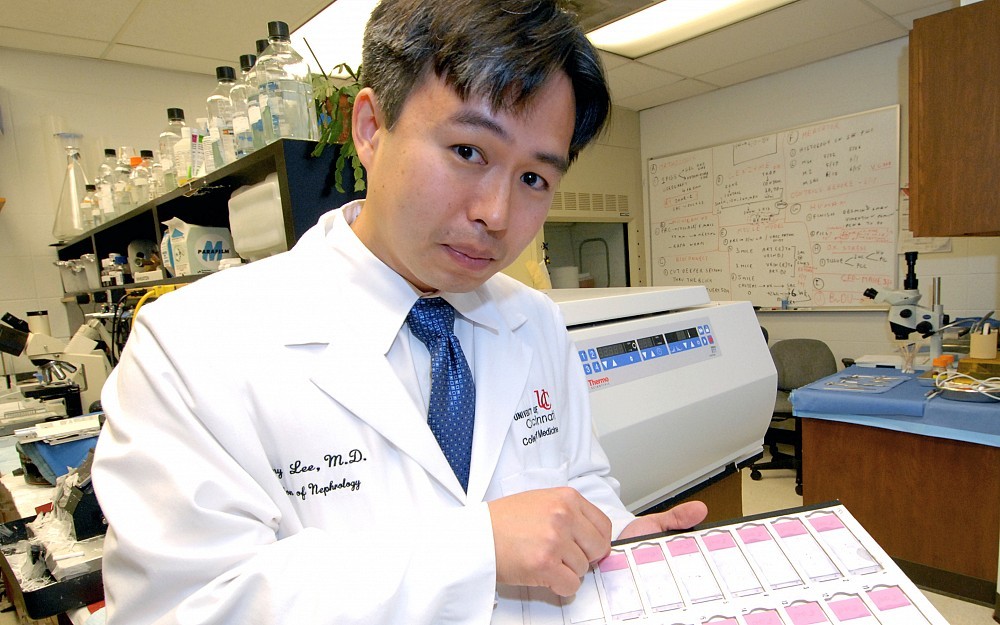
Timmy Lee, MD, assistant professor in the nephrology and hypertension division
Tags
Related Stories
Heavy social media use linked to depression
August 31, 2026

U.S. News and World Report, Yahoo! News, MSN, USA Today and other national media highlight a new study by the University of Cincinnati and Northwestern University that found a correlation between heavy social media use and depression in adults.
On-site training in Speech & Hearing Clinic sets UC’s programs apart
August 27, 2026
At the University of Cincinnati’s Speech & Hearing Clinic, Doctor of Audiology and Speech-Language Pathology graduate students gain real-world experience while providing free speech and hearing services to the community.
Funding expands UC research into weight gain side effects of bipolar medication
August 26, 2026
University of Cincinnati researchers have been approved for funding by the Patient-Centered Outcomes Research Institute (PCORI) to expand the implementation of healthy lifestyle interventions and metformin prescription to help manage weight gain in overweight or obese youth taking second-generation antipsychotic medications.