Researchers Awarded $1.44 Million in American Cancer Society Grants

CINCINNATITwo University of Cincinnati (UC) scientists have been awarded a total of $1.44 million in grant funding from the American Cancer Society to further their study of the causes and treatment of cancer.
The two $720,000 grants, which go into effect July 1, 2010, and continue for four years, are among 152 new national research and training grants from the society totaling over $50 million in the first of two grant cycles for 2010.
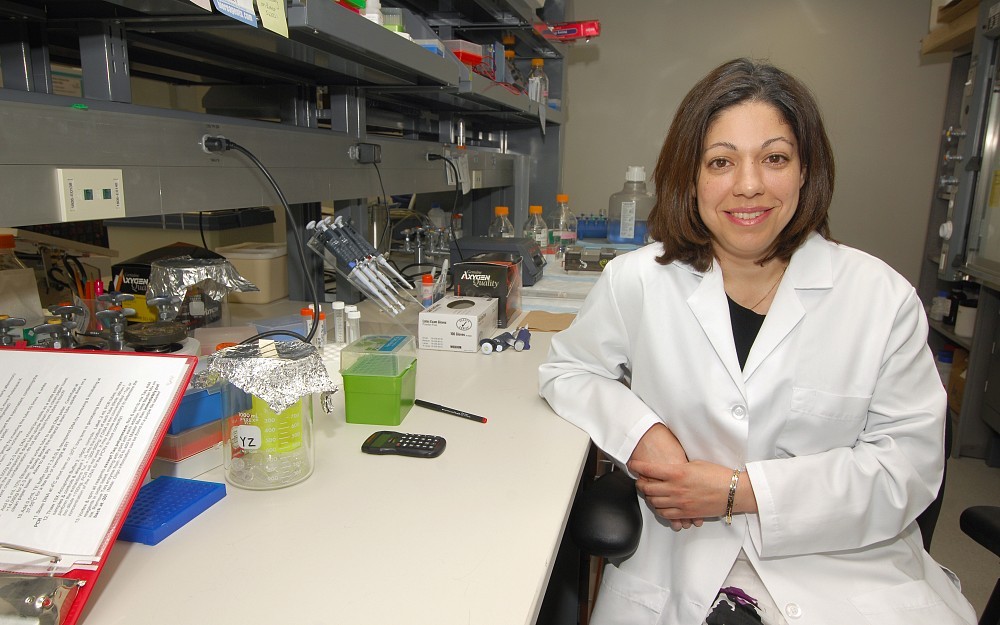
Yana Zavros, PhD, an assistant professor in the department of molecular and cellular physiology, is studying how chronic infection with the bacterium Helicobacter pylori causes gastric cancer (also known as stomach cancer). The award will support research projects investigating biological changes to the cells lining the stomach to better understand how those changes promote tumor initiation and growth.
In 2009, there were an estimated 21,130 new cases of stomach cancer in the United States, according to the National Cancer Institute of the National Institutes of Health (NIH). U.S. deaths from stomach cancer totaled 10,620.
Kathryn Wikenheiser-Brokamp, MD, PhD, an assistant professor in the department of pathology and laboratory medicine at UC and the divisions of pathology & laboratory medicine and pulmonary biology at Cincinnati Childrens Hospital Medical Center, is studying the retinoblastoma (Rb) protein familys role in the development of cancerous lung tissue. She anticipates that her work could provide information to personalize therapy for individual patients as well as develop new treatments that could target cancer cells and minimize side effects.
Lung cancer is the No. 1 cause of cancer death in the nation for both men and women, killing close to 159,000 Americans every year.
"Theres still much to learn about the development of gastric cancer, says Zavros. "This award will help support our lab as it continues to identify the complex interactions that result in stomach cancer with the long-term goal of developing new approaches for the targeted therapy of cancer. "It is a tremendous honor to have been chosen as one of the recipients of this grant, and I wish to express my sincere thanks to the society.
"The ultimate goal of our research is to identify the basic machinery that controls lung growth and to determine how the machinery becomes dysfunctional in lung cancer, says Wikenheiser-Brokamp. "Im optimistic that we can work with the American Cancer Society to create more birthdays for cancer patients if we combine the passionate efforts of clinicians, researchers, cancer patients and volunteers.
The American Cancer Society, headquartered in Atlanta, is the nations largest private, not-for-profit source of funds for scientists studying cancer. Since its founding in 1946, the American Cancer Societys extramural research grants program has devoted about $3.5 billion to cancer research.
In 2009, UC received more than $1.1 million in research funding from the American Cancer Society. Of those funds, the societys Ohio chapter contributed $30,000.
Tags
Related Stories
Cancer Center plays key role in lab research, clinical trials for new pancreatic cancer drug
September 1, 2026

WLWT and WCPO highlighted the contributions of University of Cincinnati Cancer Center researchers that helped lead to the recent FDA approval of daraxonrasib, a new treatment for pancreatic cancer.
Cancer Center physician receives $150,000 New Investigator Research Grant to study treatment-resistant leukemia
September 1, 2026
The University of Cincinnati Cancer Center’s Sarah Skuli, MD, PhD, received a two‑year, $150,000 Leukemia Research Foundation New Investigator Grant to study TP53‑mutated leukemia, a treatment‑resistant subtype with very poor outcomes.
Heavy social media use linked to depression
August 31, 2026

U.S. News and World Report, Yahoo! News, MSN, USA Today and other national media highlight a new study by the University of Cincinnati and Northwestern University that found a correlation between heavy social media use and depression in adults.