New Research Examines Care Practices in Place for Dialysis Patients

CINCINNATIResearchers at the University of Cincinnati and the Cincinnati Department of Veterans Affairs (VA) Medical Center have received funding to study the care processes that lead to placement of arteriovenous fistulas in patients beginning dialysis.
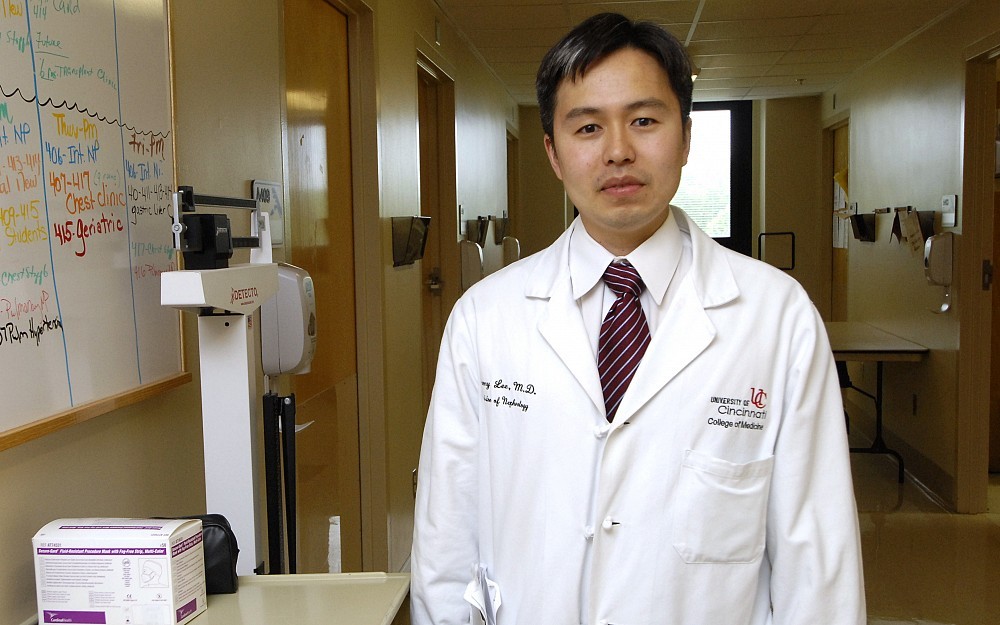
Timmy Lee, MD, UC Health nephrologist, staff VA physician and lead investigator on the study, was awarded the National Kidney Foundations Young Investigator Awardtotaling $150,000 over three yearsto look at ways to improve access placement in patients starting dialysis for the first time.
"There are two main types of permanent dialysis access: an arteriovenous fistula (AVF), which connects the artery and the vein directly, and an arteriovenous graft, which connects the artery and the vein using a plastic tube, he says. "AVFs are the best form of access because fewer interventions are needed in order to keep the access area open once functional, and fewer infections occur compared to grafts; however, less than 20 percent of dialysis patients use AVFs on their first dialysis session. National guidelines are seeking to achieve a goal of 50 percent of patients starting dialysis with a functional AVF.
"In this observational study, we will examine the processes of care that get patients to the point of having an AVF implanted when they start dialysis, such as early referral from a patients internist to their nephrologist and physicians discussions with patients about dialysis options, time of examination of their veins and arteries with ultrasound, referral to a surgeon for fistula placement, and placement of a fistula before dialysis is needed.
Nephrologists and surgeons at the VA will also initiate a multi-disciplinary clinic to deliver comprehensive care to patients with advanced chronic kidney disease. These nephrologists and surgeons are already operating a vascular access clinic at the VA.
Lee says both of these initiatives will be examined for their effect on improving the rate of successful placement of preferred vascular access, and researchers will compare historical data with the results from the initiation of these two new clinics.
This project will be completed at the VA.
"We will look at the level of kidney function when preoperative ultrasound mapping occursa tool which allows physicians to look at the vessel size to determine if an AVF is the right fit for the patientand level of kidney function when surgeon referral and surgical placement occurs, he says. "Were specifically trying to pinpoint a breakdown in the steps to see if it can be prevented. Furthermore, we believe that these newly developed clinics will improve processes of care measures.
"We hope that this research and our patient care clinics dedicated to vascular access care will greatly improve results for this subgroup, he continues. "There are over 450,000 people undergoing hemodialysis in the United States. If we tweak the way we are doing things to prevent the need for added surgeries and interventions, we will be positively impacting lives all over the world.
Charuhas Thakar, MD, associate professor of medicine at UC and chief of the renal section at the Cincinnati VA Medical Center, is a co-collaborator on the study. Lees mentor for this grant is Prabir Roy-Chaudhury, MD, PhD, UC Health nephrologist, staff VA physician and professor of medicine at UC.
Lee is also a member of the Cincinnati Dialysis Access Program, a translational research group at UC dedicated to improving the care of dialysis access in patients with kidney disease.
Tags
Related Stories
Cancer Center plays key role in lab research, clinical trials for new pancreatic cancer drug
September 1, 2026

WLWT and WCPO highlighted the contributions of University of Cincinnati Cancer Center researchers that helped lead to the recent FDA approval of daraxonrasib, a new treatment for pancreatic cancer.
Cancer Center physician receives $150,000 New Investigator Research Grant to study treatment-resistant leukemia
September 1, 2026
The University of Cincinnati Cancer Center’s Sarah Skuli, MD, PhD, received a two‑year, $150,000 Leukemia Research Foundation New Investigator Grant to study TP53‑mutated leukemia, a treatment‑resistant subtype with very poor outcomes.
Heavy social media use linked to depression
August 31, 2026

U.S. News and World Report, Yahoo! News, MSN, USA Today and other national media highlight a new study by the University of Cincinnati and Northwestern University that found a correlation between heavy social media use and depression in adults.