UC HEALTH LINE: Don't Aggravate Your Asthma in Hot, Humid Weather

CINCINNATISummer is officially here and, with it, a season of warnings and worrying for those with asthma.
Asthma, a chronic inflammation of the lungs airways characterized by a cough, shortness of breath and wheezing, affects 300 million people worldwide, including 22 million in the U.S. In severe cases, or attacks, airways contract and the patient cannot get enough air into the lungs. But with proper medical care and self-management, asthmatics can help themselves avoid the more severe reactions.
To stay attack-free this season, UC Health allergist and asthma expert Steven Sutton, MD, cautions each asthma patient to be aware of his or her own risks and prepare accordingly.
"Asthma is a very individualized disease, says Sutton. "As a specialist I encourage my patients to understand their own asthma triggers, which will ultimately help them control their disease.
But there are some seasonal trends that can pose a problem for many.
"In general, high pollen levels, humidity, heat and pollution can all cause asthma to flare in many asthmatics, says Sutton. "Asthmatics need to be wise in choosing the time and place for their activities. For instance, exercising in the hottest part of the day or going to Kings Island on a smog alert day are likely to be problematic.
Sutton recommends checking with the Hamilton County Department of Environmental Services website for a daily record of pollen levels and air quality for the summer.
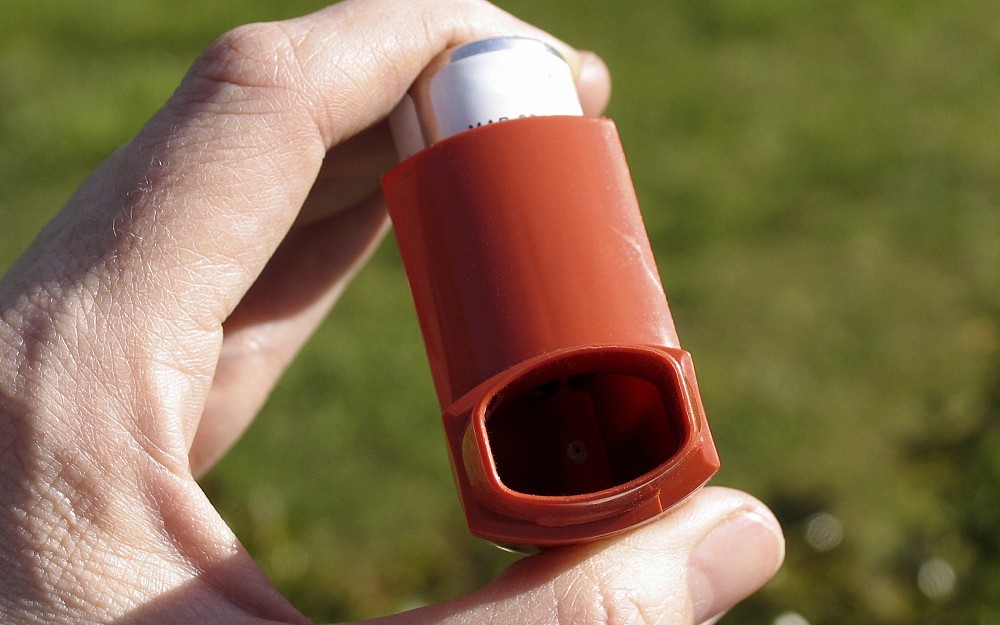
On days with high pollution or pollen, asthmatics should stay in cooler environments or in air-conditioning if possible, avoiding lawn care and outdoor exercises. If they find themselves near a trigger or in the beginnings of an attack, Sutton recommends taking their rescue medication and removing themselves from the area as soon as possible.
He says most physicians give their patients an asthma action plan, a document personalized for the patient that tells them how to manage their asthma when it worsens. That document should include information on when to seek emergency care.
But nothing wards off attacks better than regular use of the patients prescribed controller: "One of the best ways to minimize your risk of attacks is to be consistent with taking your controller medication, says Sutton.
"This can be done by keeping it in an obvious place and incorporating it as part of your daily hygiene ritual. I have many of my patients leave their maintenance inhaler near their toothbrush so they can take it when they brush their teeth.
Sutton sees patients at University Sinus and Allergy at UC Healths West Chester campus. To schedule an appointment, call (513) 475-8400.
Tags
Related Stories
Cancer Center plays key role in lab research, clinical trials for new pancreatic cancer drug
September 1, 2026

WLWT and WCPO highlighted the contributions of University of Cincinnati Cancer Center researchers that helped lead to the recent FDA approval of daraxonrasib, a new treatment for pancreatic cancer.
Cancer Center physician receives $150,000 New Investigator Research Grant to study treatment-resistant leukemia
September 1, 2026
The University of Cincinnati Cancer Center’s Sarah Skuli, MD, PhD, received a two‑year, $150,000 Leukemia Research Foundation New Investigator Grant to study TP53‑mutated leukemia, a treatment‑resistant subtype with very poor outcomes.
Heavy social media use linked to depression
August 31, 2026

U.S. News and World Report, Yahoo! News, MSN, USA Today and other national media highlight a new study by the University of Cincinnati and Northwestern University that found a correlation between heavy social media use and depression in adults.