UC HEALTH LINE: Know the Facts About Drowning for Adequate Prevention

CINCINNATI―Most of us have seen depictions of drowning on TVtheres splashing, yelling and a lifeguard running to the rescue. But emergency medicine professionals caution thats not how it happens in real life.
"Recognizing drowning is probably harder than people think it is, says Jordan Bonomo, MD, assistant professor of emergency medicine, neurosurgery and neurocritical care at University of Cincinnati (UC). "Generally, theres no splashing going on. There isnt flailing or screamingits usually the persons head bobbing up and down under the surface. Youre looking for someone one moment and then theyre gone.
The Centers for Disease Control and Prevention estimates there were 3,443 fatal unintentional drownings in the United States in 2007, an average of almost 10 deaths per day. In addition, almost 500 people died in boating-related incidents.
But even if the person is pulled from the water and survives 24 hours, Bonomo says there can be serious side effects from what are called "near-drownings.
Complicated near-drownings involve resuscitation efforts at the scene, he says. Survival rate depends on the length of immersion, the temperature of the water and the persons physiological status beforehandmeaning that a younger, healthier person is generally going to do better.
"A key factor in near-drowning survival is the effectiveness of bystander CPR and the time it takes to re-establish oxygen delivery, says Bonomo.
He says its also a myth that someone can receive CPR, cough water out of their lungs and be perfectly fine: "Anyone requiring resuscitation after a near-drowning should receive emergency medical care. It takes a while to clear the water out of the lungs, to re-establish adequate circulation and perfusion to get your brain functioning again.
Wendy Pomerantz, MD, UC associate professor of clinical pediatrics, says she sees many near-drownings in her role as emergency department physician at Cincinnati Childrens Hospital Medical Center.
She says the ultimate recommendation is to keep an eye on children around any kind of water: pools, bathtubs, even a bucket of water or a toilet. Caregivers should stay an arms length away to provide "touch supervision.
While theres some evidence that swimming lessons are protective against drowning, Pomerantz says its not a guarantee: "Someone may know how to swim, but if they fall in with their clothes on, they can panic and go under.
For home pools, she recommends four-sided fencing at least four feet high around all sides of the pool as the best preventative measure.
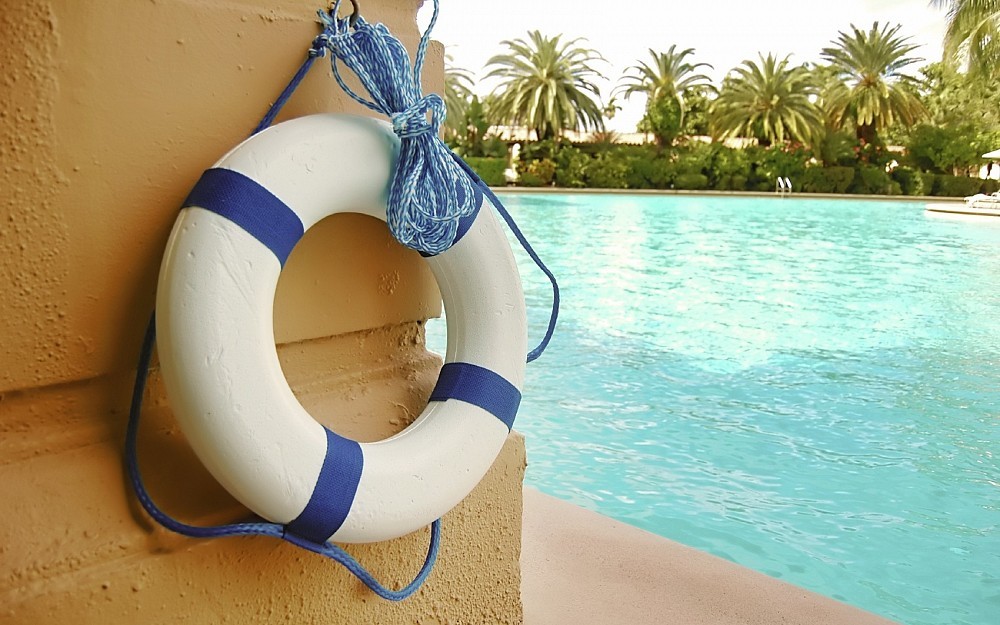
"The fence should have a self-latching gate and a lock where small children cant reach, she says. "You should have a life ring to throw to anyone in the pool and definitely should know CPR.
For more tips from Dr. Pomerantz and Cincinnati Children's on drowning protection, click here.
Tags
Related Stories
Cancer Center plays key role in lab research, clinical trials for new pancreatic cancer drug
September 1, 2026

WLWT and WCPO highlighted the contributions of University of Cincinnati Cancer Center researchers that helped lead to the recent FDA approval of daraxonrasib, a new treatment for pancreatic cancer.
Cancer Center physician receives $150,000 New Investigator Research Grant to study treatment-resistant leukemia
September 1, 2026
The University of Cincinnati Cancer Center’s Sarah Skuli, MD, PhD, received a two‑year, $150,000 Leukemia Research Foundation New Investigator Grant to study TP53‑mutated leukemia, a treatment‑resistant subtype with very poor outcomes.
Heavy social media use linked to depression
August 31, 2026

U.S. News and World Report, Yahoo! News, MSN, USA Today and other national media highlight a new study by the University of Cincinnati and Northwestern University that found a correlation between heavy social media use and depression in adults.