UC HEALTH LINE: Numbness, Tingling or Pain in Arms and Hands? Peripheral Nerve Damage Could Be the Culprit

CincinnatiIgnoring persistent pain and disturbing bouts of tingling or numbness in your arms, elbow and hands wont make the problem go away: Its more likely to worsen conditions that are very treatable.
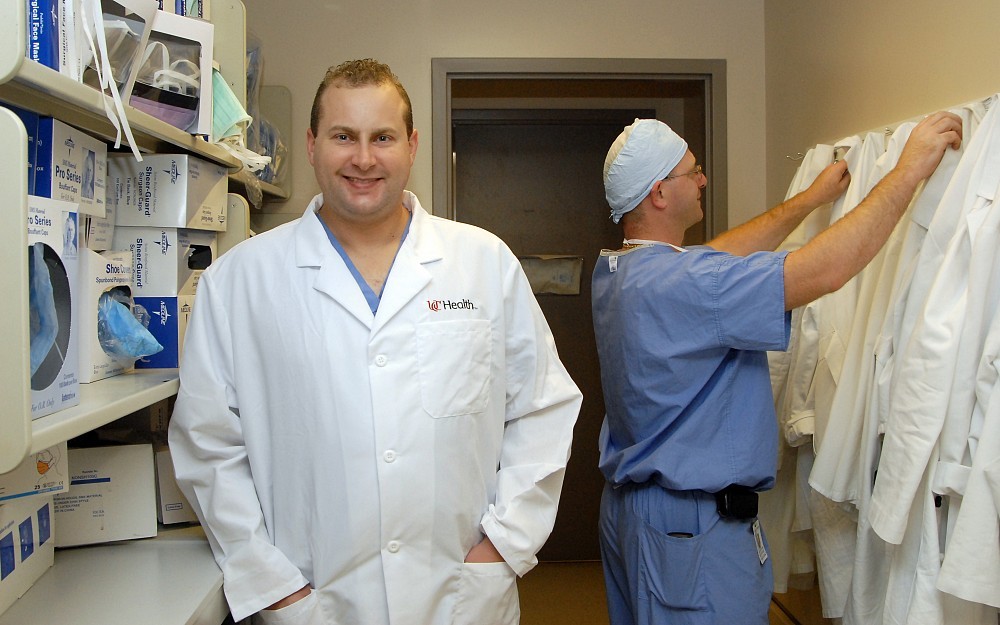
Overuse injuries to peripheral nerves in the upper extremities are a common but an often ignored problem, according to David Megee, MD, a plastic, reconstructive and hand surgery specialist with UC Health.
The peripheral nervous system is a vast network of specialized nerves responsible for transmitting messages sent from the central nervous system (brain and spinal cord) to the rest of the body. This includes sensory information that allows us to feel the difference between, for example, hot and cold.
Megee says most peripheral nerve injuries can be corrected through behavior modification and improved body mechanics: avoiding repetitive tasks, applying principles of ergonomics and avoiding devices that apply physical pressure to sensitive areas. When this does not give the patient relief, surgery may help restore function.
"Many people work in an office environment where they are likely to hold their upper extremities in fixed positions for long periods of timefor example, using a computer mouse or talking on the telephone. But our joints arent designed to be in fixed positions for long periods of time. Its important that people be aware of their body posture during work to avoid overuse injuries, explains Megee.
"If they do begin to experience persistent problemslike loss of sensation or shooting painthey should seek medical advice without delay to prevent long term injuries.
Peripheral nerve injuries occur when individual nerves are pinched or subjected to chronic, unintended pressure. This can occur when tendons thicken or swell from overuse.
"This leads to nerve compression, which can cause pain or a sensation of tightness, weakness or numbness in the hand, wrist, fingertips or elbow, depending on where that compression occurs, explains Megee.
Common peripheral nerve injuries affecting the wrist, hand, fingers and forearm include:
· Carpal tunnel syndrome: This syndrome occurs when the nerves passing through the arms carpal tunnel (space between ligaments and bone in the forearm) become traumatized by pressure. This is the most commonly diagnosed "pinching nerve condition.
· Cubital tunnel syndrome: This condition is caused by increased pressure to the ulnar nervepositioned right next to the interior elbow "funny bone. The nerve has very little padding to protect it, so it is particularly vulnerable to pressurefor example, from propping the elbow on an armrest.
· Radial tunnel syndrome: This condition occurs when the radial nerveoriginating at the neck and traveling along the back of the arm to the handis pinched. The condition is worsened by repetitive tasks that require you to twist the wrist, as the nerve passes under the muscle used to perform this function.
In all three cases, the condition is diagnosed with electromyography or another similar nerve conduction test. Surgery is used to relieve pressure to the compromised nerve only after behavior modification techniques have failed to give the patient relief.
Megee is fellowship-trained in microvascular reconstructive hand surgery, making him uniquely qualified to correct delicate peripheral nerve injuries related to the upper extremities. He sees patients at the UC Health Physicians Office in West Chester and University Hospital in Clifton. For appointments or referrals, call (513) 475-8881. For a full list of UC Health specialists, visit ucphysicians.com.

David Megee, MD, specializes in peripheral nerve surgery.

David Megee, MD, specializes in peripheral nerve surgery.
Tags
Related Stories
Cancer Center plays key role in lab research, clinical trials for new pancreatic cancer drug
September 1, 2026

WLWT and WCPO highlighted the contributions of University of Cincinnati Cancer Center researchers that helped lead to the recent FDA approval of daraxonrasib, a new treatment for pancreatic cancer.
Cancer Center physician receives $150,000 New Investigator Research Grant to study treatment-resistant leukemia
September 1, 2026
The University of Cincinnati Cancer Center’s Sarah Skuli, MD, PhD, received a two‑year, $150,000 Leukemia Research Foundation New Investigator Grant to study TP53‑mutated leukemia, a treatment‑resistant subtype with very poor outcomes.
Heavy social media use linked to depression
August 31, 2026

U.S. News and World Report, Yahoo! News, MSN, USA Today and other national media highlight a new study by the University of Cincinnati and Northwestern University that found a correlation between heavy social media use and depression in adults.