UC One of 15 Sites in National Hybrid Cochlear Implant Trial

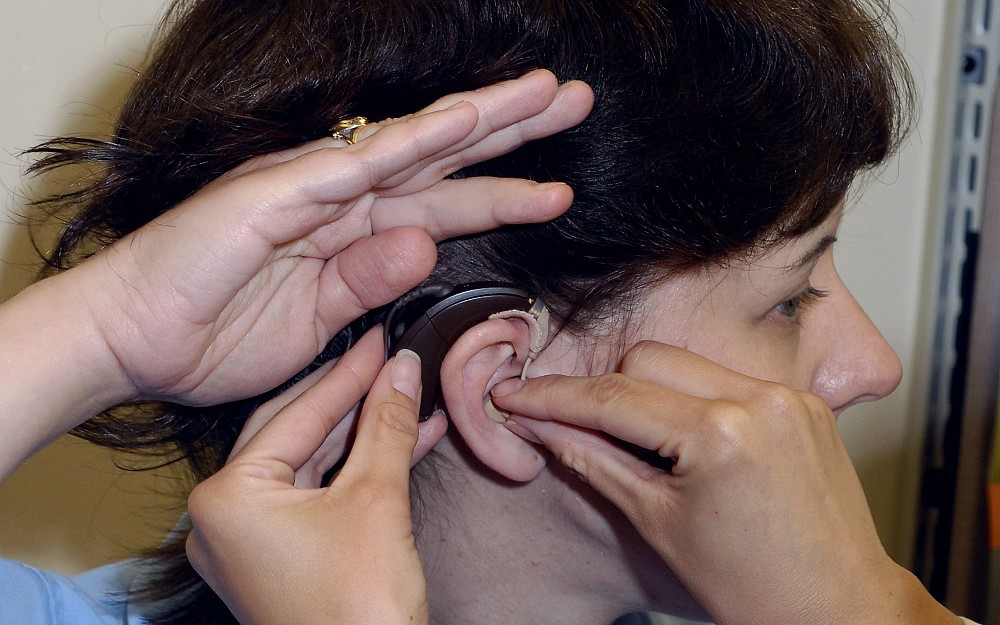
CINCINNATIResearchers with the University of Cincinnatis department of otolaryngology-head and neck surgery are participating in a national trial to study a new device combining two types of existing hearing loss technology.
The device, a Hybrid L 24 cochlear implant manufactured by Cochlear Americas, combines the external amplification technology of a hearing aid with the internal processor of a traditional cochlear implant. It incorporates a smaller, specialized electrode in the implant, designed to target and stimulate the high frequency area of the cochlea.
In traditional cochlear implants, a surgically-placed electrode bypasses damaged hair cells or inner ear structures to send sound signals straight to the cochlear nerve and the brain. Traditional implants are typically used for patients with severe to profound hearing loss, where they have been successful in restoring hearing for those patients for many years.
But there isnt yet a solution for patients with moderate levels of hearing loss, says Ravi Samy, MD, assistant professor of otolaryngology and co-investigator in the trial.
"In that moderate to severe category of hearing loss, youll see patients who dont benefit from hearing aids any longer, or they benefit sometimes, but not all the time, he says. "They usually have to strain to use hearing aids.
Many of these patients can still hear lower frequencies, but not sounds typically heard in higher frequencies. They may have difficulty talking on the phone or distinguishing conversation in a crowded room.
"With the hybrid cochlear implant, the hope is that we can get the mid to high frequencies taken care of by the specialized electrical portion of the cochlear implant, and the low frequency loss helped from the hearing aid, says Samy. "This provides the patient with both acoustic and electrical stimulation.
The Food and Drug Administration has approved the use of traditional cochlear implants in children and adults. Now, this multi-center trial is testing the safety and efficacy of the hybrid implant on adult patients.
The trial aims to enroll 50 patients, with UC hoping to enroll 5 patients, says UC audiologist Lisa Houston, co-investigator of the study.
Thats optimistic, she says, because the Hybrid L 24 implant is only appropriate for patients who fall in that specific subgroup: those who have lost their ability to hear mid to high frequency sounds yet have residual low frequency hearing. Furthermore, eligible patients must receive minimal benefit from traditional hearing aids or amplification devices.
"The trial requires a fairly demanding time commitment, she says. After the surgery to implant the device, patients have a series of outcome visits, during which an audiologist measures the devices performance and "maps their hearing range.
During the mapping process, the audiologist works with the patient to determine how much current the implanted electrode array needs in order for the patient to hear properly and comfortably.
It also takes some time for patients to adjust to the device, says Samy. "When you first put a cochlear implant in, its like having to learn a foreign language. The sound goes straight to the nerveits abnormal, its not what the body is used to. It can be very daunting.
Patients can take anywhere from six months to a year to adjust to the device, depending on their duration of hearing loss, previous use of an amplification device, personal motivation and family support.
The trial is sponsored by Cochlear Americas, manufacturers of the device. Samy does not receive honoraria from the company and cites no conflict of interest.
Tags
Related Stories
Cancer Center plays key role in lab research, clinical trials for new pancreatic cancer drug
September 1, 2026

WLWT and WCPO highlighted the contributions of University of Cincinnati Cancer Center researchers that helped lead to the recent FDA approval of daraxonrasib, a new treatment for pancreatic cancer.
Cancer Center physician receives $150,000 New Investigator Research Grant to study treatment-resistant leukemia
September 1, 2026
The University of Cincinnati Cancer Center’s Sarah Skuli, MD, PhD, received a two‑year, $150,000 Leukemia Research Foundation New Investigator Grant to study TP53‑mutated leukemia, a treatment‑resistant subtype with very poor outcomes.
Heavy social media use linked to depression
August 31, 2026

U.S. News and World Report, Yahoo! News, MSN, USA Today and other national media highlight a new study by the University of Cincinnati and Northwestern University that found a correlation between heavy social media use and depression in adults.