Voluntary Exercise by Animals Prevents Weight Gain, Despite High-Fat Diet

CINCINNATIUniversity of Cincinnati (UC) researchers have found that animals on a high-fat diet can avoid weight gain if they exercise.
The study, led by Silvana Obici, MD, appears as a rapid electronic publication May 17, 2011, in the journal Endocrinology.
Obici and her team found that voluntary exercise activates leptin-receptor-positive neurons in the brains hypothalamus. Leptin is a hormone produced and released by fat and interacts with receptors in the hypothalamus known to inhibit appetite. High-fat diet-induced obesity results in the inability of leptin to suppress appetite, which is also known as leptin resistance.
The team tested whether preventing diet-induced weight gain by either exercise or calorie restriction would improve leptin resistance in mice. They found that leptin was ineffective at reducing body weight in sedentary mice on a restricted diet. However, they found that leptin significantly lowered body weight in active mice on a high-fat diet.
"What weve learned is that exercise helps to maintain a lower body weightdespite a high-fat dietperhaps through improved leptin action, says Obici, an associate professor in the division of endocrinology, diabetes and metabolism and researcher with UCs Metabolic Diseases Institute.
The results, Obici says, support the idea that exercise helps to keep weight off not only by burning calories through muscle activity, but also by influencing the brains response to the neural circuitry involved in energy balance.
The study was funded by grants from the American Diabetes Association and the National Institutes of Health. In addition, Kimberly Krawczewski Carhuatanta, first author and senior neuroscience graduate student at UC, was awarded a pre-doctoral fellowship from the American Heart Association to conduct this work.
Co-authors, all from the University of Cincinnati are Stephen Benoit, PhD, Giovanna Demuro, MD, Paul Pfluger, PhD, and Matthias Tschöp, MD.

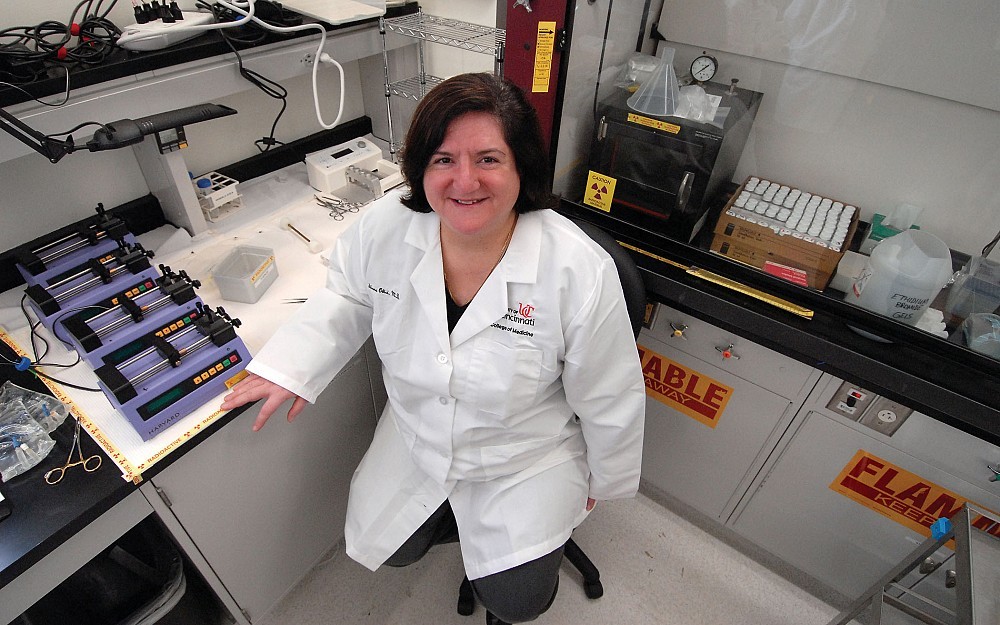
Silvana Obici, MD
Tags
Related Stories
Cancer Center plays key role in lab research, clinical trials for new pancreatic cancer drug
September 1, 2026

WLWT and WCPO highlighted the contributions of University of Cincinnati Cancer Center researchers that helped lead to the recent FDA approval of daraxonrasib, a new treatment for pancreatic cancer.
Cancer Center physician receives $150,000 New Investigator Research Grant to study treatment-resistant leukemia
September 1, 2026
The University of Cincinnati Cancer Center’s Sarah Skuli, MD, PhD, received a two‑year, $150,000 Leukemia Research Foundation New Investigator Grant to study TP53‑mutated leukemia, a treatment‑resistant subtype with very poor outcomes.
Heavy social media use linked to depression
August 31, 2026

U.S. News and World Report, Yahoo! News, MSN, USA Today and other national media highlight a new study by the University of Cincinnati and Northwestern University that found a correlation between heavy social media use and depression in adults.